


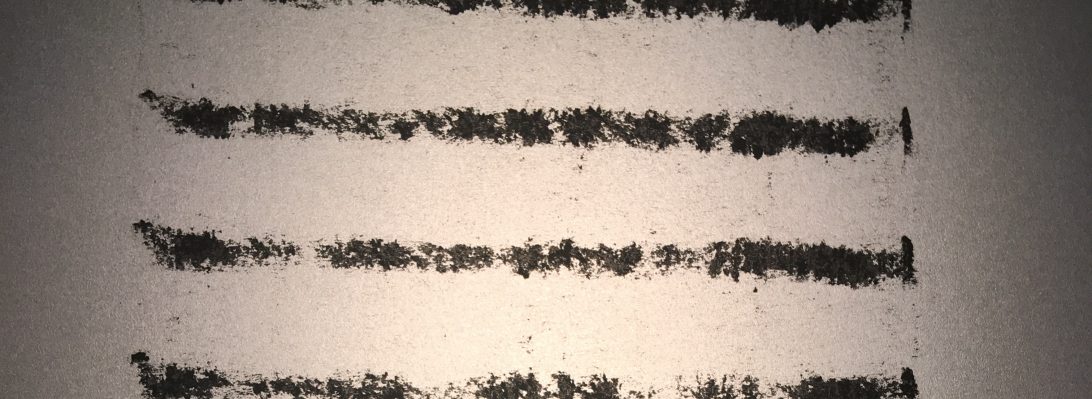


On Reading ‘Falling Into The Void’ by Hayley Lock
Hayley writes of ‘the void that surrounds (us)’ but what about the void within? Can The Void perhaps be the space between material reality and the more real but less familiar, non-material reality. Its where I go when I fall backwards into the eternity of a two minute wait for the next tube train. The place beyond Boredom that seems at first glance empty but which is, like the deep ocean, full of nutrition, or, like deep space, teeming with information. The Void is the threshold from which most people recoil in a panic and quickly fill with their mobile phone, book, newspaper, worry, anxiety, crisis etc. We are losing the ability and desire to spend time with ourselves. Even yoga has come to resemble a sport. Like Seyerls bubble – all surface no content, or Arendts ‘on the earth’ vs ‘inhabit the world’, we live materially, on the surface of ourselves and the Earth, oblivious to our depths and to the universe. Materialism requires that we place ourselves, individually and philosophically, at the centre of cosmology. Yet the journey into ‘space’ is the same as the journey into ourselves. Going further and going within are the same direction. ‘Nothing’ is superficial. Sink down into it and it is Everything.
The whole thing is made trickier by the fact that that ‘Nothing’ is a word and therefore something. It lends itself to wonderful paradoxes. King Lear frets that ‘nothing comes from nothing’ and is lost in its inescapable mad loop. It says much of the relationship between word and thought, material and non-material, Techne and Magic. Scientific Materialism, our current paradigm, confidently insists that Arendt’s World can, must and will be described. Hayley Lock quotes Heidegger’s ‘the nothingness itself nothings’ where he seems to be trying square this circle. It is the insistence that nothing is ineffable, when in fact Nothing IS ineffable lies at the heart of the paradox. Insisting that nothing is ineffable places us at the centre of things and so outside, seemingly god-like but in fact alienated. Saying that Nothing is ineffable activates The Void and fills both it and us with creative data. Pressure equilibrates. The bubble bursts. Object and Subject reconcile.
‘Black’
Fludds primordial Black referenced by Hayley Lock, might also have been the Alchemical Nigredo, the blackening – sth to do with cooking matter until it is primal. Jung interpreted this as a dissociative stage before Albedo, the Light, or the whitening. Ive just read a short story by Hemingway, ostensibly a simple tale of a solitary fisherman. But to get to the idyllic spot from where to cast his line he has to pass through a town that has been burned to the ground. The surrounding land is blackened. Even the crickets have turned black. (as I write this a house is on fire across the road – the smoke is stinging my eyes). He is the Fisher King traversing The Wasteland, preparing himself in the sunny spots, the Albedo, the Light for the journey into the swamp, the Wyld Wood of deep consciousness. But did Hemingway know he was using ancient memes? His novel Fiesta also seems to use themes of wounds, bulls, infertility, chivalry, Amor, fishing, whilst ostensibly narrating a straightforward semi-autobiographical tale. Or is this a case of (Jungs) Archetypes forever bubbling up and nudging us in a particular direction? Is Hemingway referencing memes and archetypes or are they referencing him?
And does that nudge come from our instinct? from nature? reminding us that we are non-material as well as material beings, participants of and not just witnesses to the void that is Everything?
Bachelard, Gaston, The Poetics of Space, Penguin, New York (1964), 2014 Edition
Barthes, Roland, Image Music Text, Fontana, London, 1977
Benjamin, Walter, Illuminations, (1955), Bodley Head, London, 2015
Berger, John, Ways of Seeing, Penguin, London,1972
Bickers, Patricia, Ed. Talking Art 2, Ridinghouse, 2017
Borges, J.L, Labyrinths (1964) Penguin Modern Classics, 2000
Breton, Andre, Manifesto of Surrealism, 1923, theoria.art-zoo.com
Campagna, Federico, Technic And Magic: The Reconstruction Of Reality, Bloomsbury Academic, London 2018
De Chirico, Giorgio, Mystery and Creation, theoria.art-zoo.com
Deleuze, G and Guattari, F, A Thousand Plateaus (1987) Bloomsbury Academic,
Eastham, Ben, Pierre Huyghe Strange Attractors, Art Review vol70 no7 October 2018 p50-57
Freud, S, On Dream, 1901, theoria.art-zoo.com
Fried, Michael, Art And Objecthood, 1967, theoria.art-zoo.com
Greenberg, C, Modern and Postmodern, theoria.art-zoo.com
Groys, Boris, In The Flow, Verso, (2016) 2018
Harman, G, Object-Oriented Ontology, Random House, 2018
Hemingway, E, A Big Two-Hearted River, 1925
Koons, Halley, Steinbach et al, From Criticism to Complicity, 1986, theoria.art-zoo.com
Judd, Donald, from Not About Masterpieces,1984,t heoria.art-zoo.com
Judd, Donald, Specific Objects, 1965, theoria.art-zoo.com
Lock, Hayley, Falling Into The Void (collaged text)
Lyotard, Jean-Francois, What Is postmodernism?, 1982, theoria.art-zoo.com
Malevich, K, From Cubism and Futurism to Suprematism: The New Realism In Painting
Materiality (Ed. Petra Lange-Berndt), Whitechapel Gallery, London, 2015
May, Todd, Gilles Deleuze, An Introduction, Cambridge University Press, 2005
Mitchell, W.T.J, Image and Word, 1986, theoria.art-zoo.com
Morris, Robert, Notes On Sculpture, theoria.art-zoo.com
Murdoch Mills, Christina, Materiality as the basis for the Aesthetic Experience in Contemporary Art, University of Montana, 2009
Ortega y Gasset, Jose, The Dehumanization of Art, 1925
Pistoletto, Michelangelo, Omnitheism and Democracy, 2012, theoria.art-zoo.com
Ponge, F, http://www.poetryfoundation.org
du Preez, Amanda, (Im)Materiality: on the matter of art, Image and Text
Proust, M, Swanns’s Way (Trans. Moncrieff and Kilmartin) Vintage, 1981.
du Preez, Amanda, (Im)Materiality: on the matter of art, Image and Text
Read, Herbert, The Meaning Of Art (1931) Faber 2018
Russell, Bertrand, A History of Western Philosophy (1946), Unwin, London, 1987
Sauvagnargues, A, Deleuze and Art (Trans. Bankston), Bloomsbury, London, 2018
Steyerl, Hito, The Wretched Of The Screen
Tradowsky, P, Kaspar Hauser (Trans. Wood) Temple Lodge, 1997
Williams, Raymond, When Was Modernism?, 1987, theoria.art-zoo.com
Videos and lectures
Pierre Huyghe in conversation at Serpentine Galleries, 2018:
https://www.youtube.com/watch?v=emYOOVRzG8E
What is the Creative Act – Gilles Deleuze 1987 (English Subs)
I am beginning to think of my work as illustrations of my attempts to renegotiate a relationship with the non-material (currently by absenting the material through accelerated, forced erosion, tracing and making openings) after having spent the bulk of my adult life applying my fathers scientific-materialist template to reality (the same father who has also begun re-addressing his own relationship with the universe through a direct negotiation with God, that he calls The Infinite, whilst recovering from surgery in hospital). But also as an accompaniment to my efforts to understand post-Nietzschean attempts by wider western materialism to cope with its exit from the non-material aspect of what was up to that point a reality that recognised that humans are both animal and spiritual. That is, with Modernism, we opted to leave the God-created universe for a new man-made, language-defined universe. The question being, was this a natural and necessary act in order for us to be ultimately reconciled with the cosmos on better terms than the previous relationship based as it was on God as Creator Entity and us as sinners, or is this a one way trip to Technic and the end of Magic (F. Campagna)? Is materialism a necessary step toward Jungs Individuation? Is democratic capitalism merely a symptom of this materialism?
‘The debate around the hierarchy of word over image has raged for a long while and will continue to do so. How we as artist work within this and use it to our advantage is a challenge’. (Caroline Wright commenting on OCAMA 16 seminar, Oct 18).
Technology can be seen as a symptom of a culture or a creator of it. The printing press is a primary example of this. It manifested at the beginning of the psychic shift from the non-material to a material reality. From the image-based Southern European ineffable Magic of Catholicism to the word-based, iconoclastic, Northern Techne of Protestantism. Was Protestantism successful because of the printing press, or was the printing press successful because of the Protestant paradigm? Or was the development of a protestant reality an expression of an energetic development that feeds off an insistence on non-ineffability: the World can, must and will be described. All else is witchcraft or weakness. Modern Science ensues. Art adopts language of scientific discourse. Techne victorious.
I am not interested in attempting to express the ineffable but I am leaving markers along the border between the expressible and inexpressible, at openings in the border, and about the nature of the data that passes from one to the other, in both directions. I am attempting to construct a language that helps me to communicate with myself, or rather the act of attempting to construct a language that helps me to communicate with myself about myself is symptomised by object making. Object making is a by-product of language -making. But at the same time there is an awareness of the unconscious using this process as a means to communicate, even up to the point of expressing itself IN the objects.
Words roam the surface of things. They serve the material. We exist on the surface, neglecting the depths where words cant penetrate. We look for signs in named things, some configuration, some alignment. Clues. Looking for meaning in the potential of things to combine and teach us something of Value. But this is a symptom of illness. We are trying to put elements together that are already together, which means we need to seperate them first, tear things apart in the search for potential. Because we are not part, having chosen to step outside, like little gods, in order to look in, judging, categorising, mining and extracting value.
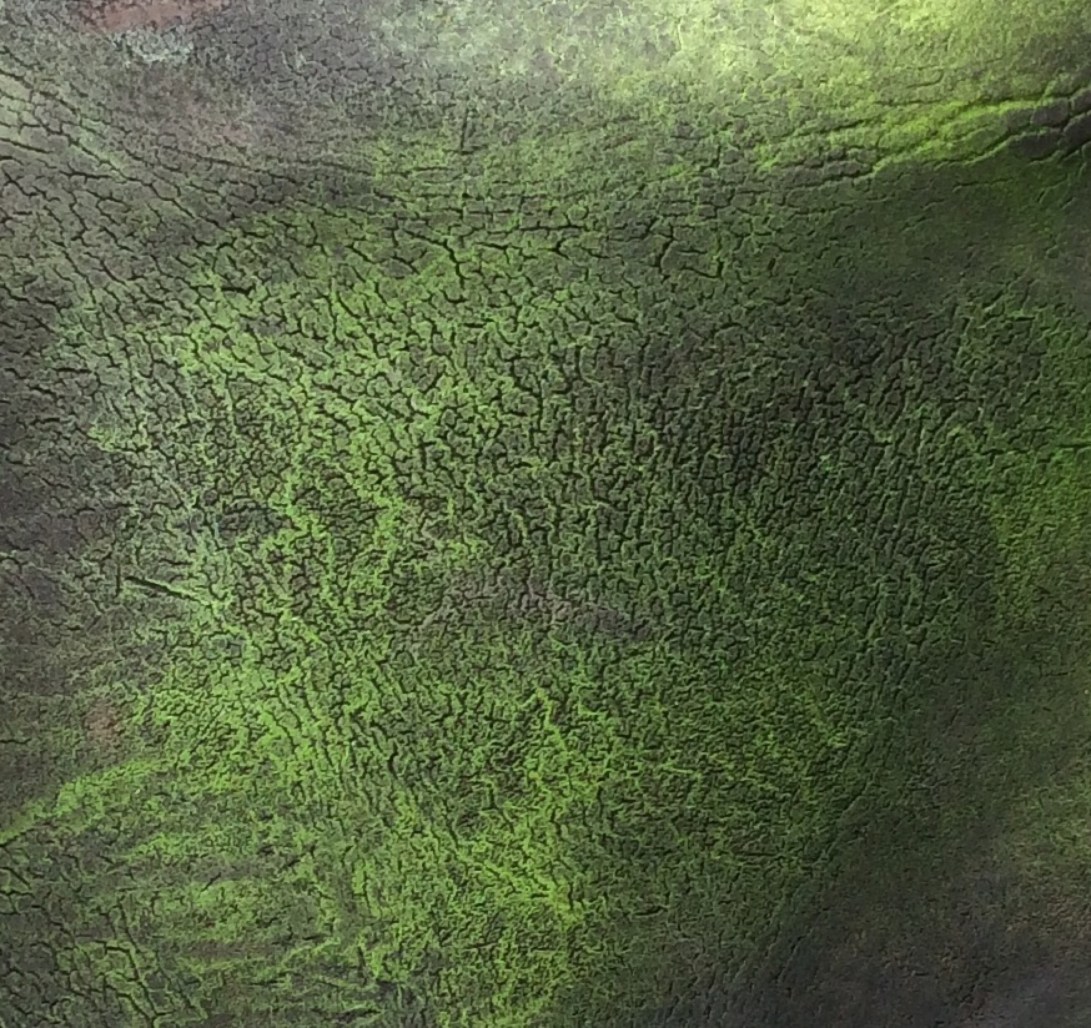
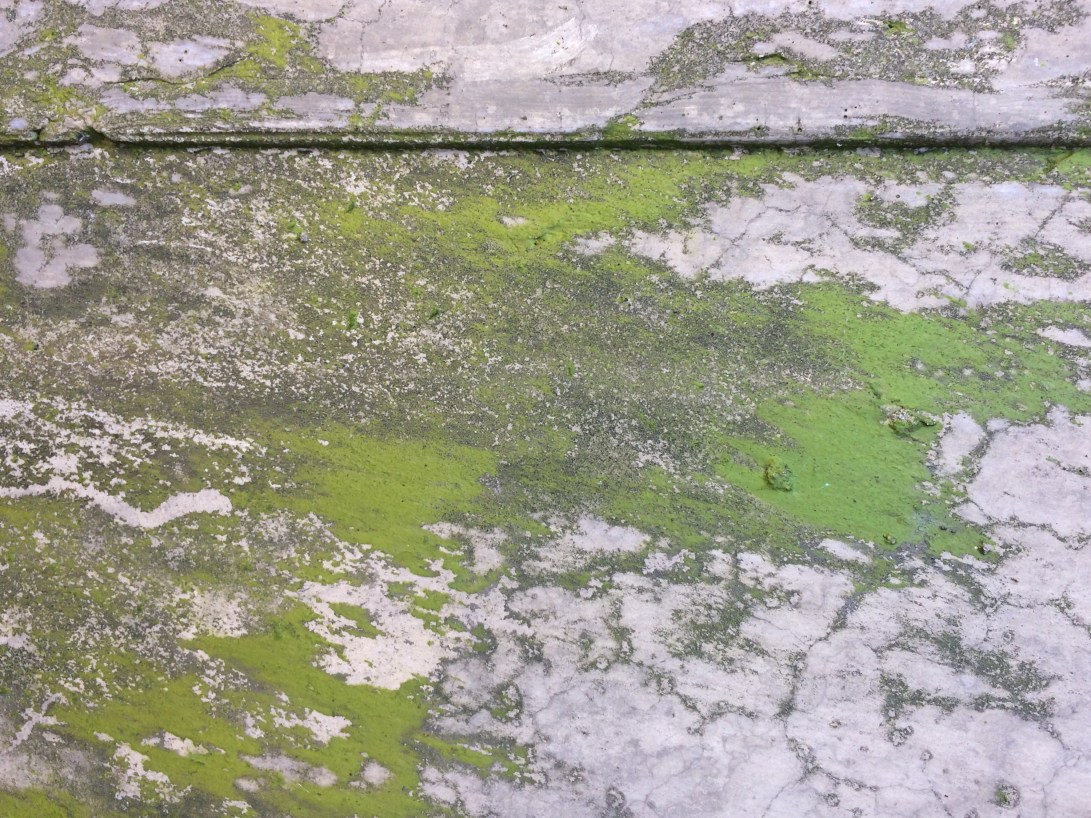
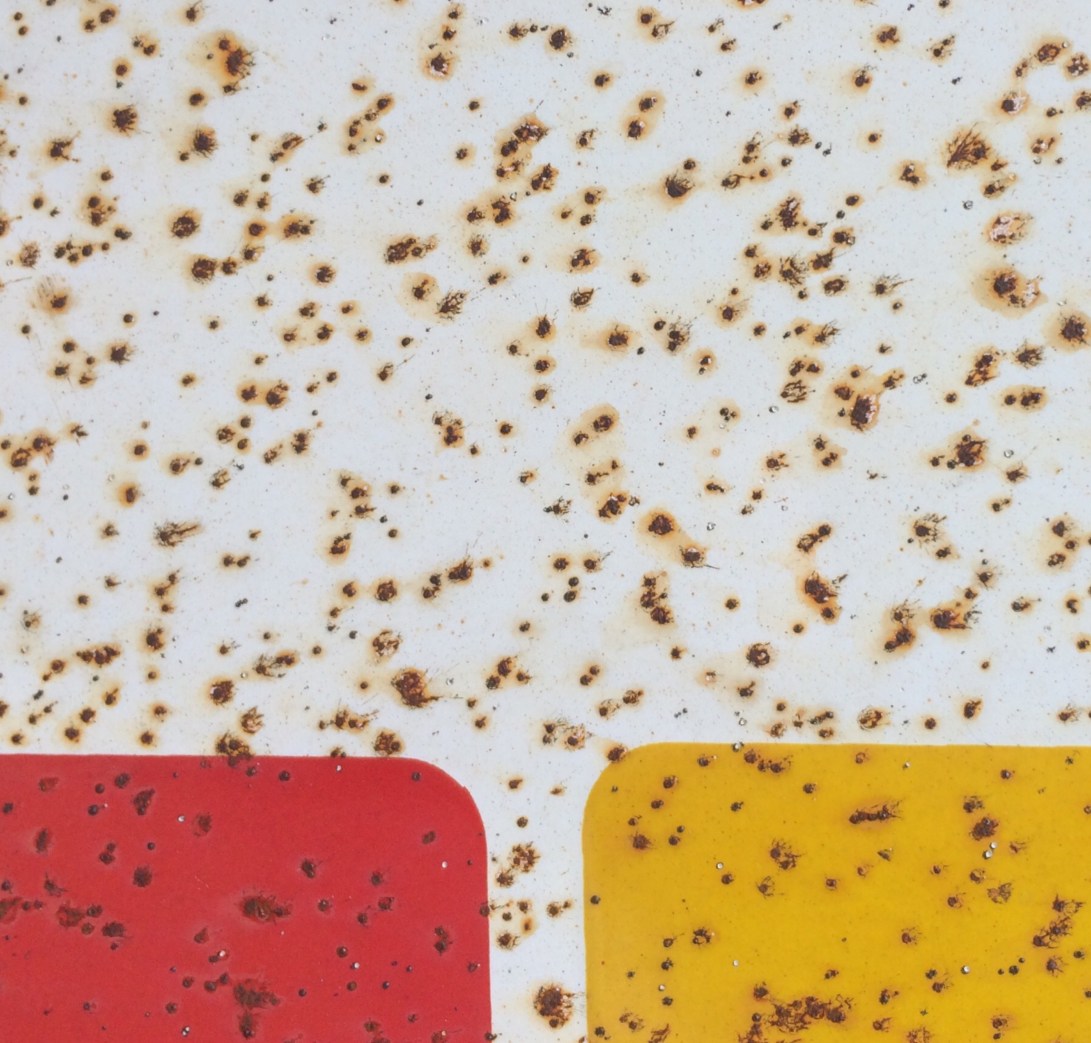
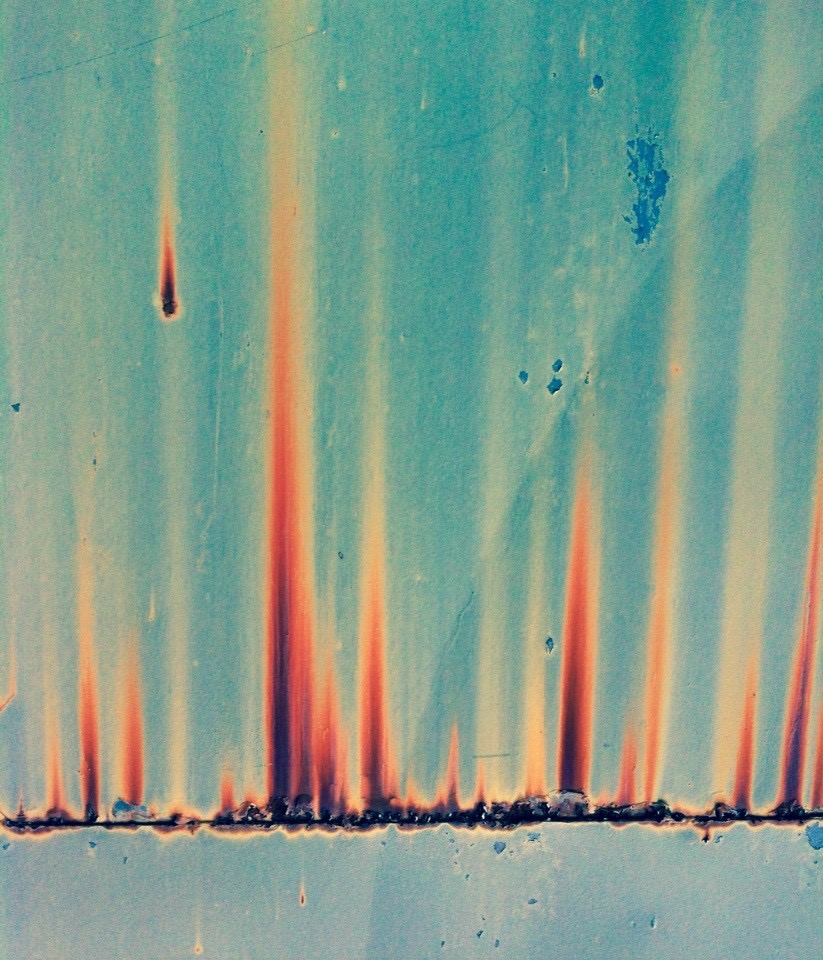
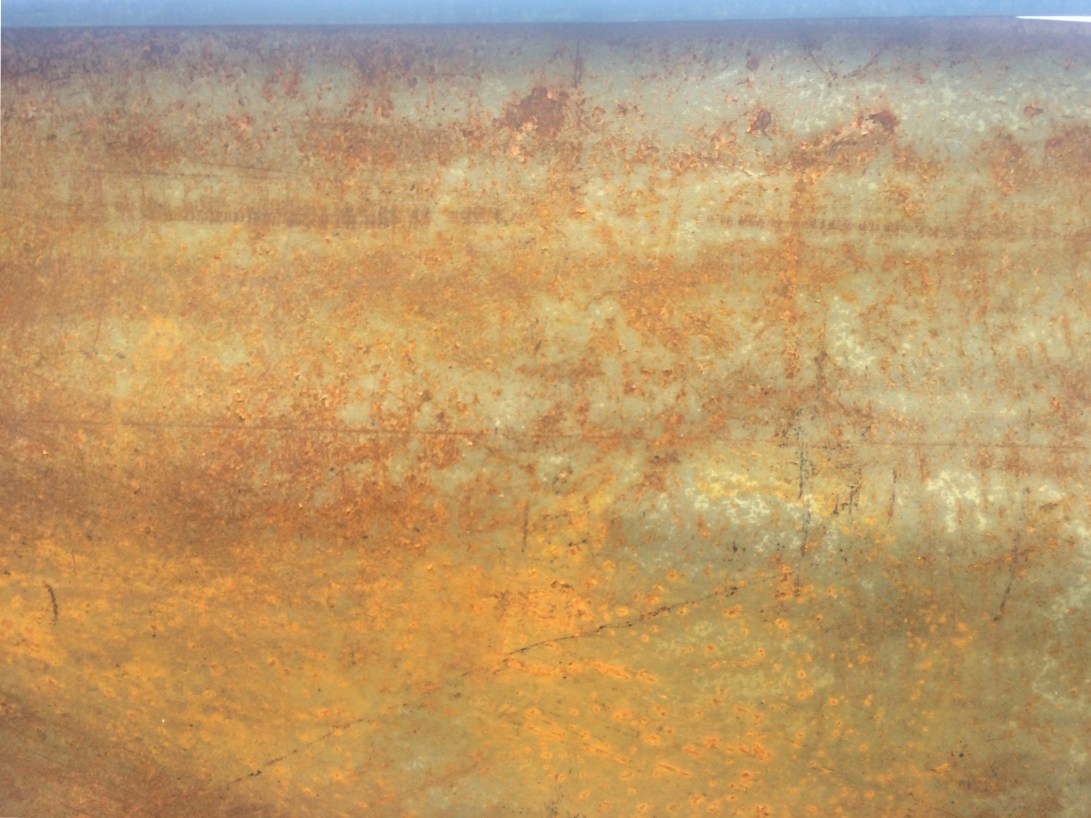
We are constantly fed (not always nourished), by external stimuli that come in, are mapped, and go out as response. And when we think about internal stimuli we talk about moods, nature, instinct. But what does that really mean. What is the data that is affecting us? How? Where does it originate? Why? Certain birds are born with the ability to cower in the nest when a predator flies overhead, yet not when a non-predator flies over. This is an Innate Response Mechanism built from millennia of experience and evolution. Imagine the spectrum of our human innate responses.
For example, I have just reread The Sun Also Rises by Hemingway and recognised several motifs that correspond with the tale of The Wounded Fisher King of Arthurian Romance legend, who is excluded from the hunt by his injury, leaving the world a wasteland. Hemingway’s protagonist has been wounded in the groin in the First World War and left infertile. His is the emotional wasteland of ‘The Lost generation’. He gains pleasure from fishing for trout in the streams of the Pyrenees (Romance country) and from watching the bullfights in which he cannot take part. I looked up Hemingway and the Fisher King online and there is a commentary on this subject but it seems to me to be in error. The debate centres on whether or not Hemingway was aware of the Romance tales of which TS Eliot was writing contemporaneously in The Wasteland, influenced by the academic treatment by Jesse Weston. However the tales of heroes wounded in the thigh or groin are many and ancient, (here are the ones of which i am aware – King Amfortas by a spear, Jacob by the angel, Tristan by Morold, Telephus by Achilles, Chiron by Hercules, Hercules himself, Adonis by the wild boar and Alexander by a spear. Of course Jesus was also wounded in the abdomen with a spear). I suggest that Hemingway is not knowingly retelling the tale but channeling the archetype that maybe concerned with spiritual infertility – who knows? That is to say, the Archetype of The Wounded King is expressing itself through Hemingway, carrying with it whatever the dream like message is that it needs to make us aware of. Such is the creative principal of the universe and the nature of our evolved, inherited, shared and subtle Innate Response Mechanisms.
So, in other words, where is the place where I stop and Everything begins? This is what interests me as an artist.
*
The Ego gives us a thick skin and sets us on a promontory that necessarily separates and protects us from Everything. As TS Eliot says
‘Human kind
Cannot bear very much reality’ (Four Quartets, Faber and Faber)
However there is a longing on our part and on the universe’s for a reconciliation (Science probes this. As does religion (re-ligio trans. re-link (ligament, ligature) or reconnect. Also Sanskrit Yuj – root yoga, union etc) and art.
*
Is there a sense that when Barthes wrote about the death of the Author God it was interpreted as an instruction to artists as doxa to remove themselves from the production and/or product of their labour in the name of the viewer/consumer? a sort of ideal, democratic self-immolation? presumably with the kernel ambition of producing pure, inclusive objectivity. Im attracted to this idea and I like dogmatic art. Im sort of jealous of it. I like the idea of producing work in which a feedback process of copy, paste, copy, paste becomes a mechanical separation of the producer from the product, the personality is removed in a sort of creative degradation.
And yet Hermann Hesse wrote about how he sometimes imagined taking all his work back from the altar on which he first proffered it as sacrifice to be cut up and dismembered by reader-consumers, critics and subjective opinion. I make subjective art. I make it for me. Consumption by others is incidental and a sort of justification. The conversation i am having is not primarily with an audience but between myself and Everything. In fact it is a probing of the relationship between myself, as a subset of everything, and the set that is Everything.
*
Create
Curate
Collect
all attempts to address (control) ownership of the creative act and its issue.
Owning is a form of creativity, an expression of the creative drive.
*
Looking at the primal matter and activity of human consciousness is like staring into the crater of an active volcano filled with potential for creation and destruction and its going on ALL THE TIME.
*
Money is a symbol of value.
Art is a concretion of value
Art Is Value.
*
There is still some discursive connection between Beauty and Art – a sense that the art object should … what? contain beauty? represent beauty? BE beautiful? But does beauty inhere an object or is it a response? It is an effect, not a cause. It takes place not in the object but within us.
*
I think of Postmodernism as the consequence of gravity, volume and velocity. Many streams become one torrential river becomes shallow delta as its waters reach sea level, as all water pursues its own level: losing momentum and depth there is deposition and dispersal. The result, a myriad of rippled sandbanks spread over a wide area finally merging in oceanic conformity. And Post- Postmodernism? a hacking and slashing climb back up in search of the source or a new universalism? Or a compression of the deposition into a new stone to be mined? Of course it might also be dammed water, deep but virtually stagnant, as The Market releases just enough to power itself and irrigate a narrow strip along its downstream banks.
 JON WHITBREAD ART