Thoughts on Hickey and Mann

Thomas Mann in Dr Faustus (p61 Penguin 1978) spoke of ‘cult epochs and cultural epochs’. He said (or he has one of his characters say)  ‘for a cultural epoch, there seems to be a spot too much talk about culture in ours don’t you think?’.

Hickey might pretend to agree. But he’s a culture snob that sets himself up as an anti-snob. Of Foucaults acid experiment he says ‘Too late! Too Euro, too Castaneda. Bad place, wrong music. Yikes!’ He ridicules spectators as ‘looky-loos’ whilst proudly nailing his impeccable connoisseur credentials to the mast. His account of meeting a group of artists in SF who he says only mixed with other artists does not read authentically. I suggest he made the conversation up. Its fake news.

He even has the arrogance to place himself inside the head of Hank Williams and in one unintentionally hilarious moment, gives himself a credit for getting Parliament Funkadelic signed to a major label.

His anti-expert, anti-academic diatribes are Trumpian. As is his paranoid-libertarian dislike of the NEA as state sponsored art. He’s a free market neo-liberal disguised as an anti-elitist, ground-up democrat.

His style is cod-gonzo sub-Kerouac. It made me feel uneasy and uninspired.

Apart from that it’s ok. In fact he might agree with Mann when he says

‘I’d like to know if epochs that possessed culture knew the word at all…Our state is that of civilisation- a very praiseworthy state, no doubt, but…we should have to become very much more barbaric to be capable of culture again’. He defines the current civilisation as possessing ‘technique and comfort’ and ‘in that state one talks about culture but one does not have it’.

He is writing in 1943 about the early 1900’s. It brings to mind the contemporary phenomenon of artists making art about art and a certain obsession with definition of terms.

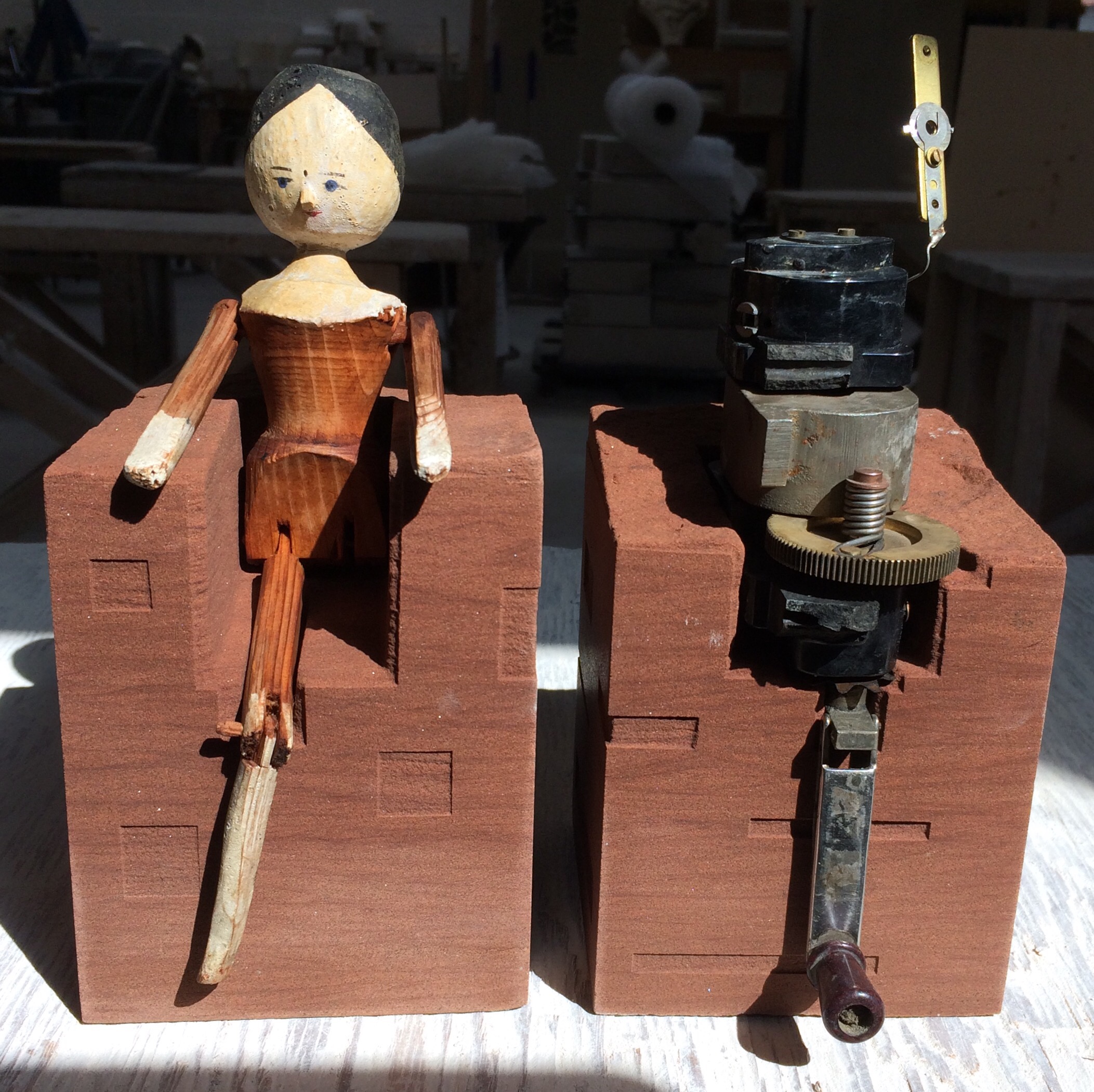
Plinths For found objects: The Queen of Light That Can Be Dark and The King Of The Dark That Can be Light

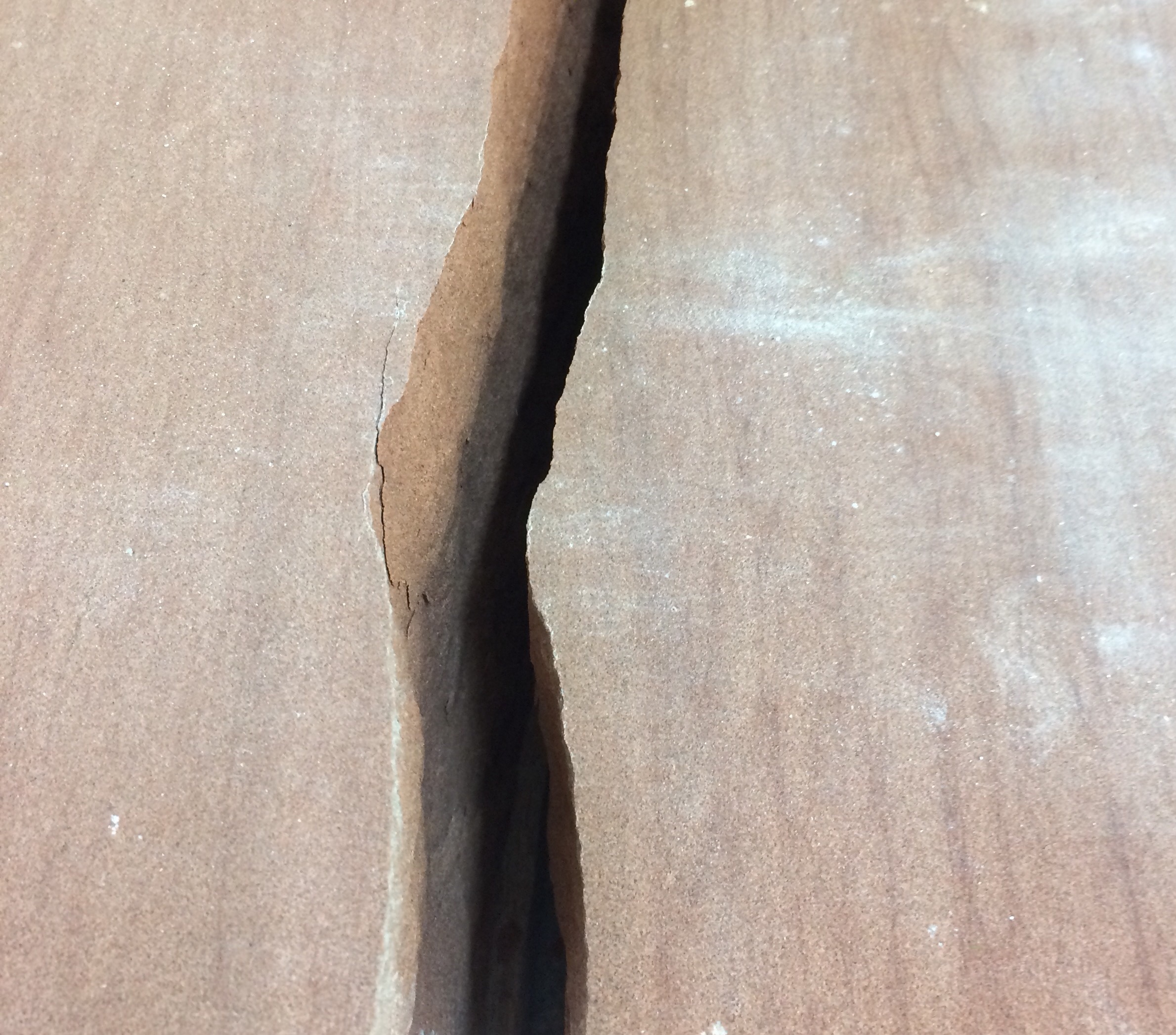
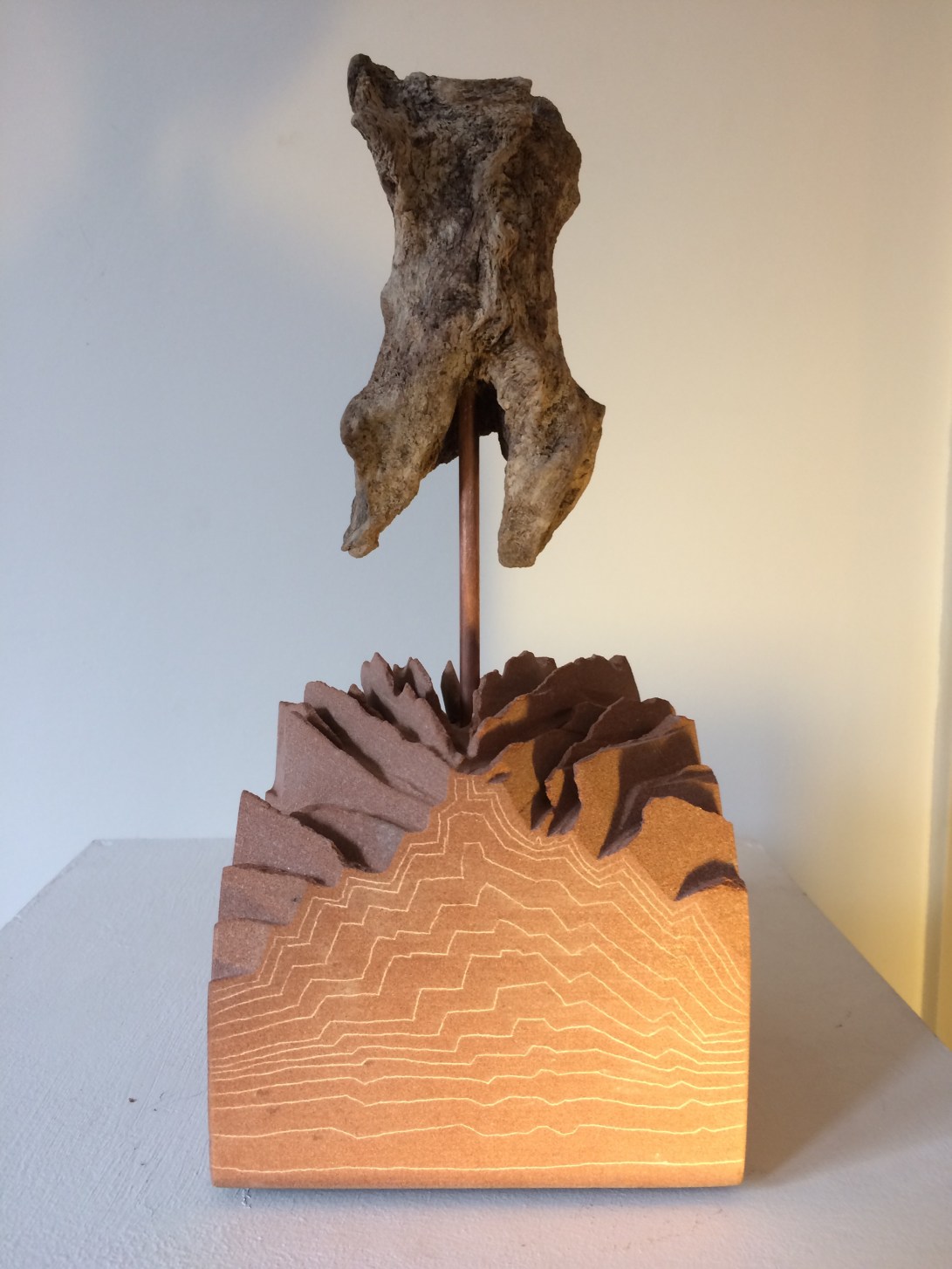
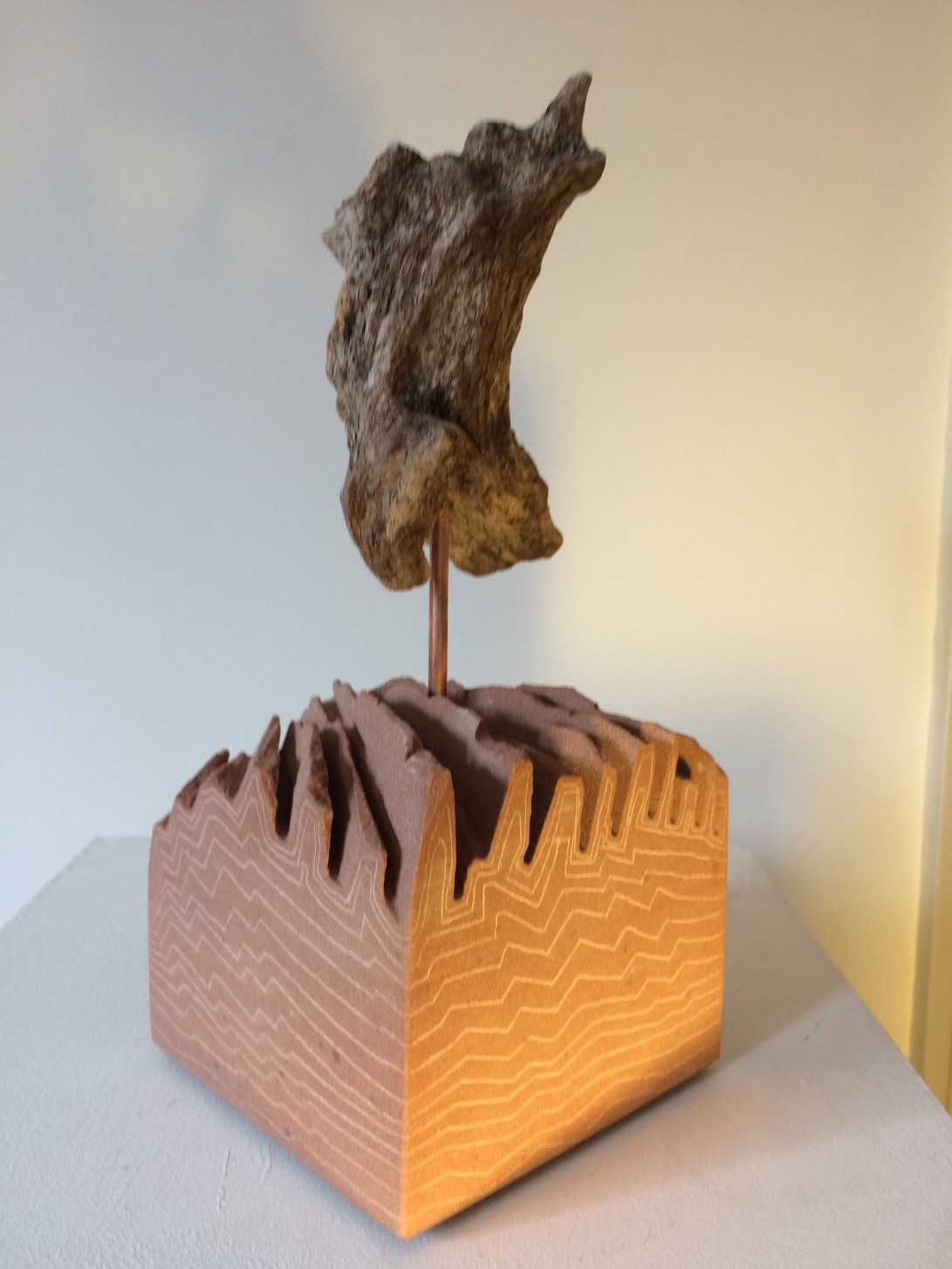
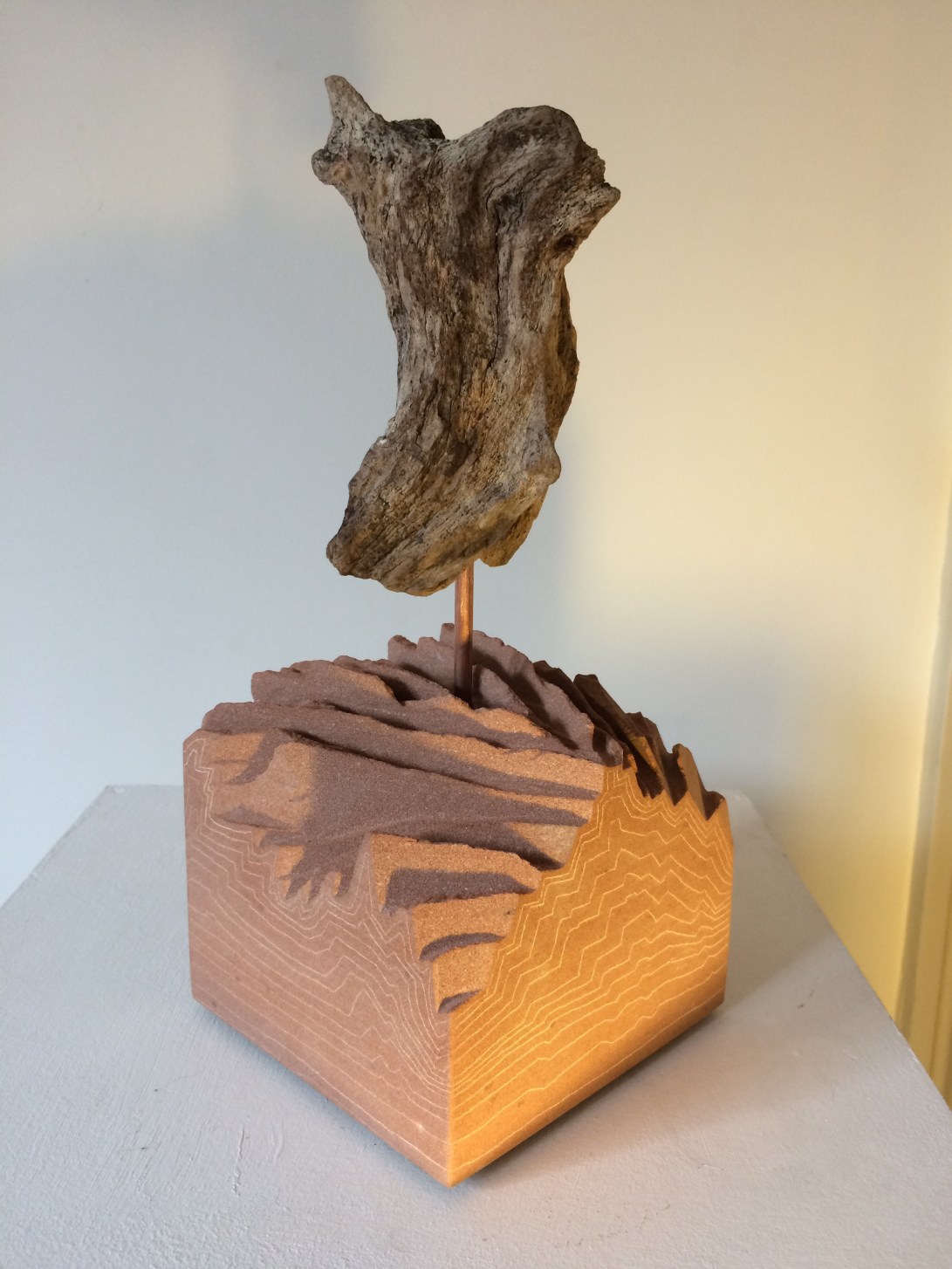
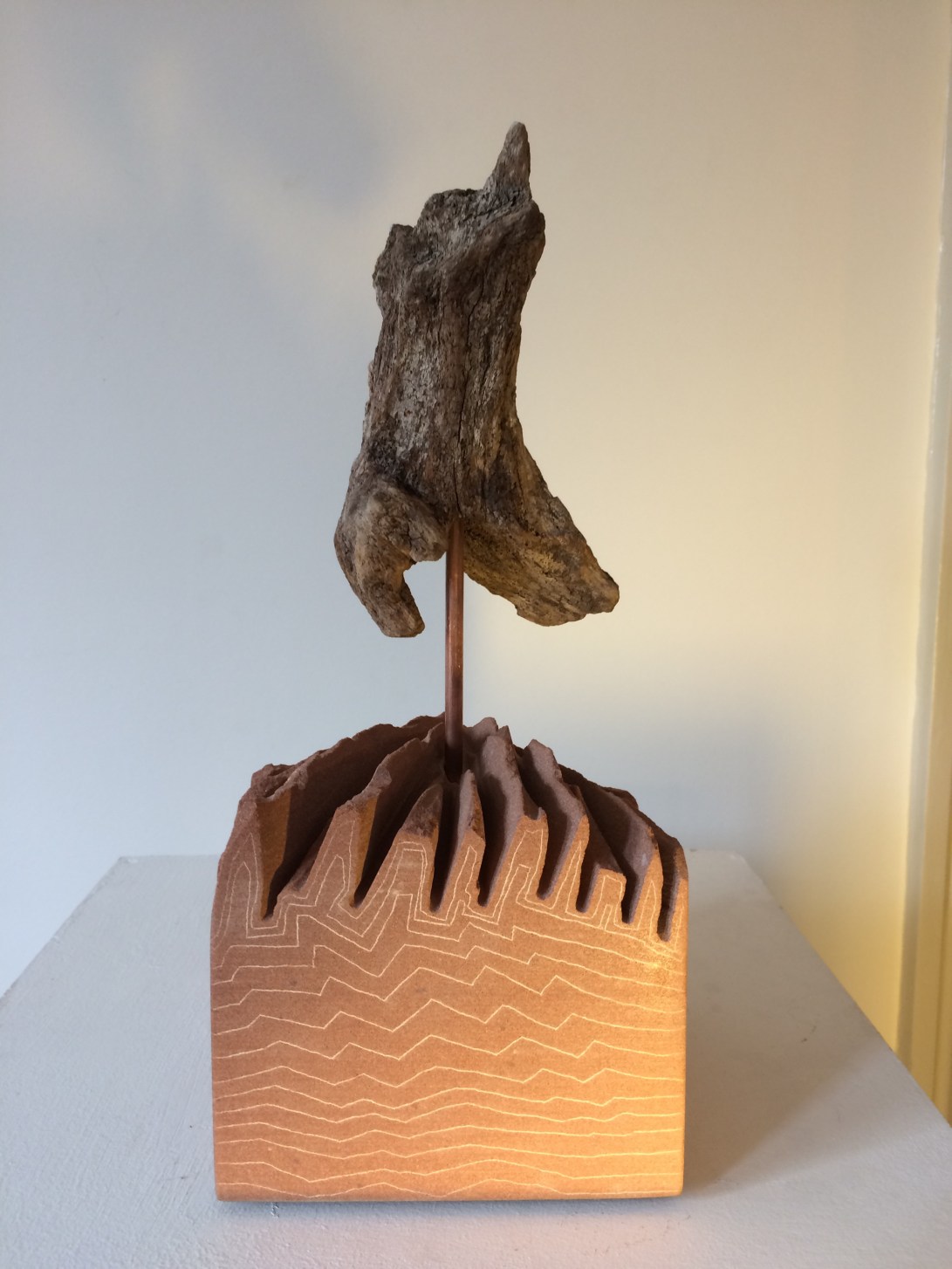
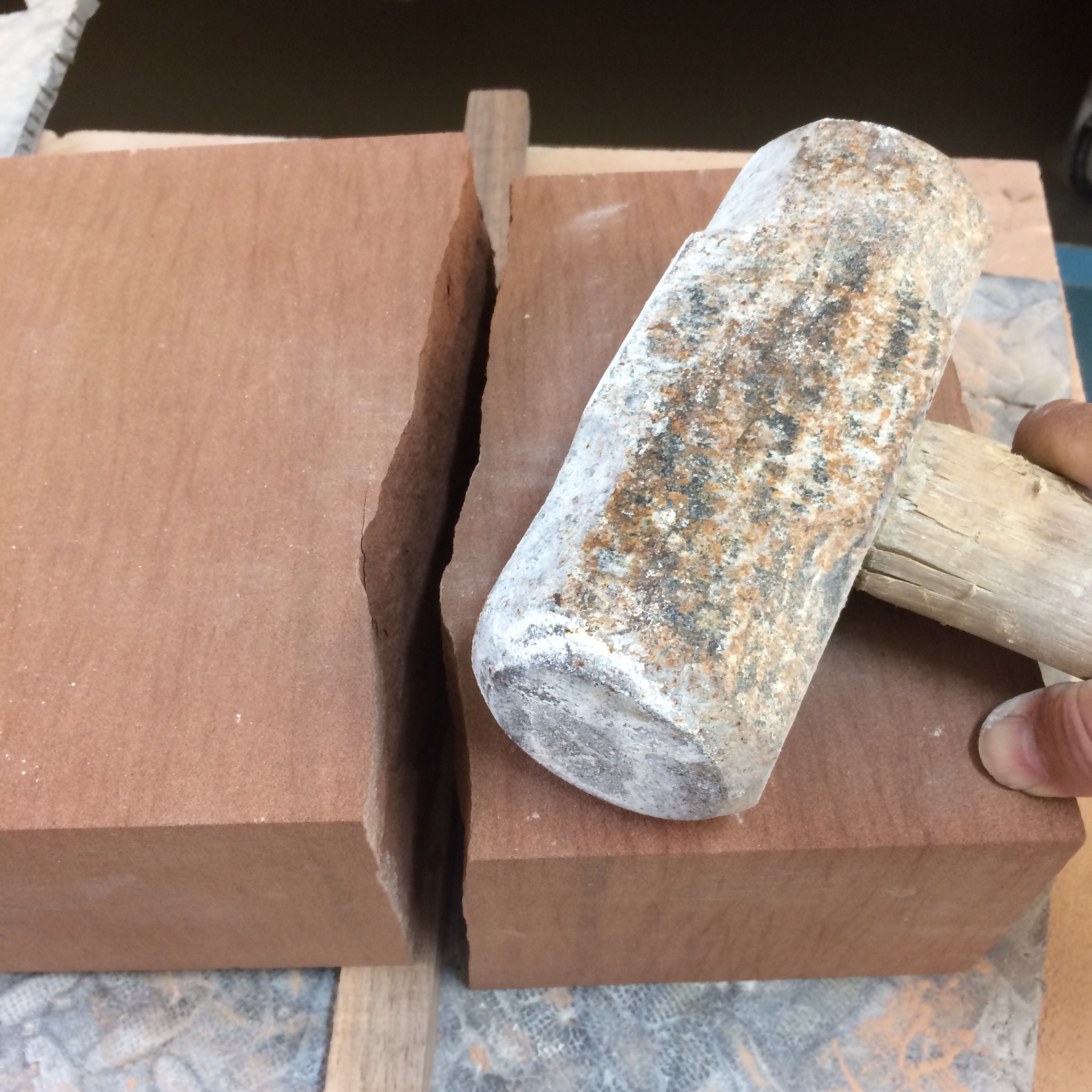
I had a piece of red sandstone from a restoration job which had a vent or natural weakness in the stone which meant i had to reorder it. I kept the flawed stone for sculpture. I gave it a good whack with a sledge hammer and it split along the vent. I cut the stone in two on the table saw. I then span it with a flex polisher to remove saw whips and honed the surface through the grades of grit 60/120/220/320/400. Any more (600 etc) and it would have started polishing and I wanted honed – less shiny and glassy. Not sure why – just an instinctive decision). I had no specific work in mind at this stage and no idea of which objects to provide plinths for. That morning id gone to the basement and taken the doll and the dynamo. theyd been sitting together on the shelf for several years.

The doll was my mothers as a child in Switzerland. my mums still alive but somehow this doll came to be in my basement. This is a typical swiss doll of the mid 1950s and i suspect beyond. In th 1950s anthropologists were still finding villages high in the Swiss valleys that had no communication with the lowlands and that practiced old ways and survived in a diminished gene pool. The dynamo was my fathers. he also is still alive. He was an engineer, socialist and humanist, a scientific realist who has since discovered a sense of spirituality. My mother was of Christian stock but sought her own spiritual path. They were/are both powerful people. My mother the spiritualist, my father the anti spiritualist. Both had/have light and dark aspects. Light can blind as much as absence of light. They separated 5 years ago.  they  have negotiated their own personal balance but i am the product of their experimentation.  My Dad would mock spirituality so i hid mine from him and for a while, from myself. I am negotiating my own balance of light and dark, science and spirituality. So here they are on their thrones. The Queen and King of The Light That Can Be Dark And The Dark That Can Be Light. Incidentally, if you turn the leg of the king and hold his crown you will receive an electric shock.

Plinths For Found Objects – Nike or Ariadne?

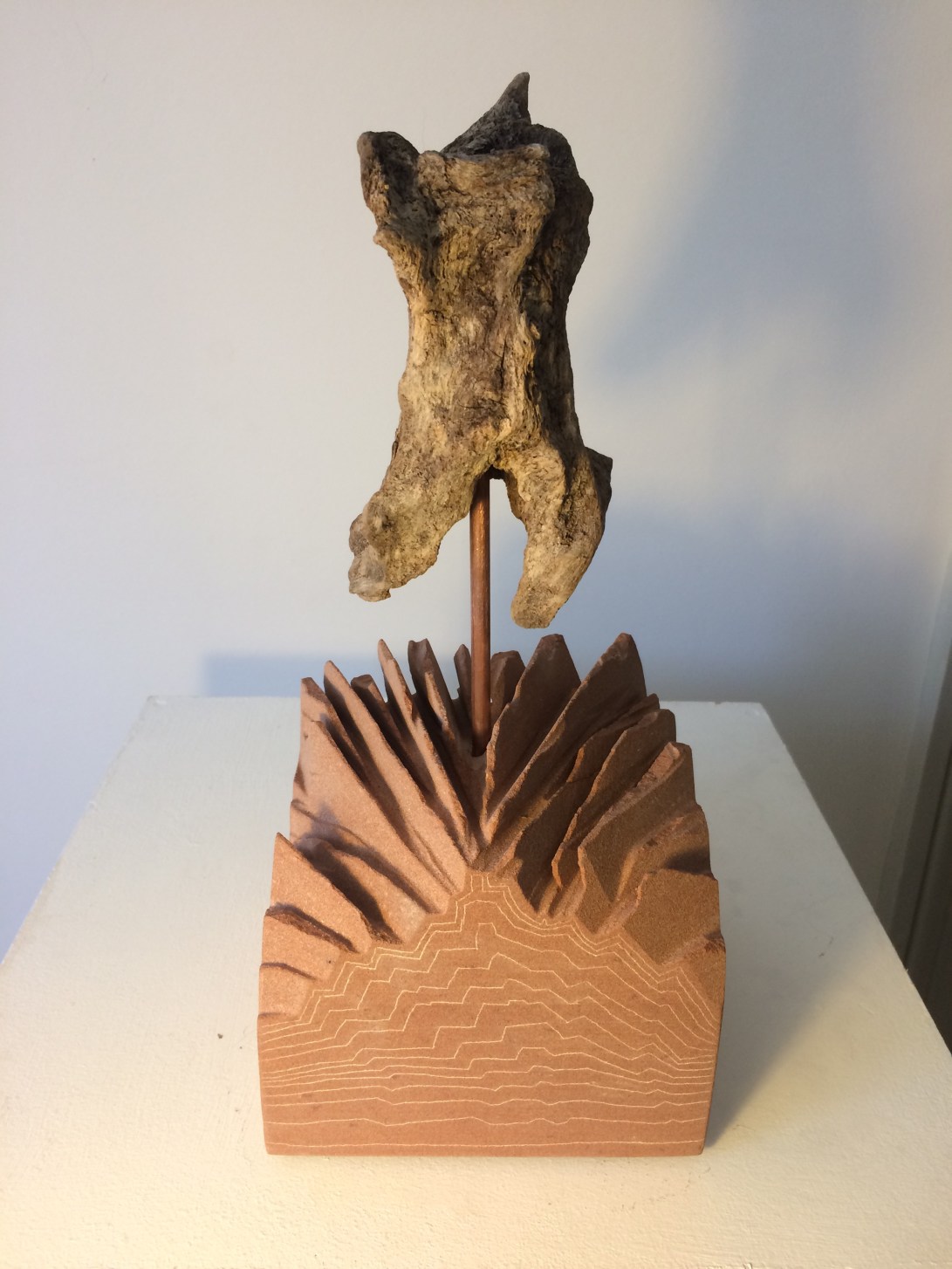
If as Dali/Breton said, ‘found objects have been waiting in the unconscious’ I might extend this to all art. I found this piece of what I think is pine, a wild and small sea pine, in Provence by the coast amongst vineyards and forest maybe 5 years ago. Its been sitting, neglected, amongst other found objects in my basement (!) since then.

At art school we would go to the British Museum and draw sculpture. I wasnt very good at life drawing but I was ok at constructing drawings of sculpture. Less pressure, more time.There are some draped figures of Nike there and the marble drapery is cut so deep I could put my entire forearm amongst the folds. This scrap of wood reminded me of the posture of the goddess of Victory, one arm raised, back curved, striding forward.

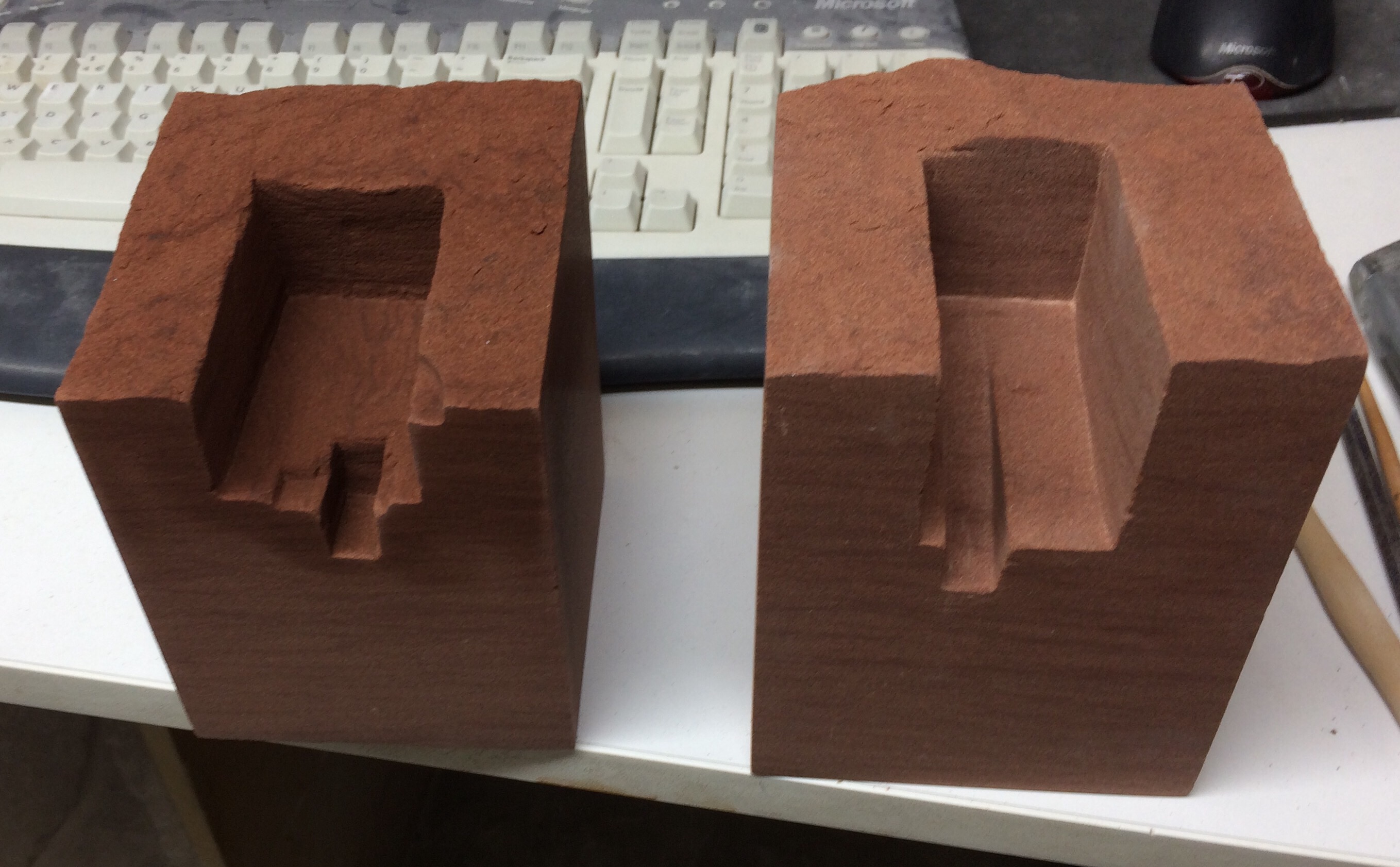
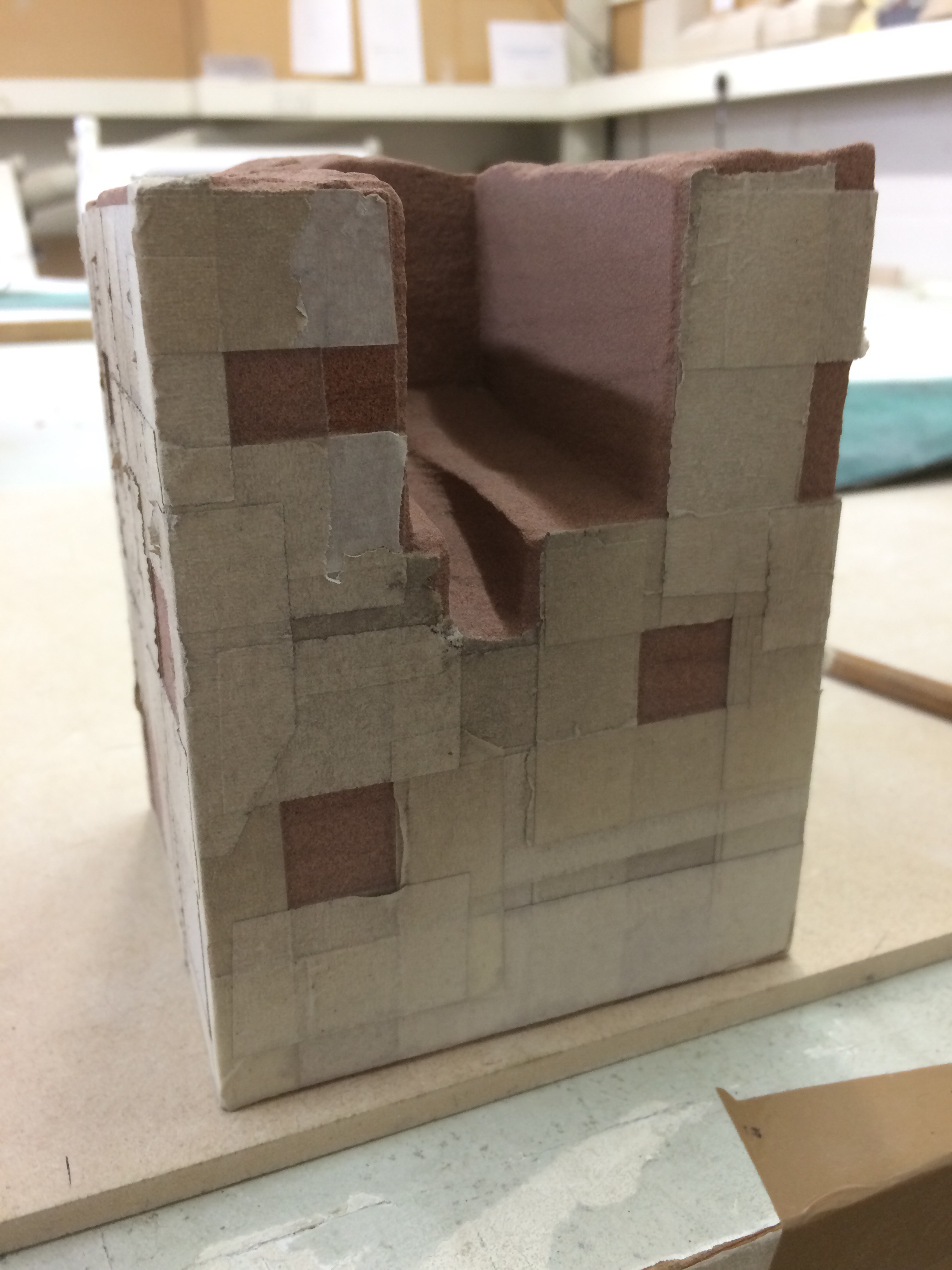
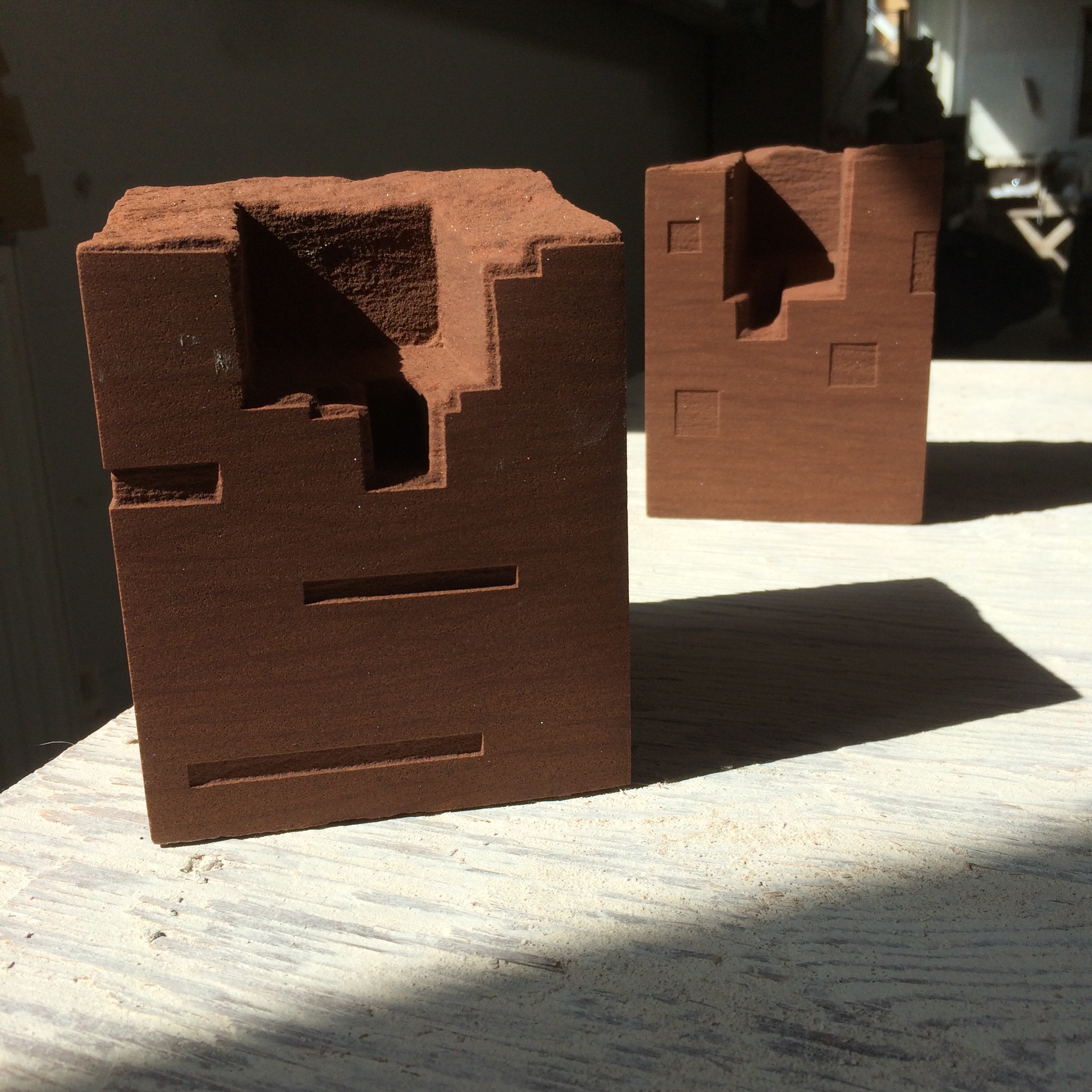
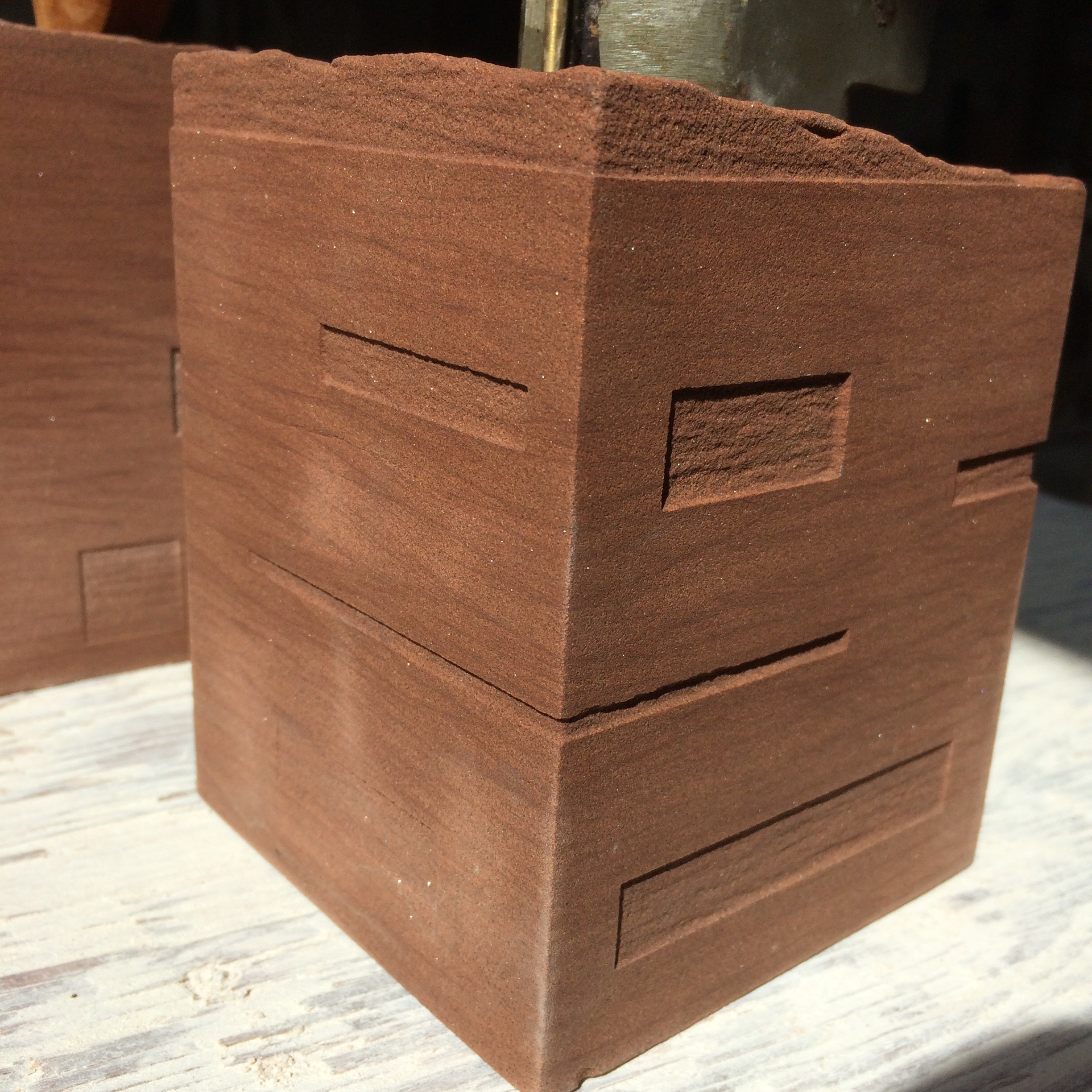
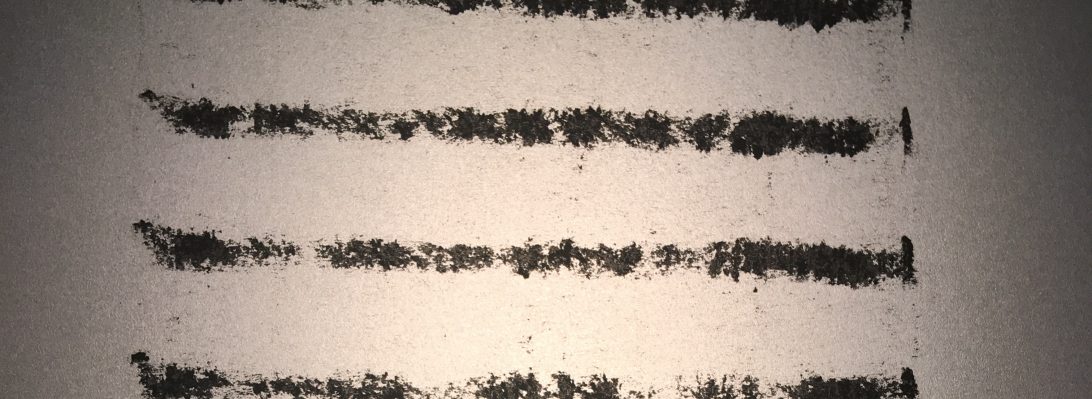
I started with a block of red sandstone as the proportions worked. I intended to act without intention. to simply act. as i began i thought of a ploughed field. I wanted to cut and smash. Id been thinking about why i worked with stone and i think one of the causes is that it involves destruction. where other mediums, painting, clay, involve smearing liquid matter stone requires destruction, removal of dry matter and this for some reason appeals to me. revealing through removal like an archaeology of the self. You get rid of stuff and whats left is Essential. I used a 5″grinder to cut the first furrows at varying depths and did so without drawn lines. I planned to then cut through them at 90 degrees but found myself smashing the ridges off with a lump hammer and cutting another sequence of furrows converging on one point i have no idea why. I smashed some of these off, kept others and continued until it was as seen. Then i had the idea of scribing lines that echoed the furrows like Chinese whispers down into the depths. This was strangely exhausting and I struggled to control my concentration and the tungsten scribe with both hands, the pressure hurting my fingers, trying to flat line near the bottom, little blips of activity popping up like signs of electrical activity, signs of life and then the line disappears into the distant unseen.

Since I wrote this a month ago I have reinterpreted this piece to be not of Nike but, of course of Ariadne partnered as she is with the Minotaur and connected as she is, it seems by a thread to the blood red stone. This is exactly the way I had hoped this project would evolve as the Archetype (this time of The Labyrinth)  uses me as a conduit to express itself.


img_7232img_7231-2img_7228img_7230-2

Plinths for found objects – Labyrinth and Thread

img_7237


If as Dali/Breton said, ‘found objects have been waiting in the unconscious’ I might extend this to all art. I found this piece of what I think is pine, a wild and small sea pine, in Provence by the coast amongst vineyards and forest maybe 5 years ago. Its been sitting, neglected, amongst other found objects in my basement (!) since then.

At art school we would go to the British Museum and draw sculpture. I wasnt very good at life drawing but I was ok at constructing drawings of sculpture. Less pressure, more time.There are some draped figures of Nike there and the marble drapery is cut so deep I could put my entire forearm amongst the folds. This scrap of wood reminded me of the posture of the goddess of Victory, one arm raised, back curved, striding forward.

I started with a block of red sandstone as the proportions worked. I intended to act without intention. to simply act. as i began i thought of a ploughed field. I wanted to cut and smash. Id been thinking about why i worked with stone and i think one of the causes is that it involves destruction. where other mediums, painting, clay, involve smearing liquid matter stone requires destruction, removal of dry matter and this for some reason appeals to me. revealing through removal like an archaeology of the self. You get rid of stuff and whats left is Essential. I used a 5″grinder to cut the first furrows at varying depths and did so without drawn lines. I planned to then cut through them at 90 degrees but found myself smashing the ridges off with a lump hammer and cutting another sequence of furrows converging on one point i have no idea why. I smashed some of these off, kept others and continued until it was as seen. Then i had the idea of scribing lines that echoed the furrows like Chinese whispers down into the depths. This was strangely exhausting and I struggled to control my concentration and the tungsten scribe with both hands, the pressure hurting my fingers, trying to flat line near the bottom, little blips of activity popping up like signs of electrical activity, signs of life and then the line disappears into the distant unseen.

Since I wrote this a month ago I have reinterpreted this piece to be not of Nike but, of course of Ariadne partnered as she is with the Minotaur and connected as she is, it seems by a thread to the blood red stone. This is exactly the way I had hoped this project would evolve as the Archetype (this time of The Labyrinth)  uses me as a conduit to express itself.


img_7220

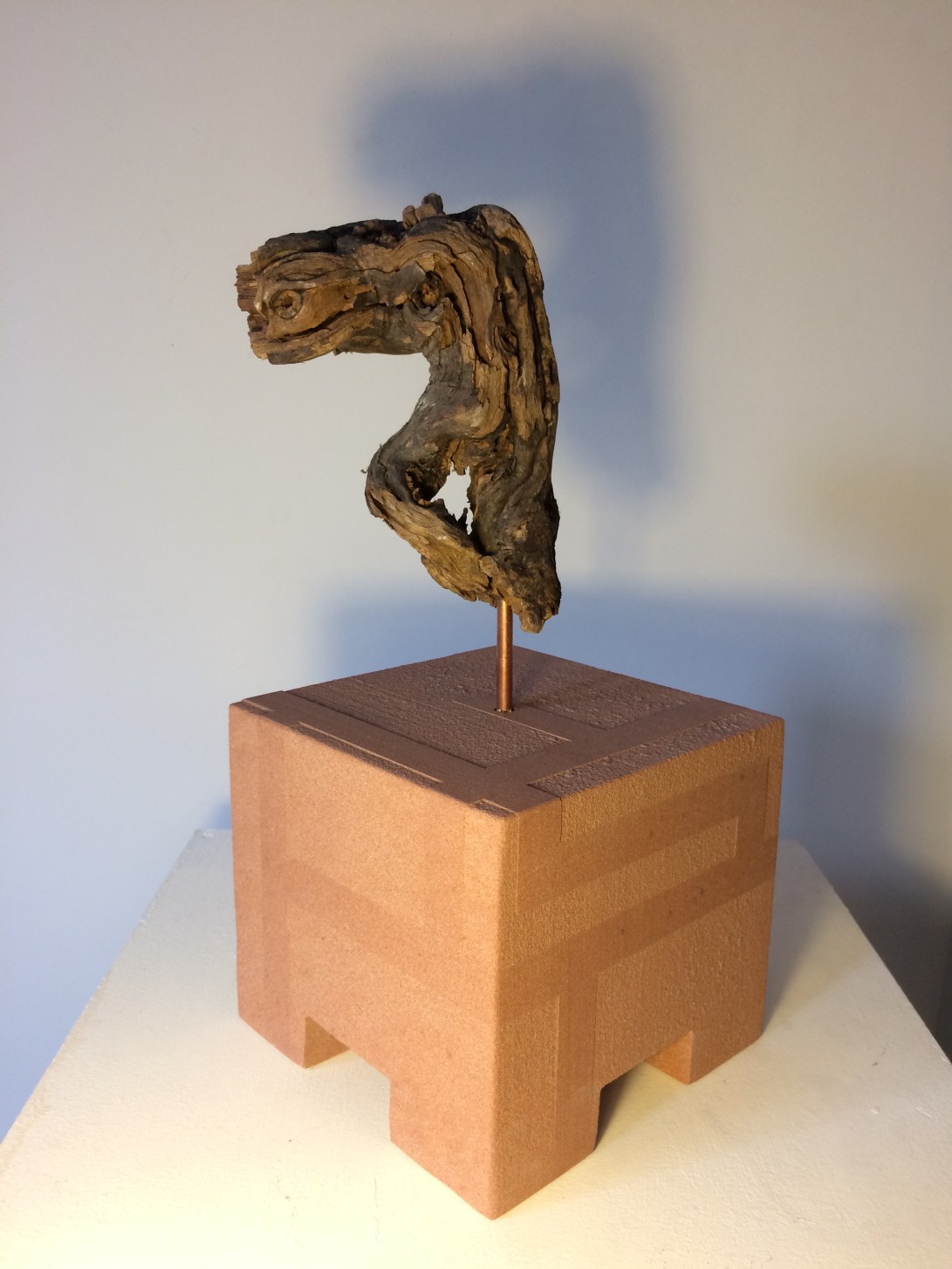
This the second in the series begun after Field For Nike was finished. This fragment of old grapevine was spotted from the road on a walk through the vineyards of Provence laying on and coated in the clay soil of a newly planted field, a vestige then of ancestor vines discarded in the ruthless regeneration. It caught my eye from 20 yards in the exaggerated contrasts of light and shade, heat and cool, waiting…

i saw a minotaur immediately in fact Ovids minotaur captured in the act of metamorphoses it ended up in the basement of my house for years until last week when I took it to be rehoused.

Again i had a piece of red sandstone that lent itself to the project. Ive been thinking about plinths for a while but more for other sculptures rather than for found objects. Brancusi was a master of the art of plinth making to the extent that his sculptures were not just placed on them, framed by them as it were but completed by them. I have been thinking about how, if a sculpture was in and of itself complete it shouldnt require a plinth (by plinth I mean both a base and/or a stand to raise a sculpture off the floor) (but really i should play a little with this and not take it so seriously)

in a way i am trying to subvert the idea of what sculpture,  and what a sculptor, is. The plinth is a secondary item, a device, like a canvas or a frame, or lighting that smooths the way from the artist to the viewer, it facilitates, sets off, contains, completes. The contemporary artist is the Creator, taking all the credit and ownership, you the viewer/buyer/consumer are honoured to be a witness, owner of the vision of the Genius.  The Gallery Museum cultivates the ambience of the Place of Worship. Listen to the Creed, the Dogma on the head phones as you waltz around. The plinth is the catafalque, the sepulchre, carrying, containing The Relic raising it up, above, separate. But if all art is an expression of the unconscious (if not then what?)  the artist is a conduit for shared data available to all. By sculpting the plinth for a found object i am facilitating the availability of that data to all through metaphor.

I had intended to scribe on by hand some representation of a labyrinth as with the ploughed and excavated Field For Nike as a metaphor for the mechanics of the Unconscious, the labyrinth being a rich symbol of the journey from birth, to life, to death and rebirth.

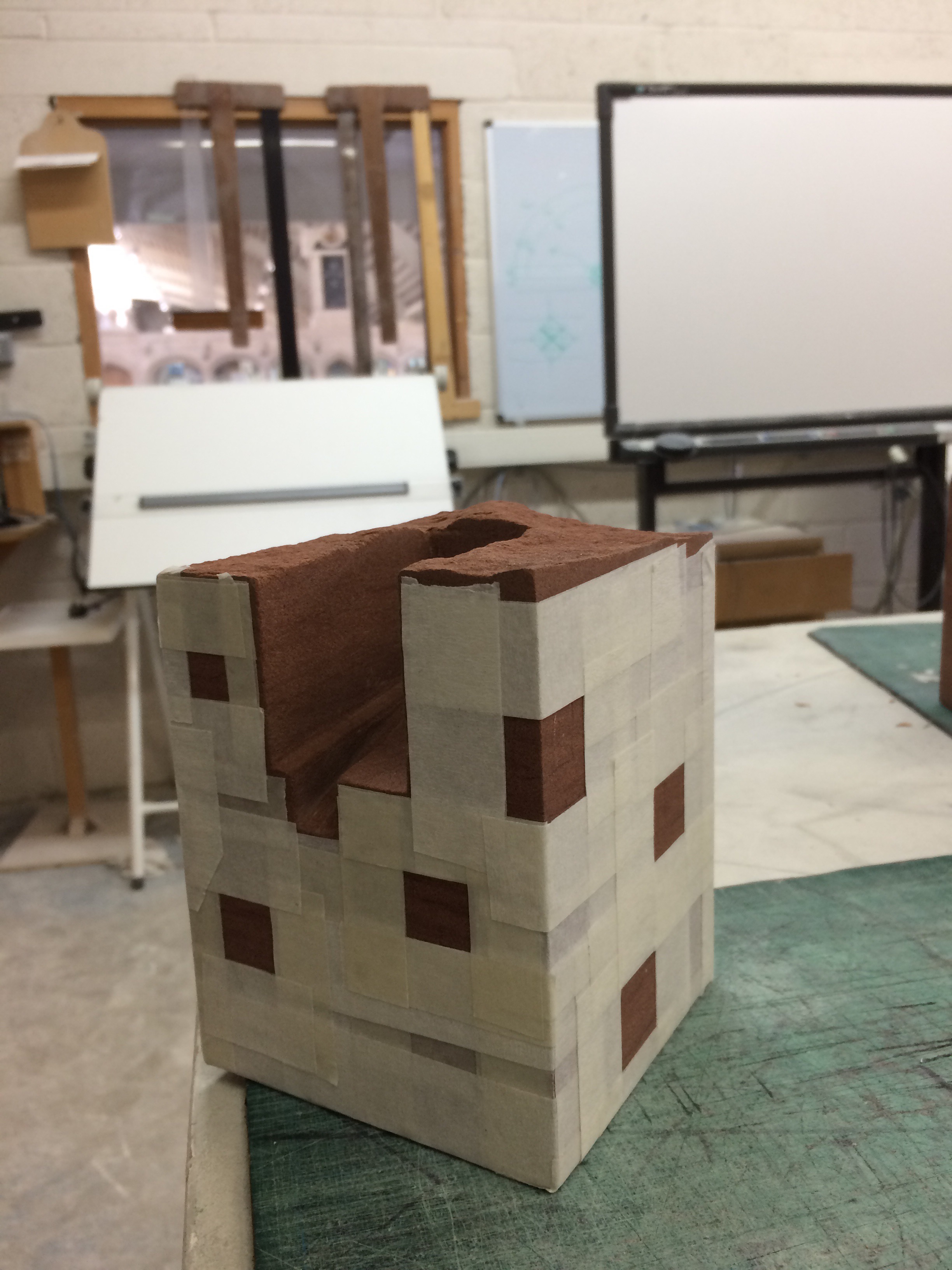
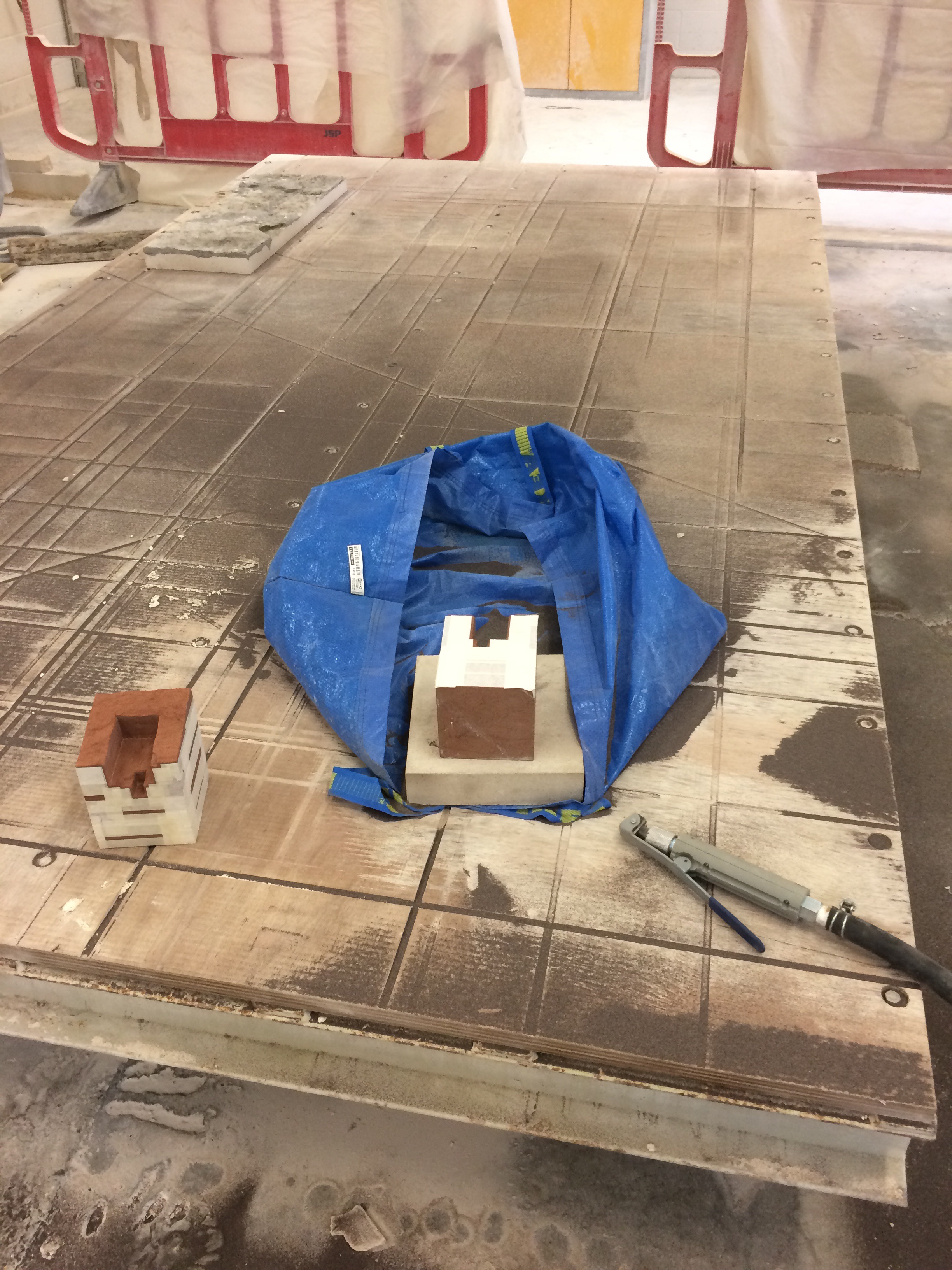
The idea of using tape and sand blasting came to me at the point at which i was about to start scribing. I polished the stone through the grades from sawn to 400 grit. jetwashed and dried to remove dust to allow masking tape to stick and then applied tape without plan or thought just balancing the space and area. Double taped it to resist the sand and blasted it. Messy. washed it again. thrilled at the effect. Drilled it, drilled the wood, cut the copper, put it all together.

The male and female coupling was pleasing and unexpected and continued into the next pairing of found objects, Queen and King.


Portal contd

when we say “I had a dream last night”

is this correct?

i actively dreamt?

MY dream?

i fell asleep, dreamt, woke up?

the dream begins when I enter rem sleep and ends when rem sleep ends?

and the dream is a way for me to process information from waking life, sift, siphon, distill?

or…

the dream is always there

I am conscious of it in different ways

i wake up and remember it

i write it down

the dream itself hasn’t ended

it continues but I am only aware of it at a different level of consciousness

not one that is immediately recognisable in the waking state

the dream is always there

always

for everyone.

it is a way for the Unconscious to feed data to us

to nudge us towards what Jung called Individuation, Consciousness.

The data is fed to us from an ocean of information, just as instinct and DNA informs our physical behaviour

this sculpture is about the portal through which the data passes.

Portal

img_7194

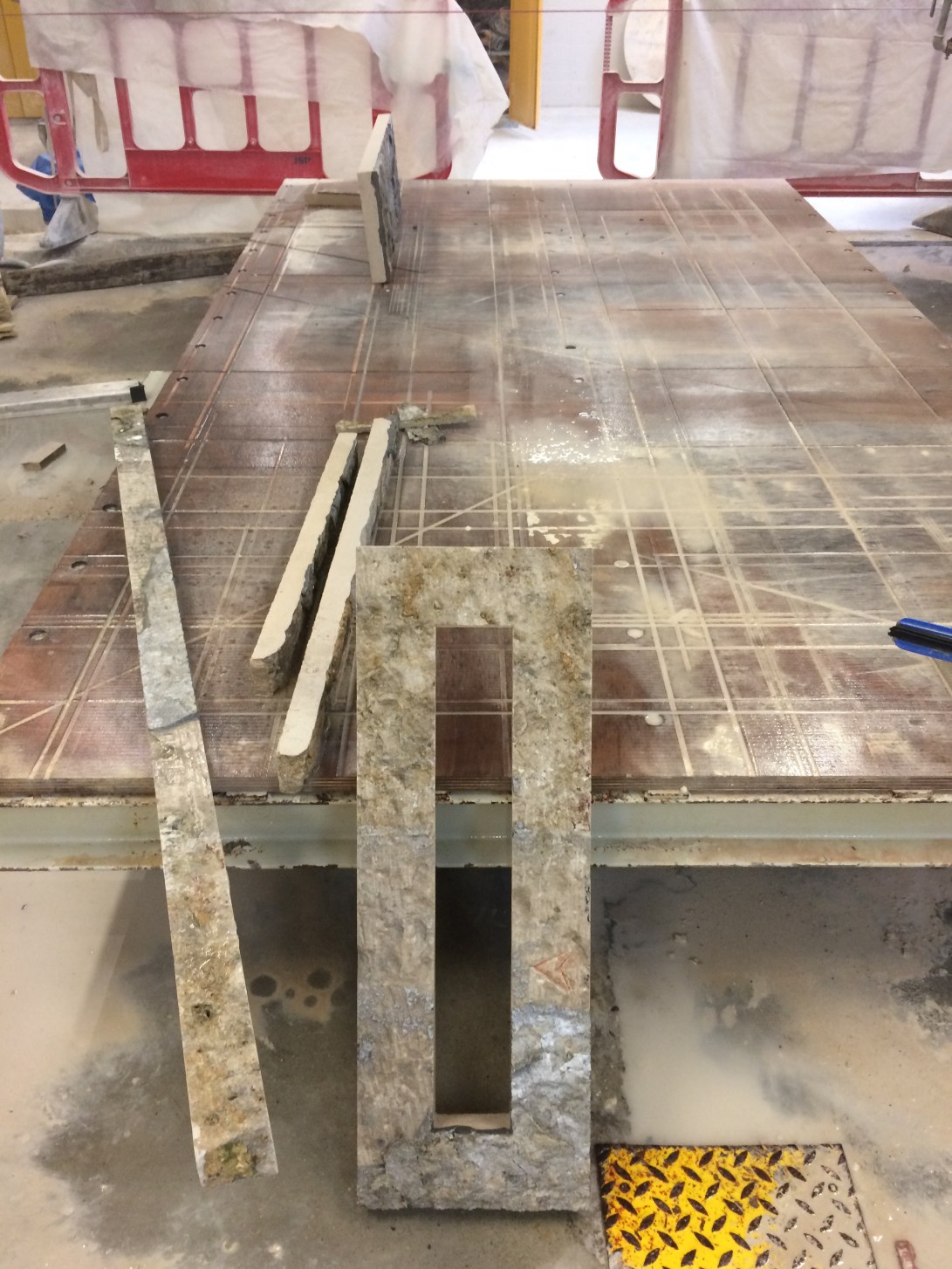
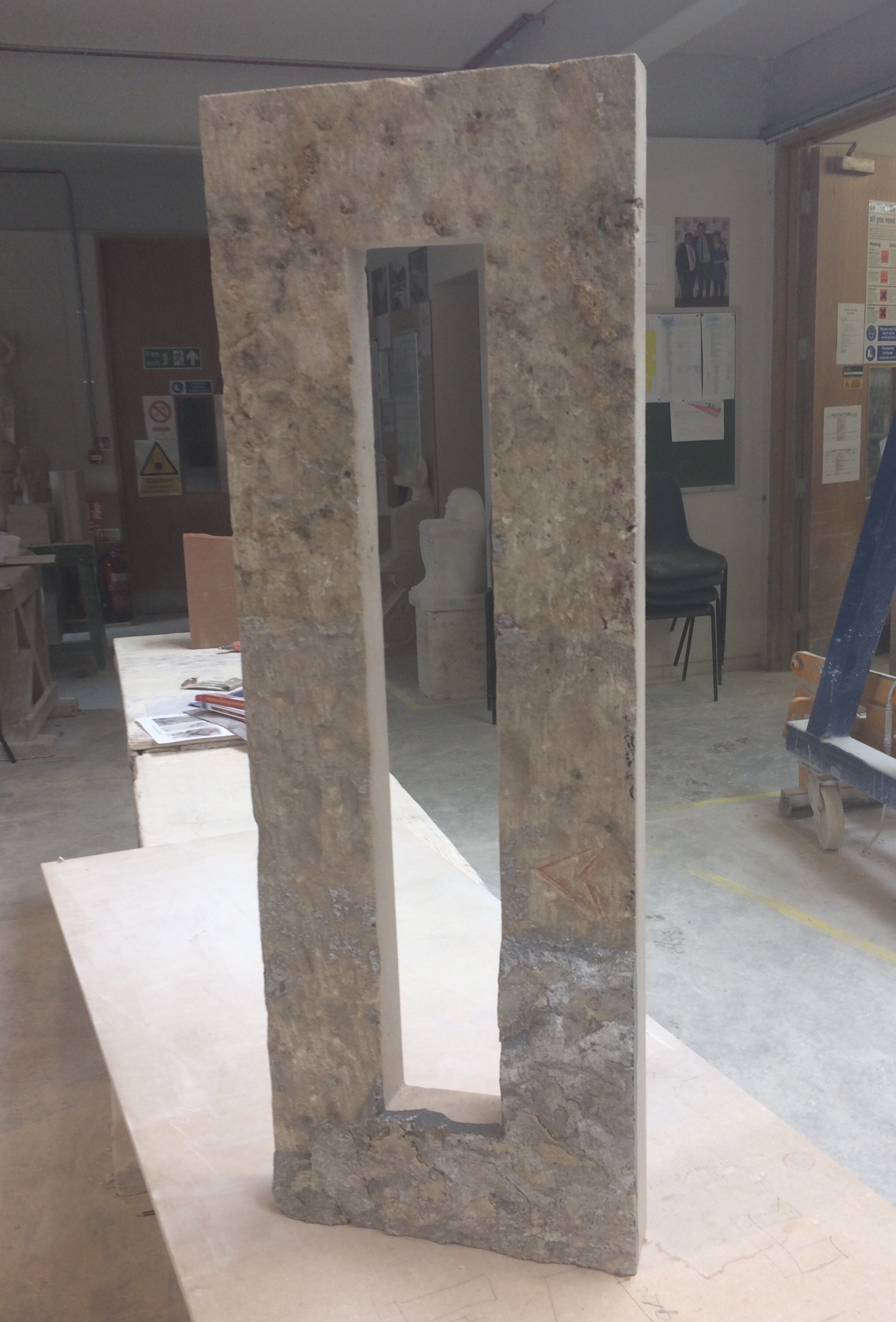
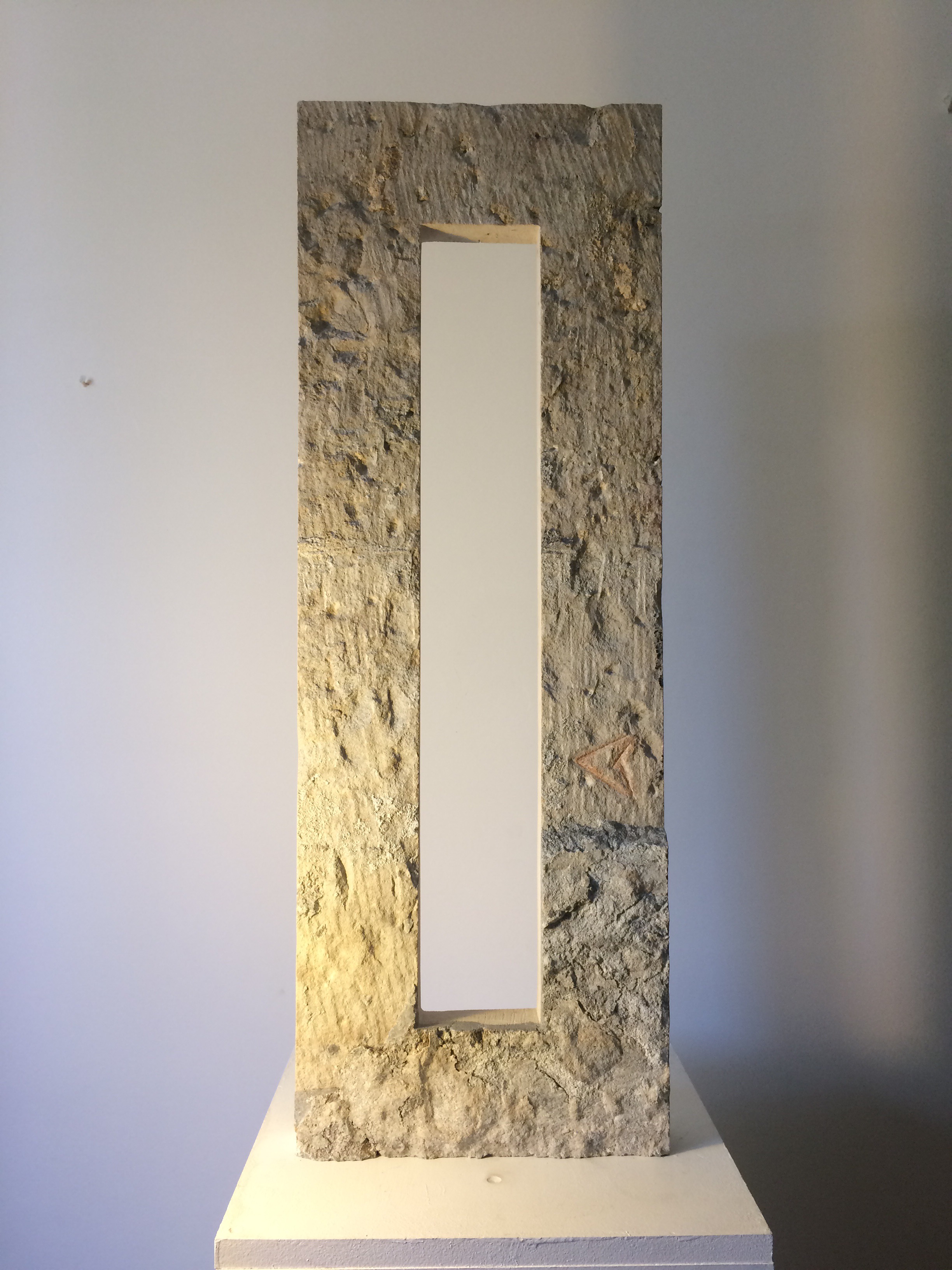
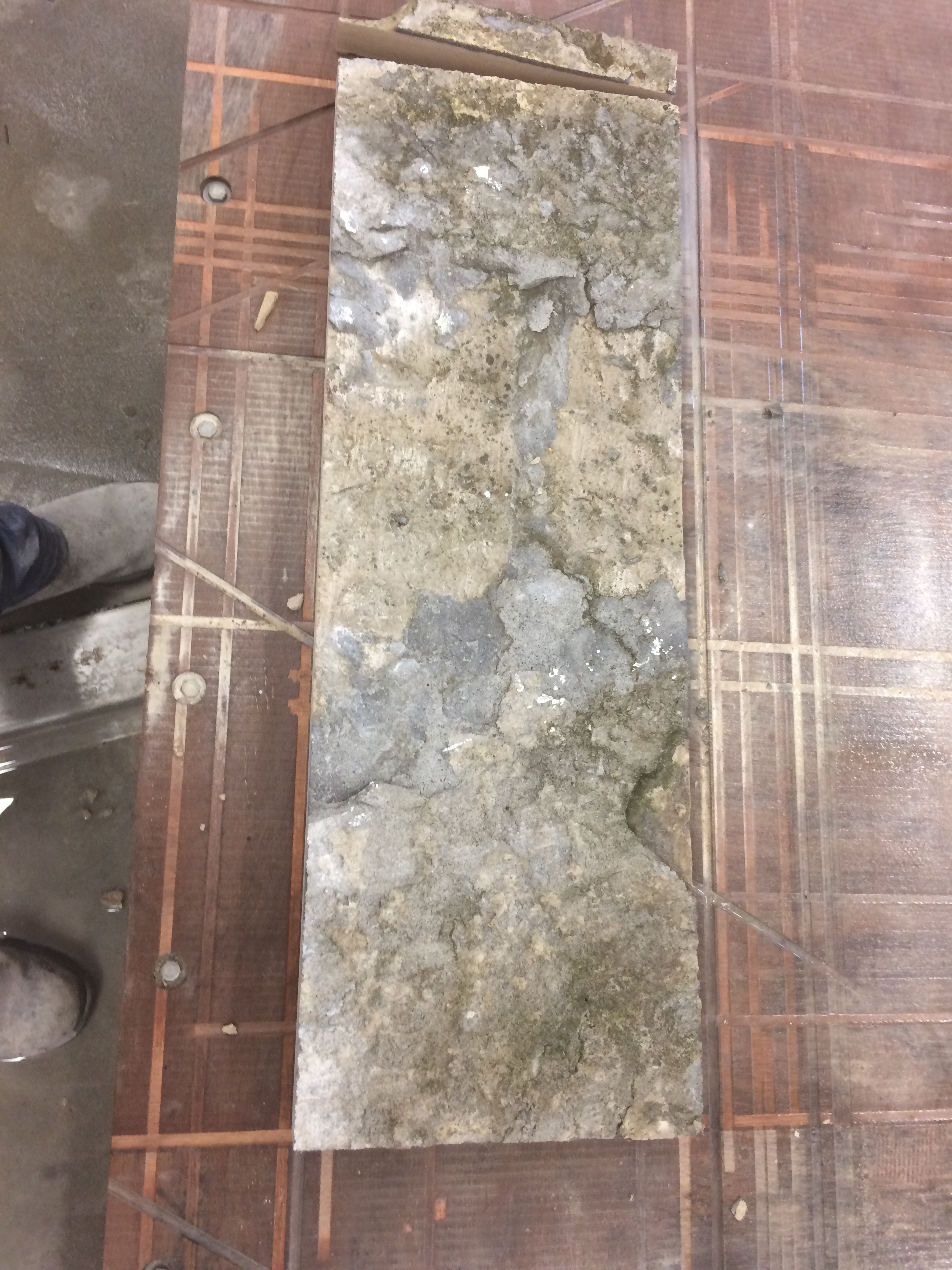
this is something I’d been wondering about for about a year. To take a piece of salvaged stone and use what would normally be discarded as waste for a sculpture. In this instance I had a large block of Portland stone salvaged from the Blackfriars Bridge regeneration project. We used the bulk of the stone for a student project (gothic tracery rounded window) and I set the off cut aside rather than chuck it in the skip. It’s covered in cementicious mortar that would have bonded it to the next stone. It was approx 2 m long coming from an original block of 2/2/1 metres that would’ve weighed around 3 tonnes.  Having been part of a bridge for around 100 years the stone increases  in hardness  and with the cement was difficult to work with. My original idea was to use the entire 2m length for one sculpture but as I assessed it on the saw table it occurred to me to use half and maybe a pair. Looking at the pattern of the cement, the absence of cement, the staining and the tool marks, inc the original masons mark (crudely carved as proof of who made it and who therefore should be paid for it),and the ratios and proportions that hinted at form, I judged the long and short cuts to be made on the table saw. then I took one half , drew on the cut out based on one third of width and used a 9″angle grinder to cut the lengths and a 5 ” on the widths. However, while the 9 cuts the depth the 5 could only part cut the depth of the width so I had to stitch drill the length and chisel one end free. Using a lump hammer to pop out the cut out in one hit was very enjoyable. The rest of the job was hard work. Drilling, chiselling, filing, riffling and hand rubbing. Final high pressure wash. Very pleased. Took home, photographed, delivered to client next day. They loved it

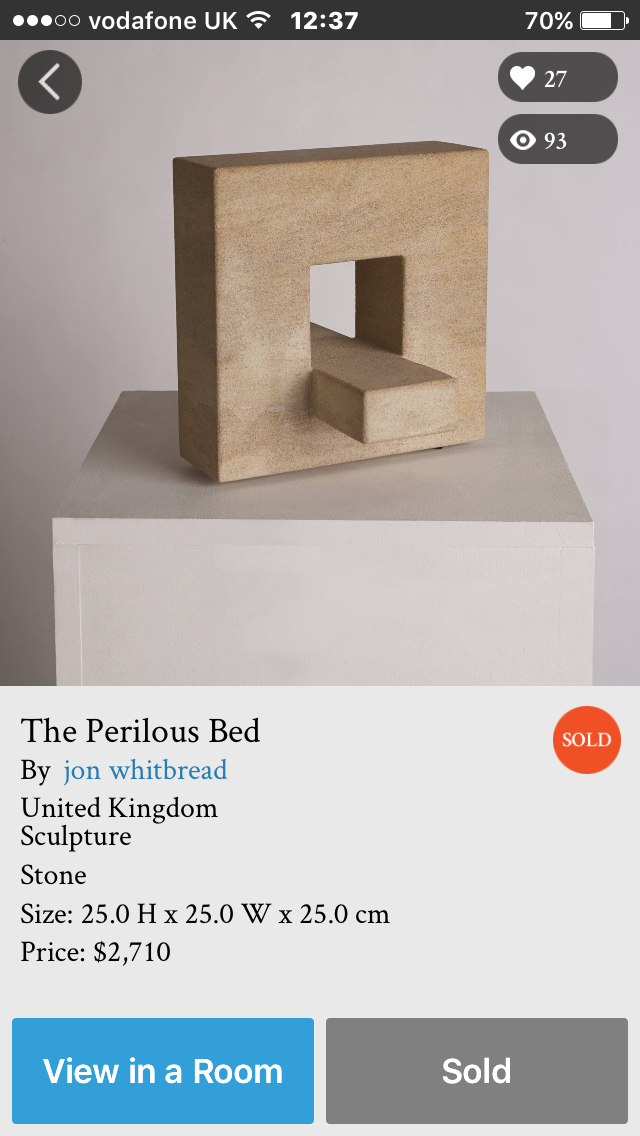
Sold

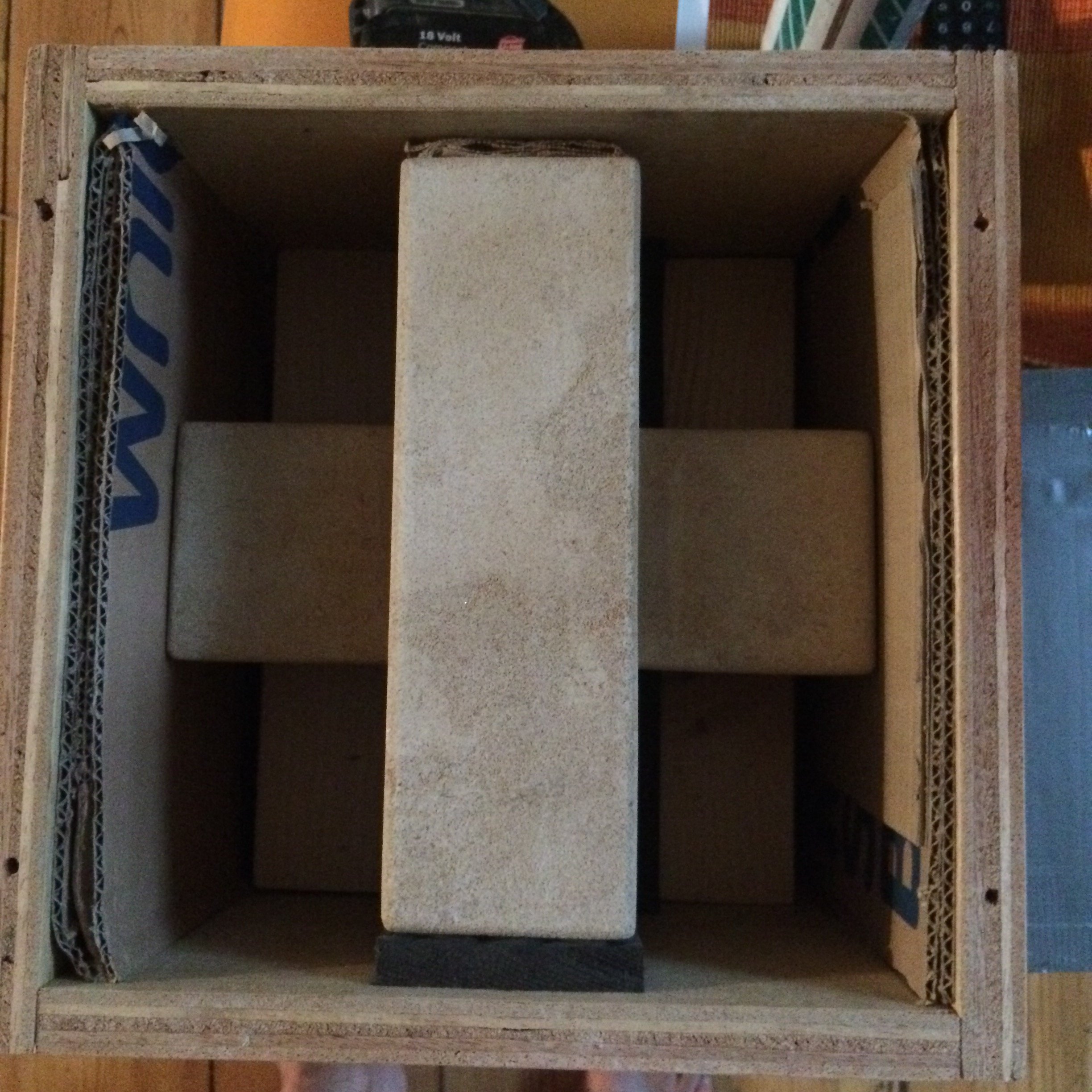
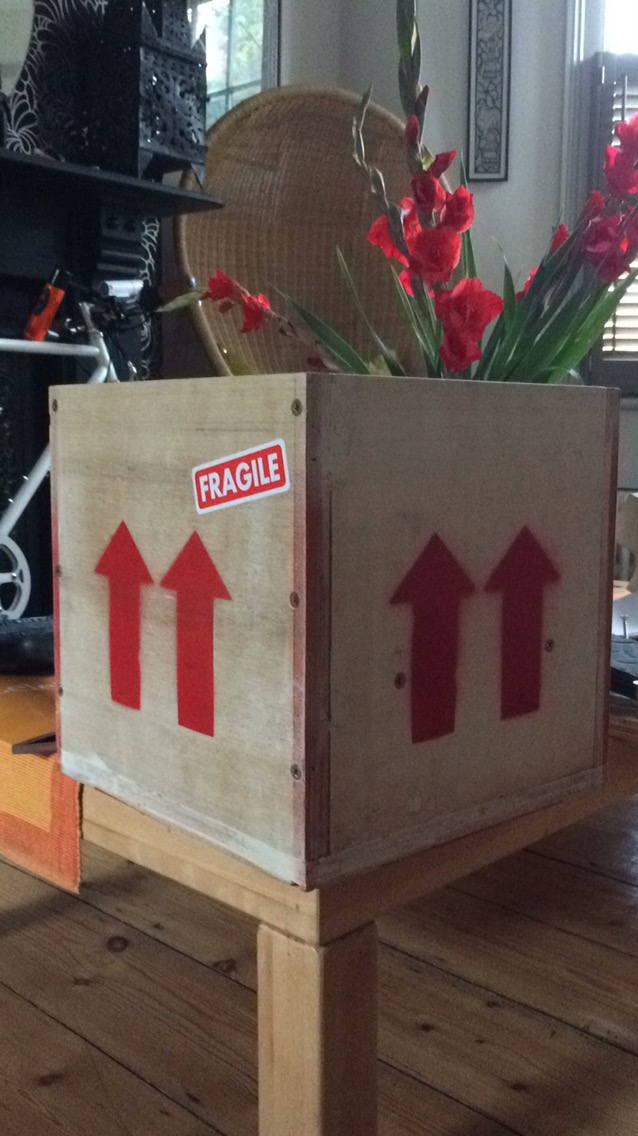
In July I received an offer for The Perilous Bed, designed a crate for shipping, filled out lots of paperwork and a courier took it to the buyer in France. The experience was surreal. I had no contact with the buyer. The money is held by the broker ( saatchiart) based in the States who take a fairly standard 35% and the buyer has a buy or return option lasting 7 days. So it’s great for them but disconcerting for the artist. The sale was completed so my sculpture is now in the collection of a person I have never met or spoken with.