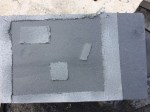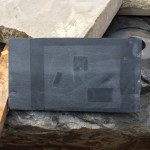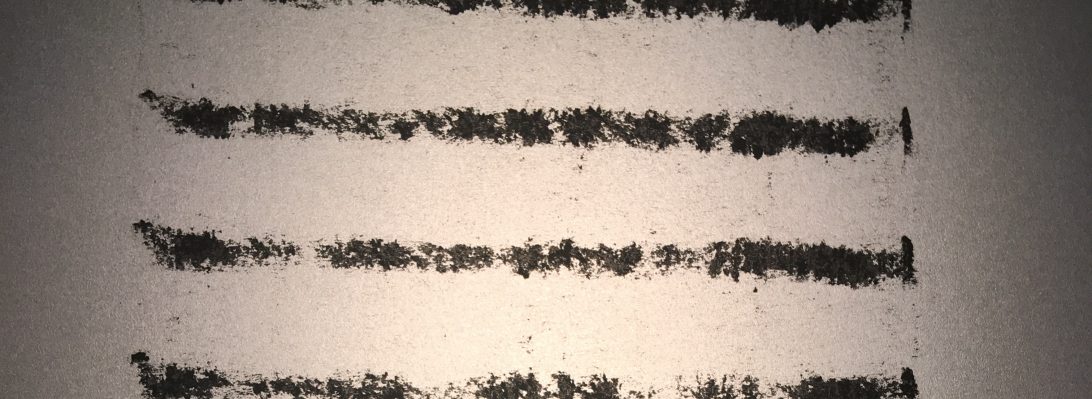
More making


: sandblast sculpture

materials: compressed air, sand, 90 gsm paper, charcoal, pva, timber

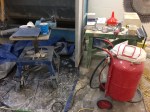
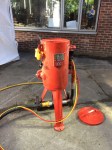
equipment: compressor, sand blaster, clamps, a-frame, banker, water wall dust extractor

intent materiality: dust noise vibration pressure wind vortex chaos melting erosion

reason:

environment: MA

purpose: exploration

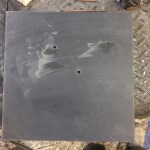
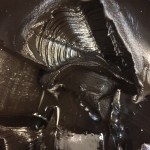
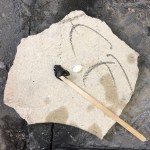
conclusions: paper and pva resist sand blasting. sandblasting turns paper brown

emotions: trepidation fear horror surprise disappointment curiosity


This pseudo-scientific introduction is reminiscent of doing o level chemistry

(apparatus: bunsen burner litmus paper acid alkali potassium pomangenate…)

(a metaphor for contemporary art practice with its epistomology, ontology, metaphysics, theory, discourse, categories, research, exploration, fragmentation, findings from failure, vitrines and tele-micro scopic differentiations. Ironic that contemporary, post-modern art uses the language and method of Enlightenment Modernism. But does it do so ironically? Indeed does it do this at all or is this me imposing my modernism upon post-modernism?)

Here I seem to have attempted to penetrate my modernist aesthetic using a suitably wide set of materials and methods akin to alchemy, or proto/pseudo-science (is contemporary science really pseudo-alchemy? Alchemy was as much proto-psychology as proto-science, or even a new expression of older ongoing psychology and ideas of individuation)

Philosophy seems to have expended its energy on our relationship with things. But all it has to show is what we have always known: We can only have relationship with ourselves. There is the territory: the only territory we can explore with written/spoken/thought language. However there are other languages eg faith (aot religion, and which btw i lack but do not discount) and art. Maybe there are others. In fact much, no, all, of art and literature has left a record of the exploration of that territory and its’ topology. What else can it be a record of? Even the language of mathematics has to interface with us at a certain wavelength. Or rather we are the interface of that language.

At the same time I am thinking, looking at this object that ‘I have made’ and reflecting on life, as my father dies, that life generates from a centre, not a beginning. That life is non-linear but generative, multi-dimensional and even non-temporal in the human sense: think of the big bang as a centre rather than as a beginning and therefore, of our lives as layers of expression rather than linear narrative.

‘When you will have made of him a body without organs, then you will have delivered him from all his automatic reactions and restored him to his true freedom’ (Artaud)

when I work I am demolishing structure, attacking solid form and creating dust clouds. The dust cloud is made of the material I am attacking and is equivalent to it. If i am sandblasting a me shaped impression in stone or paper I am creating a dust cloud shaped ‘me’ in the atmosphere. Some of that dust goes onto me and some goes into me.

What is it like to be me? What is my me-ness? my haecceity? where is it located? What are my structures? Do they serve me well? Am I conducting experiments in attempting to demolish my structures?

‘what is it in this stone by which as by a proximate foundation it is absolutely incompatible with the stone for it to be divided into several parts each of which is this stone, the kind of division that is proper to a universal whole as divided into its subjective parts?’ (Duns Scotus, ordinatio II)

Am I attempting to demolish metaphor so that in my work ‘this is like that ‘ becomes ‘this is that’? But then isnt that a metaphor for my desire to isolate my me-ness as an expression of univocity? Can I separate my work from me so that it is a thing directly of nature rather than a creative act with me as Transcendent Creator?

Is the this-ness of an art object, its haecceity,  within it? Within the space it occupies/displaces?  Or is it also to be found around it? That is, amongst the factors that led to its existence – the process and the material. Is it the everything-ness of the thing? Can only the everything-ness, all of its data, be the thing? But the everything-ness must include all responses to it, all opinion, and this involves flux.
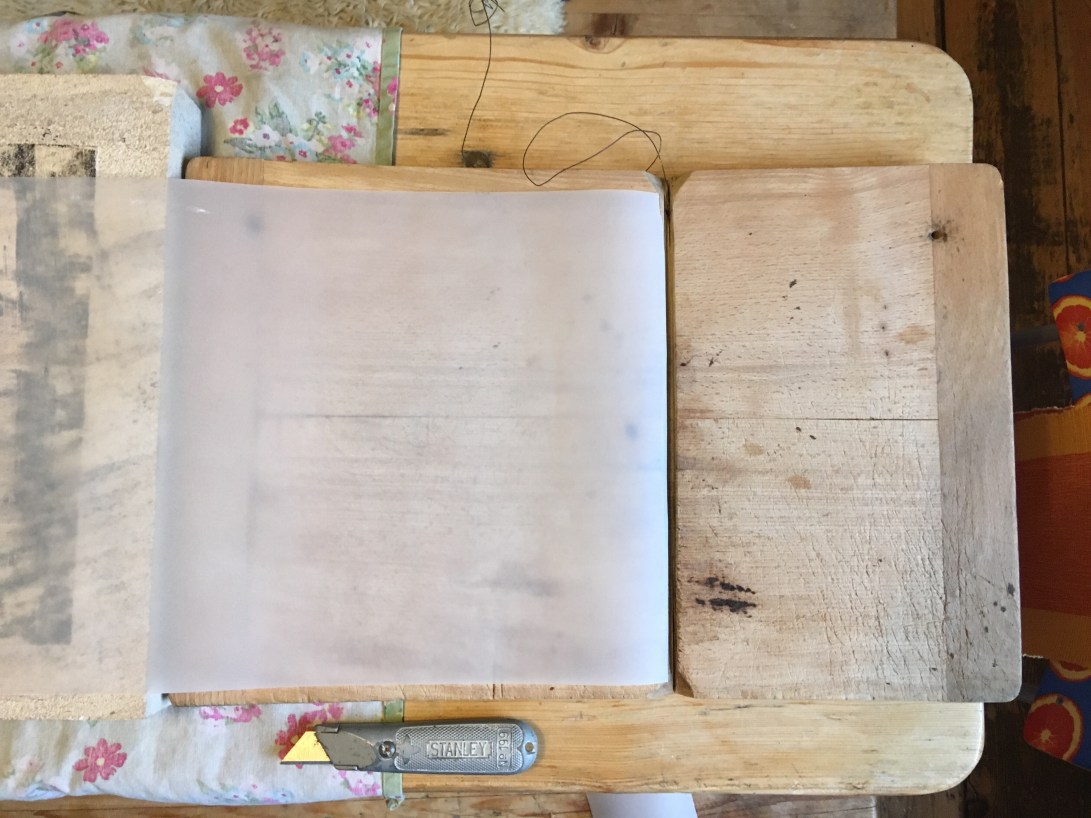
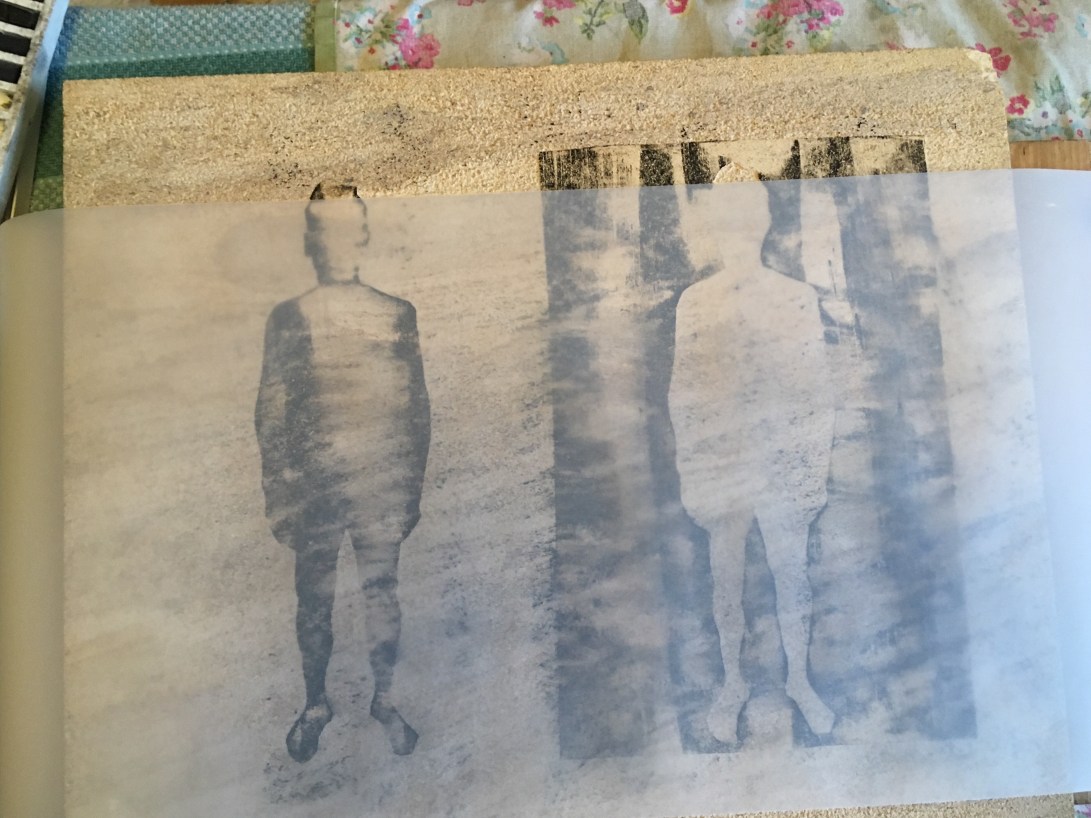


Making Day

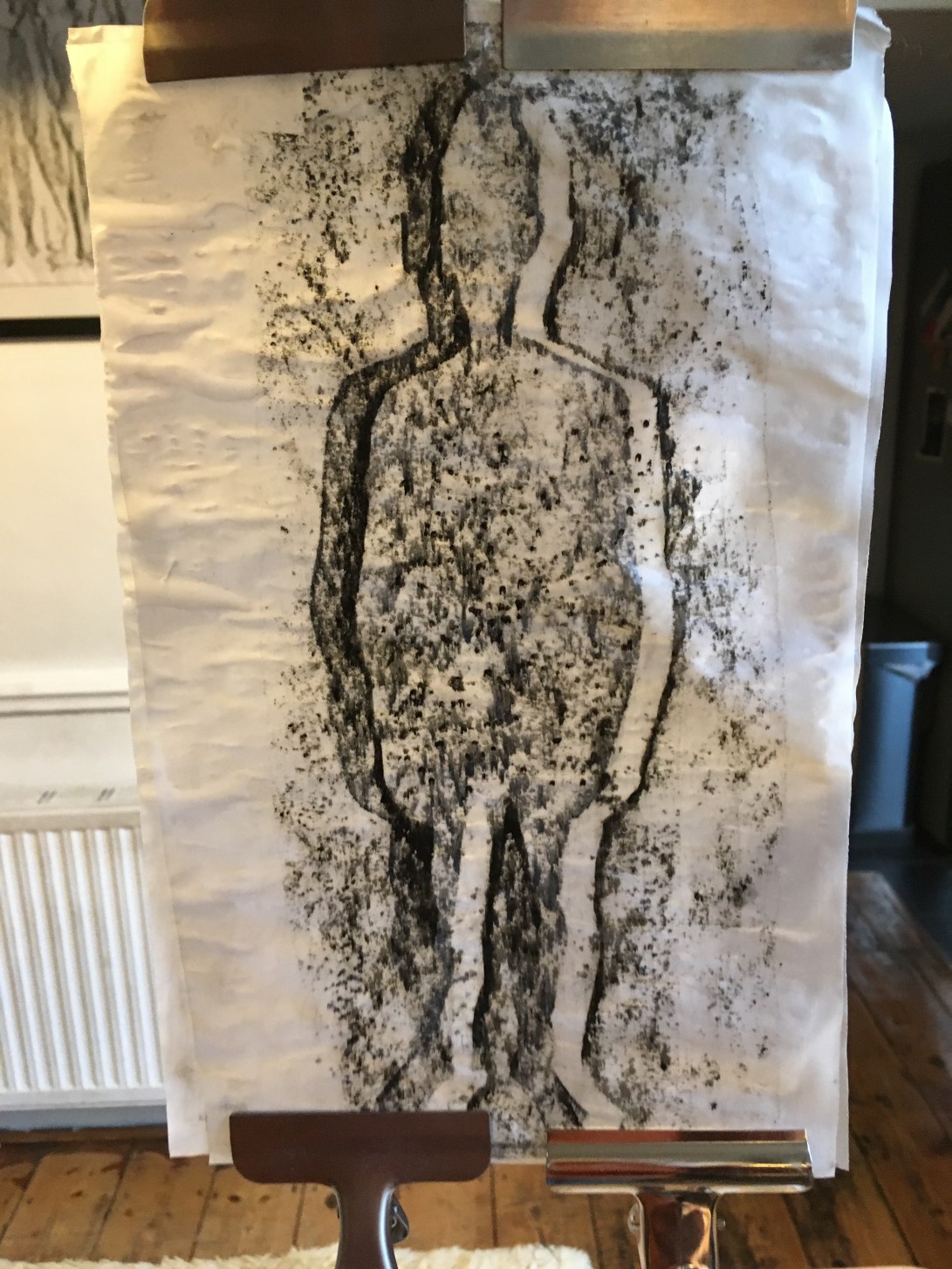
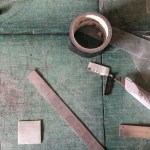
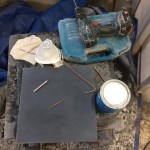
90 gsm paper, carbon paper, charcoal, pva, water, grandfathers cheese slicer from his shop, metal clips, stanley knife, sand blasted limestone, tripod, iphone, table

intent: hand print images then sand blast them


in my attempt to lose my own thread, get lost in the maze, i cant quite remember where this all began. I know that ive made some sculptures, some drawings, some drawn on sculptures, some sculptures that are drawn with air and sand, some drawings lifted from sculpture then fed back in to sculpture. here i seem to be building a sculpture made from drawings of sculpture that i intend to sculpt with sand. The sand and compressed air, or sand and wind, is an accelerated erosion. Destroy to reveal. Obliterate to read. So what?

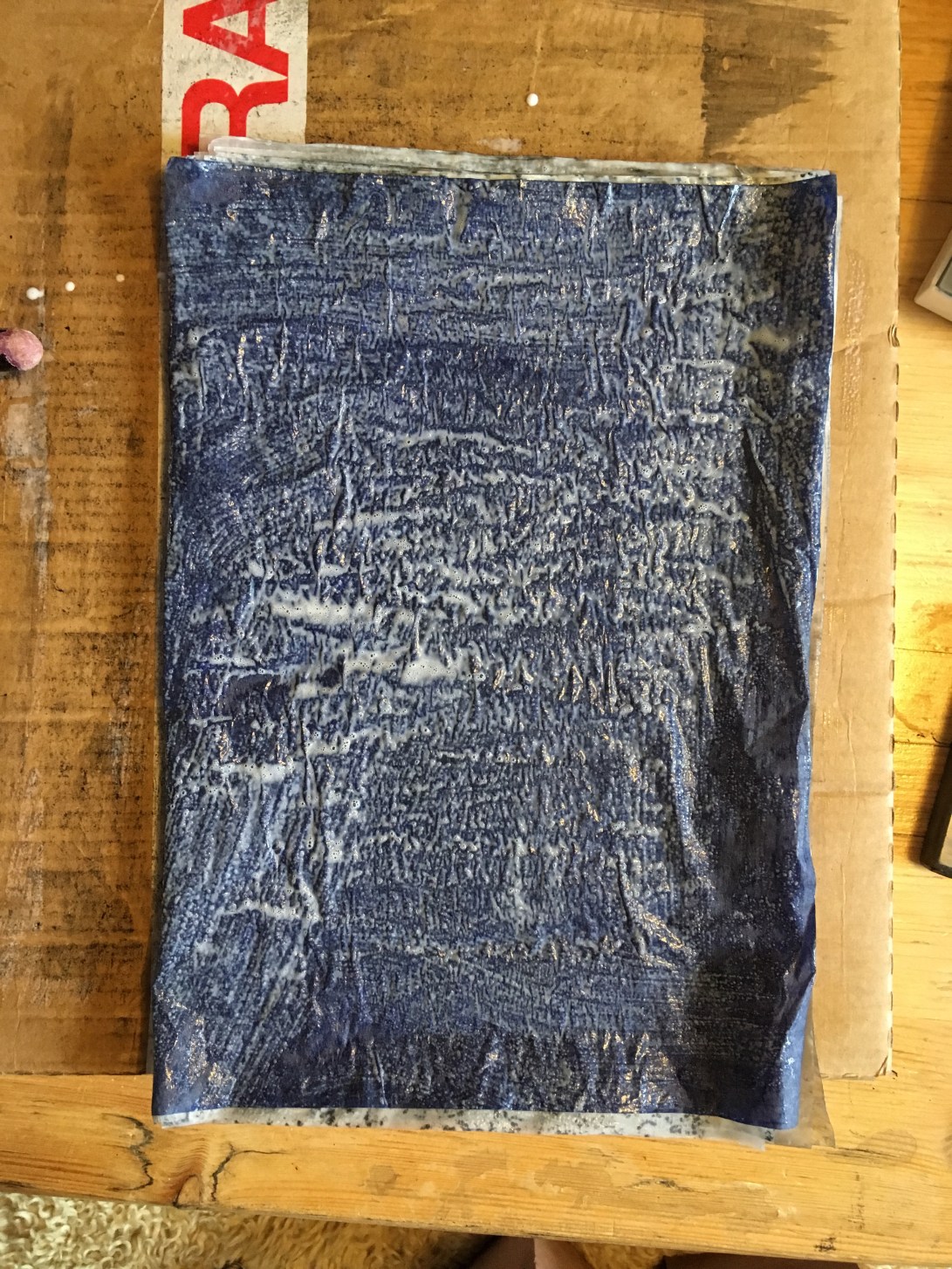
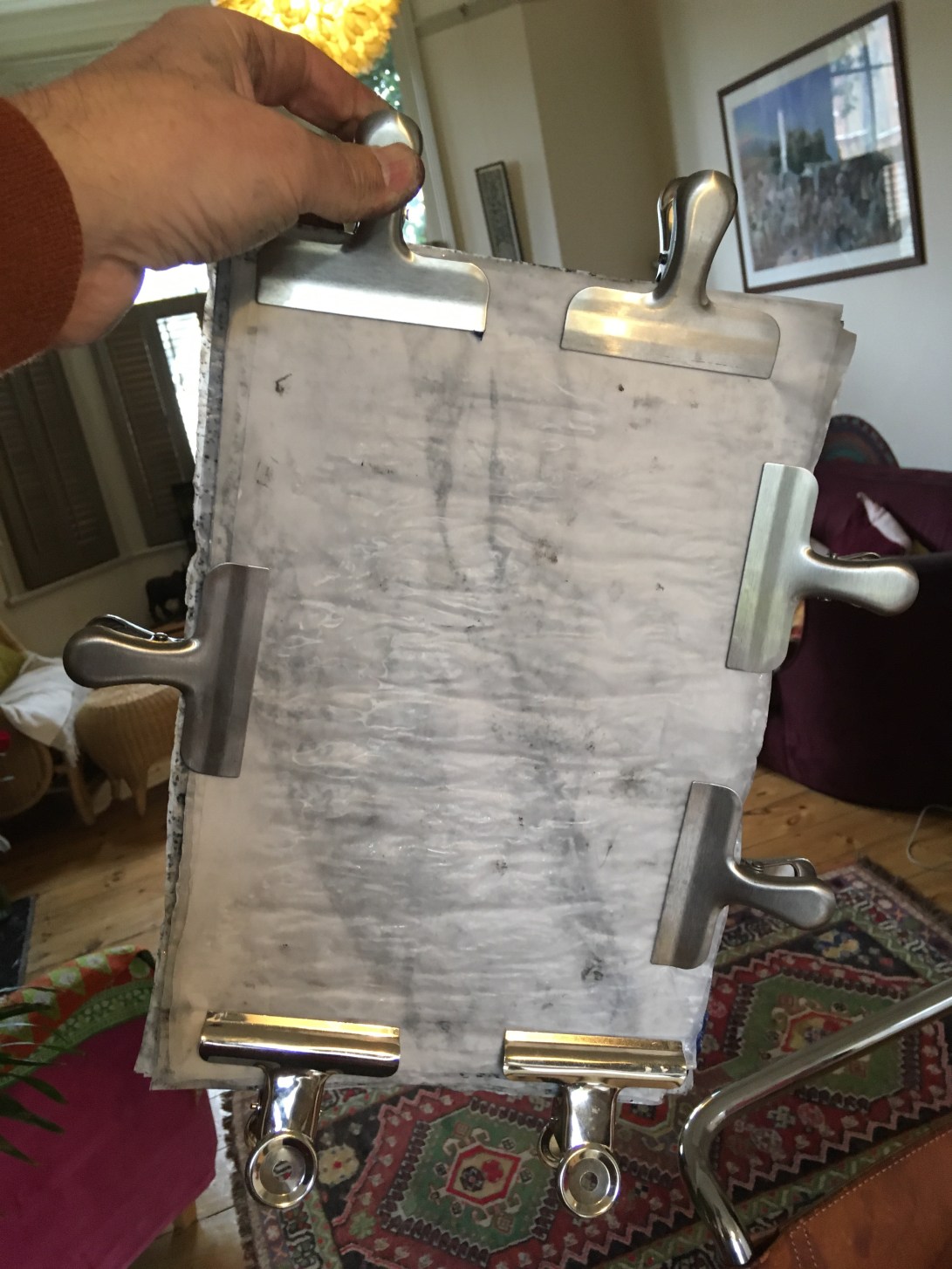
pressing the wet, gluey paper together it felt fleshy meanwhile my dad is dying in a hospice, desiccating, oxidising. When i touch him there is only skin and bone. As i built this object it became about me and him. The last few drawings were slight and gestural. the last two were blank. skin. trace. no trace.

addressing materiality – list

above tools and equipment

plus

sensual nature of materials including

sound

texture

sight

other

other?

do i believe in the materiality of art making?

do I even consider the material?

what is the material?

Its a medium.

a sound

a sight

a texture

thus a sensuality

thus a way between.

a between.

between what

the real and the known?

the reality and the knowable?

the me and the other?

the unity and the duality?

the transcendence and the immanence?

(palpating the unknowable (Deleuze), layers of catholic ‘magic’ (Campagna, 2018) unknowable imagery with protestant ‘technic’ knowable word)

the slicing and separation

the refamiliarising and appliance

the gluing and layering

the conversation…


Hayley Lock


On Reading ‘Falling Into The Void’ by Hayley Lock

Hayley writes of ‘the void that surrounds (us)’ but what about the void within? Can The Void perhaps be the space between material reality and the more real but less familiar, non-material reality. Its where I go when I fall backwards into the eternity of a two minute wait for the next tube train. The place beyond Boredom that seems at first glance empty but which is, like the deep ocean, full of nutrition, or, like deep space, teeming with information. The Void is the threshold from which most people recoil in a panic and quickly fill with their mobile phone, book, newspaper, worry, anxiety, crisis etc. We are losing the ability and desire to spend time with ourselves. Even yoga has come to resemble a sport. Like Seyerls bubble – all surface no content, or Arendts ‘on the earth’ vs ‘inhabit the world’, we live materially,  on the surface of ourselves and the Earth, oblivious to our depths and to the universe. Materialism requires that we place ourselves, individually and philosophically, at the centre of cosmology. Yet the journey into ‘space’ is the same as the journey into ourselves. Going further and going within are the same direction. ‘Nothing’ is superficial. Sink down into it and it is Everything.

The whole thing is made trickier by the fact that that ‘Nothing’ is a word and therefore something. It lends itself to wonderful paradoxes. King Lear frets that ‘nothing comes from nothing’ and is lost in its inescapable mad loop. It says much of the relationship between word and thought, material and non-material, Techne and Magic. Scientific Materialism, our current paradigm, confidently insists that Arendt’s World can, must and will be described. Hayley Lock quotes Heidegger’s ‘the nothingness itself nothings’ where he seems to be trying square this circle. It is the insistence that nothing is ineffable, when in fact Nothing IS ineffable lies at the heart of the paradox. Insisting that nothing is ineffable places us at the centre of things and so outside,  seemingly god-like but in fact alienated. Saying that Nothing is ineffable activates The Void and fills both it and us with creative data. Pressure equilibrates. The bubble bursts. Object and Subject reconcile.

‘Black’

Fludds primordial Black referenced by Hayley Lock, might also have been the Alchemical Nigredo, the blackening – sth to do with cooking matter until it is primal. Jung interpreted this as a dissociative stage before Albedo, the Light, or the whitening. Ive just read a short story by Hemingway, ostensibly a simple tale of a solitary fisherman. But to get to the idyllic spot from where to cast his line he has to pass through a town that has been burned to the ground. The surrounding land is blackened. Even the crickets have turned black. (as I write this a house is on fire across the road – the smoke is stinging my eyes). He is the Fisher King traversing The Wasteland, preparing himself in the sunny spots, the Albedo, the Light for the journey into the swamp, the Wyld Wood of deep consciousness. But did Hemingway know he was using ancient memes? His novel Fiesta also seems to use themes of wounds, bulls, infertility, chivalry, Amor, fishing, whilst ostensibly narrating a straightforward semi-autobiographical tale. Or is this a case of (Jungs) Archetypes forever bubbling up and nudging us in a particular direction? Is Hemingway referencing memes and archetypes or are they referencing him?

And does that nudge come from our instinct?  from nature? reminding us that we are non-material as well as material beings, participants of  and not just witnesses to the void that is Everything?


Gursky, Picasso, Whiteread

Gursky at the Hayward

Big flat expensive perspective defying photographs

one mans battle against parallax

technical experimentation, cut and paste, photograph as painting

postmodern materialism and its effluent.

He takes photography, flattens it, abstracts it, then with nowhere left to go, paints it.

I was occasionally minded of a cross between Jacques Tati, Monet and Wheres Wally.

The Hayward is a fascinating space. I know its surface textures intimately from my skateboarding youth but I haven’t been inside the gallery before. The skylight ceiling upstairs is a joy. The pace and measure of the show was human, generous and belied the weight of the material that could have overwhelmed but didn’t.

*

PICASSO 1932 – LOVE, FAME, TRAGEDY at Tate Modern

Picasso the soap opera

This had the lot – love, fame, tragedy, octopuses.

Shock revelation – artist responds to life.

I hope to go back for another look. I didnt leave feeling as energised as I have done after other Picasso shows.

Despite the materialist pedagogy of the exhibition (which wasn’t uninteresting – just banal) seeing Picasso’s work always offers glimpses into the interplay of internal and external stimuli – conscious and unconscious forces in his work.

Unpleasant dynamics and usual confusion as to which way to go etc. When a show is hung by date, and room by Ikean room, one feels constrained to pursue it by the calendar or miss some important connection. But because everyone is following the same path there is congestion and so one is forced to break rank and go against the order of things. Like the Bad Machine in Midnight Express. It suggests that there is an understanding to be gained by following all the clues, history and succession of the work and that if you miss a clue or see it in the wrong order you will not ‘get it’. And of course there is understanding to be gained in this way. However it therefore requires 2 visits – one for the pedagogy and the other for ones own experience. The conceit at the heart of this show was a sort of partial rehang of Picasso’s first big retrospective and although it was a bit like a Dan Brown recap it was great to see those works.


WHITEREAD AT TATE BRITAIN

The casts of the beehive like undersides of chairs is beautiful and some how evocative of my childhood – translucent colours of exotic soaps or perspex skateboard decks and wheels full of trapped light – desperate to touch them but the non-touching is a type of touching.

No plinths (see Research essay) but tape on floor and tripwires.

But once in I spent very little time in front of each piece. Having done a bit of casting I marvelled at the craftpersonship of the casts and at the technical audacity and ambition. I think the sheer density of the effect of the Holocaust Memorial is overwhelming. The demolished House cast joyous, magnificent and tender.

But mattresses and hot water bottles whilst fun are less demanding of my time and i find myself outside after 10 minutes thinking that she needed to diversify somehow.

Beautifully curated with dividing walls removed from the gallery making a vast but well used room. (For more of my views on Whiteread see Research paper and response to the Whiteread film).


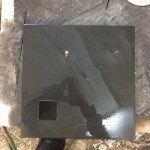
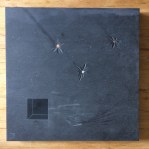
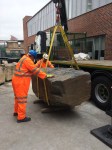
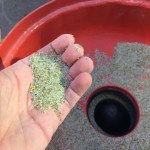
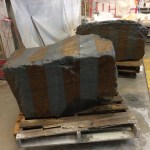
Exploratory Sandblasting

As part of a contract to produce sculptures based on the designs of MUF Architects I hired a sandblast machine and used highly aggressive glass aggregate to blast stripes onto Pennant sandstone. I conducted a quick test for my own work using slate and 3 layers of gaffer tape. The blaster obliterated the tape much quicker than I had hoped, however I liked the results. Unfortunately the machine had to be returned next day. I will continue to experiment with the smaller, less powerful machine in half term.