Exploring Appropriation

Vermeer, The Little Street (1657-58)
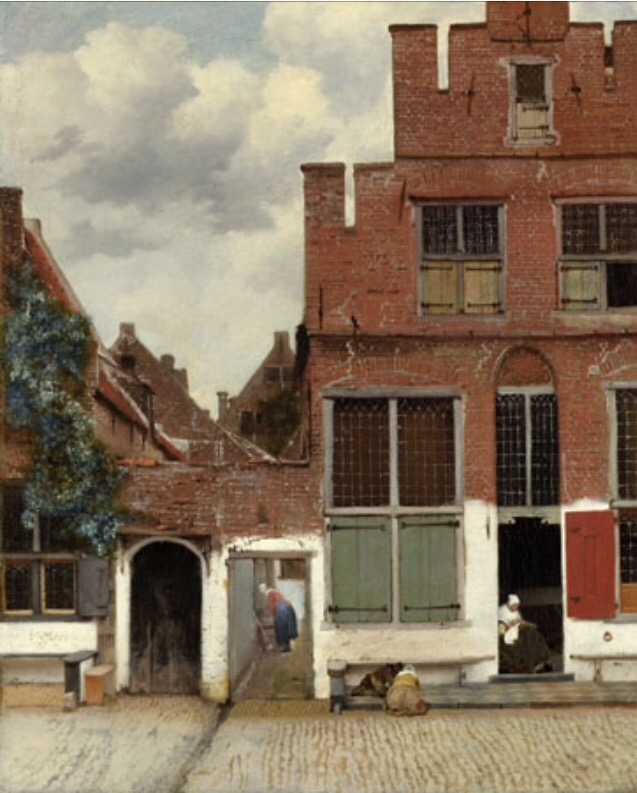
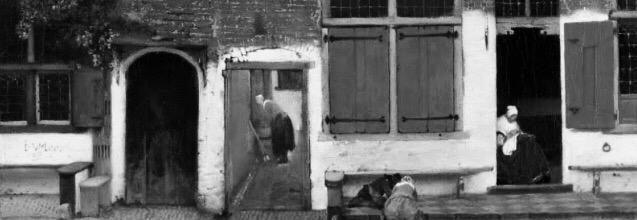


I’m thinking of deconstructing Vermeer’s urban landscape in some way. I see parallels with my own interest in portals- windows, doors, openings, viewpoints as metaphors for the way in which the unconscious and conscious communicate. I’m interested in the paintings negative and positive spaces and balance of light and shade. I want to explore it and dismantle it to better grasp its mastery. It’s rhythms and balance. I may attempt to take the central whitewashed masonry for example and make a sculpture of it. Or perhaps take the painting apart layer by layer and scribe or sandblast it onto stone panels to extract and abstract it’s representationality and explore its sculptural qualities. But also as a comment on its instant-in-time socio-economic, proto-photographic qualities. Bourgeois Vermeer depicting the servants as faceless operatives, ant-like, ornamenting his composition or scrubbing his canvas until it glistens. Sandblasting a version of this into slate, minus the servants, as a sort of black and white stone photocopy with the workers air brushed out as a way of drawing the viewer’s attention back to the original to be seen in a different way. (Berger). Or even finding a way to sandblast the figures only, without the architecture.
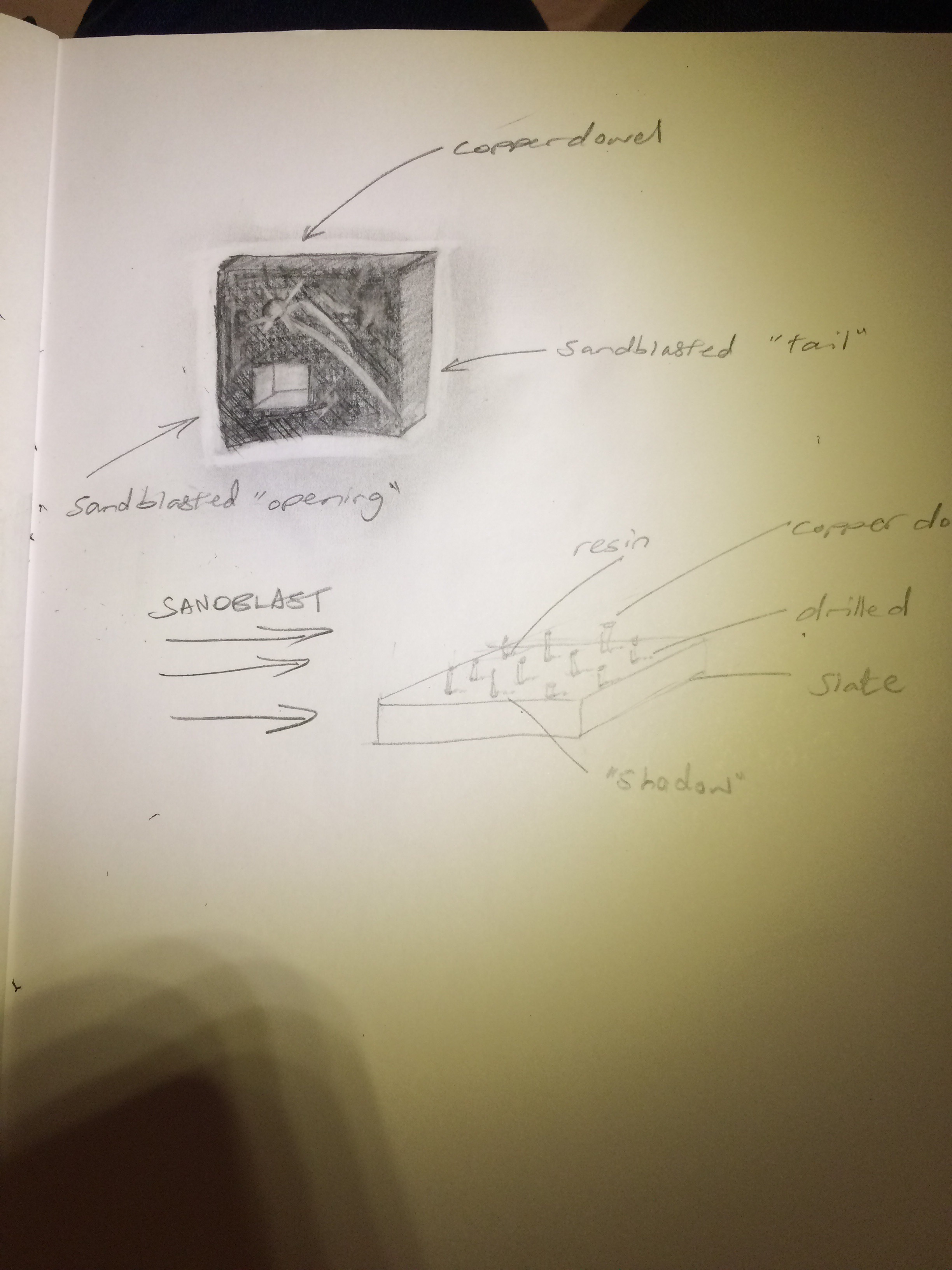
Exploratory Project

The start of the Exploratory Project coincided, for me, with the end
of a 3-year project making 15 sculptures influenced by my reading
of The Wasteland by TS Eliot at an earlier stage in my life and the
research I pursued as a consequence, into the Romance tales of
Perceval and their reinterpretation in a Jungian context. The series
concluded with a sub-series based on the Grail, which found my
work becoming increasingly minimal in terms of my intervention,
and I was aware of a growing obsession with the cube and what I
perceived to be the sculptural purity of its form. I became aware
that this was constraining me and that at some point I needed to
free myself up and reintroduce complexity into my work.
As the end of the series approached I began thinking about what
to do next and found myself planning a new series based perhaps
on Dante’s Commedia or an exploration of Germanic myth.
However tutorials on my Professional Practice Plan helped me
realise that I would be further constricting myself at a moment
where I could be freeing myself up. Having a large body of work
that I feel belongs together as part of a narrative limits my ability to
exhibit them in, for example, group or collaborative shows. Also it
makes presenting them to potential clients or Galleries a bigger,
clunkier task where a quick, punchier presentation is more
appropriate.
Lectures by David Kefford and Les Bicknell then followed which
were very helpful in nudging me away from what were becoming
restrictive working practices. Keffords ‘mini-sculptures’ inspired me
to act more quickly and spontaneously, while Bicknells lecture and
then tutorial were so helpful I have printed part of my Tutorial
Report below.
‘We discussed the puzzle-like nature of some of my work and he mentioned
Chillida and how he visualised some of his metal sculptures undoing. I knew
some of his stuff but have looked further and am a little irritated by how much
I like his work. You know that feeling when you see someone’s work and you
think “damn!”. Im very interested in his 2d image making. Inspiring. Thinking
Exploratory Project.
Also very interested in Carl Andre’s strange typed red and black word images.
we touched on how to combine text and sculpture (Text and Texture!! I
neverconnected those two words before!) I hand cut letters but don’t much
enjoy it. Also it’s very niche, trad and craft -y. I will soon have access to a
sand blaster and template cutter which will suit my sculpture more. Hmm.
Possibilities.
Les pointed me towards getting over my “no one understands stone sculpture
and i’m on a mission to change that” gripe. It’s not helpful. In fact I should
embrace and absorb that gap in knowledge and use it. Mystery is Good.
He also suggested making multiples of a piece and working more in clay. It’s
true I’m a bit militant in my direct anti maquette approach. Something to think
about…’ (See Contextual Study essay).
During Keffords lecture (prior to which we were asked to bring
some objects for a sculpture) I bent copper wire to make a frame
for some bits and pieces I had been carrying around. This in itself
required me to take a plunge into the unknown. Assemblage is not
part of my usual practice. I followed this up in the workshop by
attempting some rapid ‘mini-sculptures’, drawing freehand with a
scribe directly onto the surface of 3 small stones, and made a
short film of another mini-sculpture using trompe l’oeil to render the
opaque stone transparent.
Whilst I was trained in life and still-life drawing at art school my
interest in direct carving means that I rarely draw before I work. In
an attempt to explore other ways of working I picked up a pencil
and opened a sketchbook. I wanted to find a way to move my work
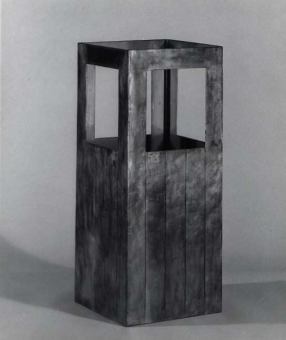
on. I had recently seen an article in The Paris Review which had
an image of a wastebin
.https://www.theparisreview.org/blog/2017/02/08/i-found-this-waste
basket-for-you/

wastebasket.jpg

which I found fascinating. I began sketching it from memory, but
soon realised it was too similar to my previous work to be
sufficiently developmental for my purposes. Whilst reflecting on
this and my need to escape the cube, to open up, to explore, I
sketched how it might look if I literally took that sculpture and
opened it up, unfolded it. And rather than just suggesting the
openings or windows by drawing them on, I actually carved them
open, creating multiple viewpoints and confusing the whole
relationship between inside, outside and through: blurring
boundaries.
I am pleased with the result but feel it is a transitional piece and I
am currently working on two other strands in my exploration of new
work.
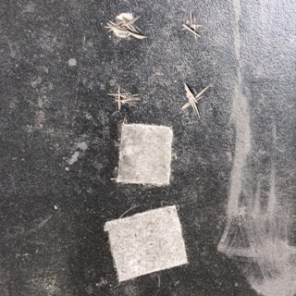
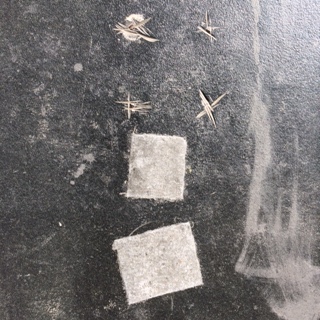
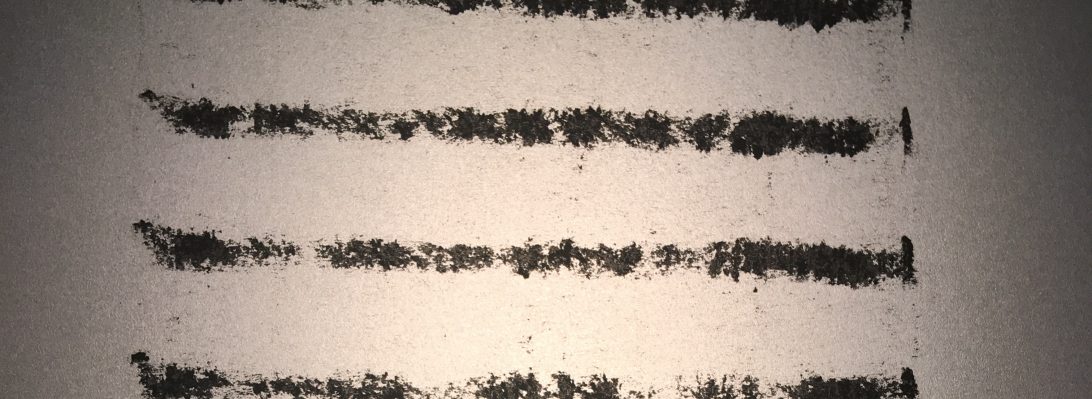
One involves sand-blasting (a kind of accelerated erosion) and I
have done a couple of trials to experiment with what to me is an
entirely new process, rather like spray painting that eats the
surface rather than coating it. This has the potential to significantly
add to my list of Actions as described by Bicknell and included in
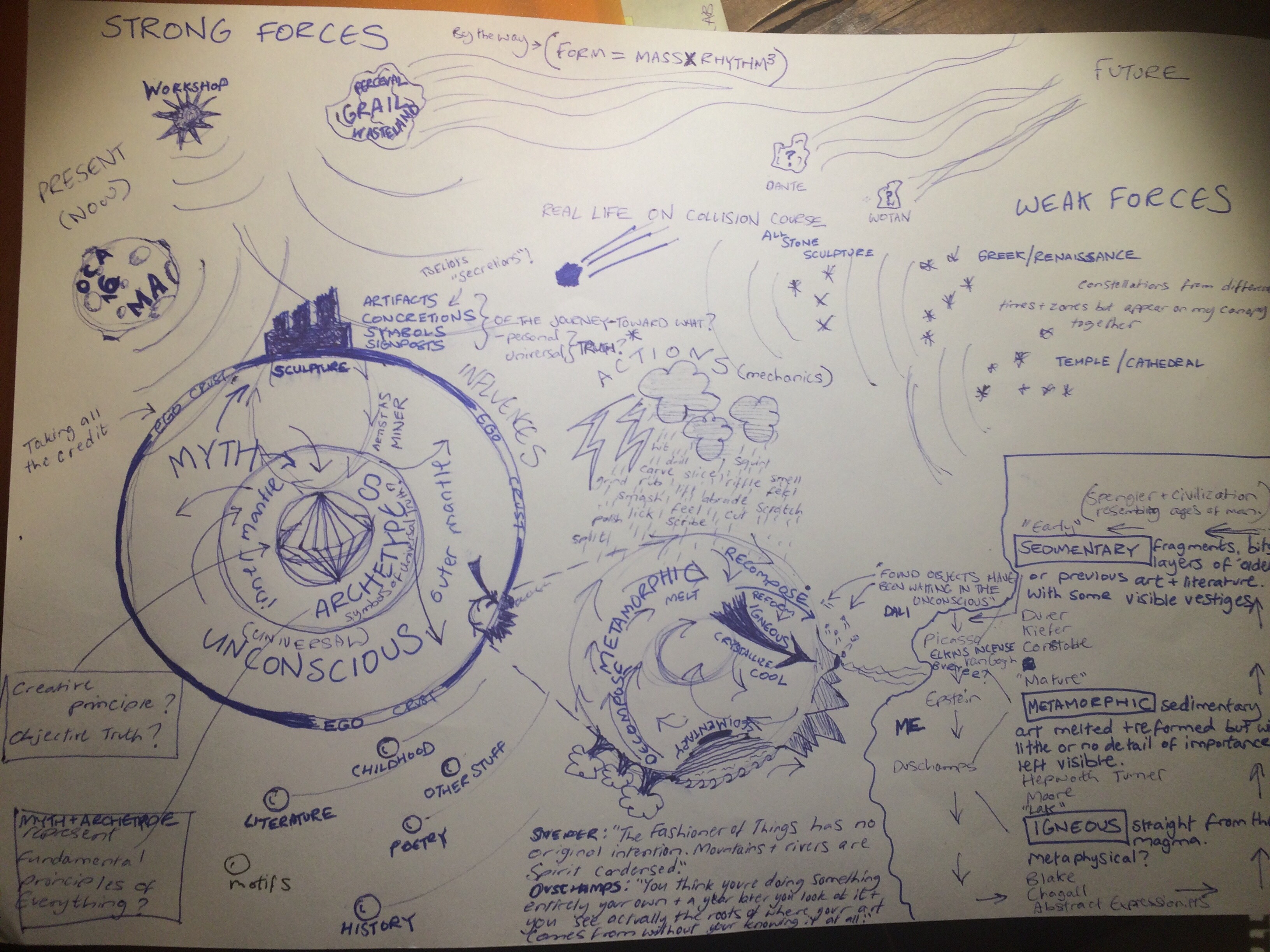
my Map of Territory.
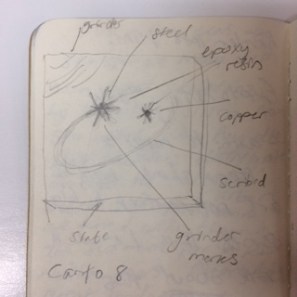
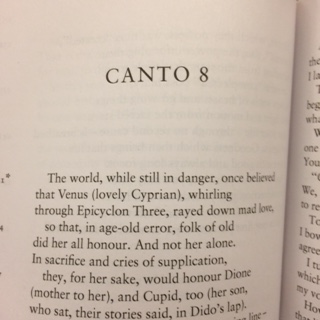
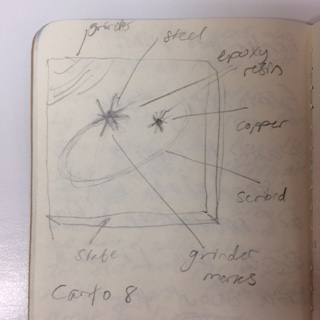
The other will include using steel and copper dowel, epoxy resin
and slate worked with angle grinders and scribe to produce a wall
mounted piece that will allow me to incorporate what is already
part of my Stonemasonry practice into my art work and allow me to
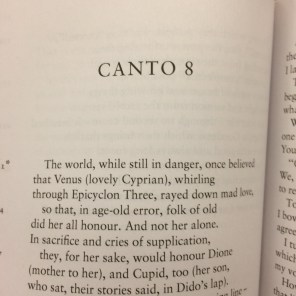
explore a more pictorial dimension. It was conceived after reading
Dante (ref) on the tube and then seeing marks left by repair work
to the station platform. (Working Title – Epicyclon 3). I hope to use
this project to experiment with a freer, more gestural style.
img_6484-1

IMG_6482

IMG_6485


Gallery visit

Popped into Damian Hirsts Newport St Gallery to see the Gavin Turk show

ttps://newportstreetgallery.com

Interesting space, if a little clichéd – impeccably restored and rejigged industrial building, brick, glass, fantastic triple pitched roof, indoors white paint, white desk, white stairs, white glazed brick, white staff. Grey floor. Restaurant (full of white women who lunch, as my mixed race companion pointed out) and white gift shop. Its all full of natural light. The space is pleasing.We are politely informed of various gallery policies. The atmosphere is informal and relaxed. Theres no hushed worshipful shuffling and whispering. One can get up close to the exhibits. Theres a lot of space.

From upstairs theres a great, galleried view of one of the downstairs spaces rather like the view into an oddly angled squash court. Turks infamous failed MA Blue Plaque looked great from the two different angles.

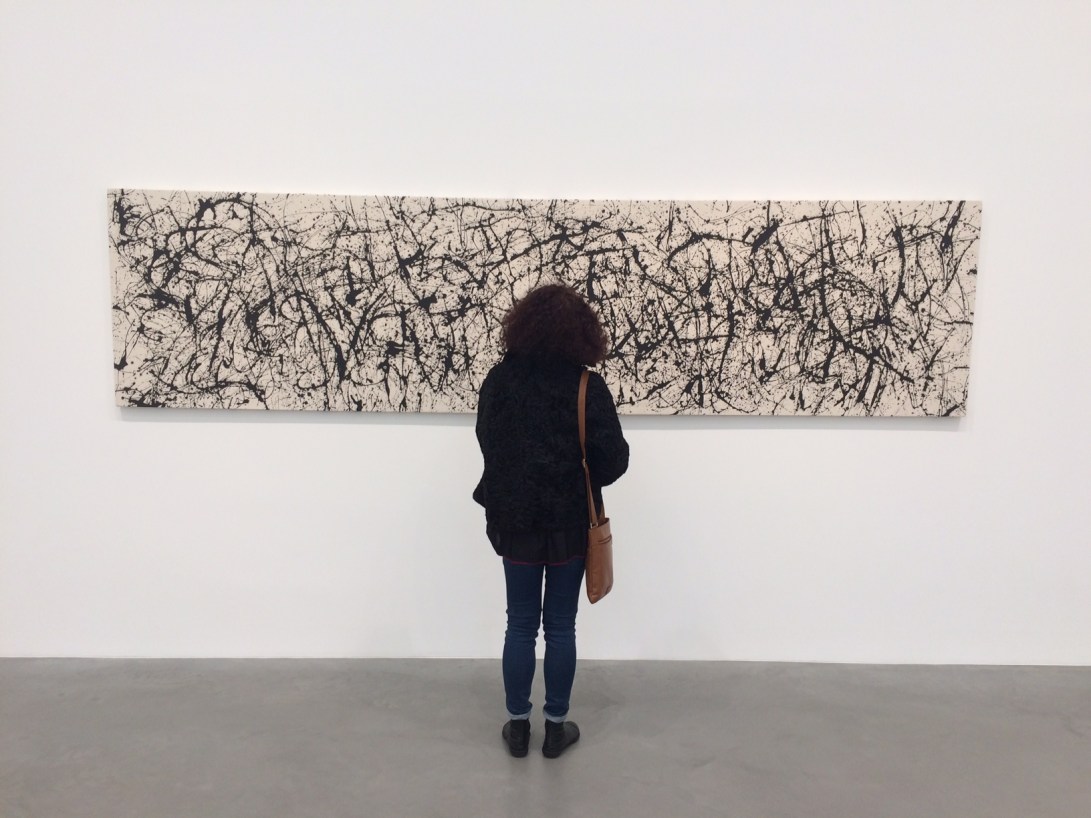
Gavin Turks work is Art about Art with himself as the Hero and as far as it goes is great fun. Except when he tries to be serious – the black skip and black bin bags are too obvious to be metaphor or symbol or representation (except unintentionally, perhaps as the only black objects amidst all that whiteness, apart from this Pollock pastiche comprised of Turks name painted over and over). Its a walk through the History of Art full of unsubtle nod and wink references to Warhol, Pollock, Duschamps (a car wheel so obvious that I cant even bring myself to play with tired/tyre), etc. Defiantly unprofound.IMG_5759.JPG