Bibliography


Mann, Thomas, Doctor Faustus, 1947, (Penguin Modern Classics 1978 issue)

Calvino, Italo, Difficult Loves, 1970

Hemingway, Ernest, A Moveable Feast, 1964 (Cornerstone, London, 1994)

Hemingway, Ernest, The Sun Also Rises, 1926 (Arrow Classic, 1994)

Hesse, Hermann, My Belief, 1974, (Grafton, London, 1989)

Kapuscinski, Ryszard, The Emperor, 1978, (Penguin, 2006)

Nelson and Shiff, Critical Terms For Art History, UCP, 2003 chapters on Modernism and Postmodernism

Bickers and Wilson, Talking Art 1, (Ridinghouse, London, 2007)

http://www.sculpture.org/documents/scmag01/june01/bien/bien.shtm Here Time Becomes Space:
A Conversation with Harald Szeemann

Ahmet, Cos, The Plinth In Art http://www.cos-ahmet.co.uk/section249469_304089.html

Bachelard, Gaston, The Poetics of Space, Penguin, New York (1964), 2014 Edition

Berger, John, Landscapes, 2016 (Verso, London)

Cabinet, Curiosity and Method,  10 Years Of Cabinet Magazine, 2012


Clayton, Eleanor, ‘The Whole Question of Plinths’ in Barbara Hepworths 1968 Tate Retrospective’ Tate Papers, no 25, Spring 2016, http://www.tate.org.uk/research/if your Griffey publications/tate-papers/25/whole-question-of-plinths, accessed 6 February 2018

Brian Robertson quoted by Eleanor Clayton in her bibliography as 14. Bryan Robertson, Anthony Caro:Sculpture, 1960-1963, exhibition catalogue, Whitechapel Art gallery, London 1963, p.1

Csikszentmihalyi, Mihaly, Why We Need Things,  https://llk.media.mit.edu/courses/mas714/fall02/csik-things.pdf

Dewey, John, Art As Experience, 1934, Perigee (Penguin, New York, 2005)

Derrida, Jacques and Prenowitz, Eric, Archive Fever: A Freudian Impression, 1995 (John Hopkins University Press)

Getsy, David,Fallen Women:The Gender of Horizontality and the Abandonment Of The Pedestal by Giacometti and Epstein in Display and Displacement:Sculpture and the Pedestal from the Renaissance to Postmodernism Ed. Alexandra Gerstein Pub. Courtauld Institute of Art Research Forum and Paul Holberton Publishing, London, 2007

Greengerg, Clement, Avant-Garde and Kitsch, 1939, http://www.share.ca/greenberg/kitsch.html

Groys, Boris Politics of Installation http://www.e-flux.com/journal/02/68504/politics-of-installation/

Heidegger, Martin, The Age Of The World Picture, 1938 pdf at http://www.users.globalnet.co.uk/~alfar2/cosmos/Worldpic.pdf

Hickey, David Air Guitar, (Art Issues Press, 1997)

Ingold, Tim, On Human Correspondence, Journal of the Royal Anthropological Institute, 2016

Lawson, Mark, Is Modern Art Off Its Head? https://www.theguardian.com/commentisfree/2006/jun/16/arts.visualarts

Plimpton, Taylor, What Is The Political Responsibility of the Artist?ww.theparisreview.org/blog/2017/11/21/political-responsibility-artist/


Schama, Simon ‘Artist Rachel Whiteread talks to Simon Schama’, Financial Times, September 1, 2017

Searle, Adrian ‘Rachel Whiteread review:the secret life of things, The Guardian, Sept 11, 2017.

Wood, Jon, Homage, Double Act and Decoy:Three Contemporary Considerations of the art Gallery Plinth in Display and Displacement: Sculpture and the Pedestal from the Renaissance to Postmodernism Ed. Alexandra Gerstein (Pub. Courtauld Institute of Art Research Forum and Paul Holberton Publishing, London, 2007)

The Politics of Display edited by Sharon McDonald (Routledge, London, 1998)

Talking Art 1, Art Monthly Interviews with artists since 1976, Ed. Patricia Bickers and Andrew Wilson, (Pub. Art Monthly and Ridinghouse, London, 2007)

http://www.luhringaugustine.com/artists/rachel-whiteread/a-press

David Roberts Art Foundation Exhibition Leaflet, 2013:

Pose Piece For Three Plinths Work:

http://davidrobertsartfoundation.com/wp-content/uploads/2016/06/study-3.pdf

and
http://davidrobertsartfoundation.com/exhibition/study-pose-piece-for-three-plinths-work-bruce-mclean/


Thoughts on Hickey and Mann

Thomas Mann in Dr Faustus (p61 Penguin 1978) spoke of ‘cult epochs and cultural epochs’. He said (or he has one of his characters say)  ‘for a cultural epoch, there seems to be a spot too much talk about culture in ours don’t you think?’.

Hickey might pretend to agree. But he’s a culture snob that sets himself up as an anti-snob. Of Foucaults acid experiment he says ‘Too late! Too Euro, too Castaneda. Bad place, wrong music. Yikes!’ He ridicules spectators as ‘looky-loos’ whilst proudly nailing his impeccable connoisseur credentials to the mast. His account of meeting a group of artists in SF who he says only mixed with other artists does not read authentically. I suggest he made the conversation up. Its fake news.

He even has the arrogance to place himself inside the head of Hank Williams and in one unintentionally hilarious moment, gives himself a credit for getting Parliament Funkadelic signed to a major label.

His anti-expert, anti-academic diatribes are Trumpian. As is his paranoid-libertarian dislike of the NEA as state sponsored art. He’s a free market neo-liberal disguised as an anti-elitist, ground-up democrat.

His style is cod-gonzo sub-Kerouac. It made me feel uneasy and uninspired.

Apart from that it’s ok. In fact he might agree with Mann when he says

‘I’d like to know if epochs that possessed culture knew the word at all…Our state is that of civilisation- a very praiseworthy state, no doubt, but…we should have to become very much more barbaric to be capable of culture again’. He defines the current civilisation as possessing ‘technique and comfort’ and ‘in that state one talks about culture but one does not have it’.

He is writing in 1943 about the early 1900’s. It brings to mind the contemporary phenomenon of artists making art about art and a certain obsession with definition of terms.

Plinths For found objects: The Queen of Light That Can Be Dark and The King Of The Dark That Can be Light

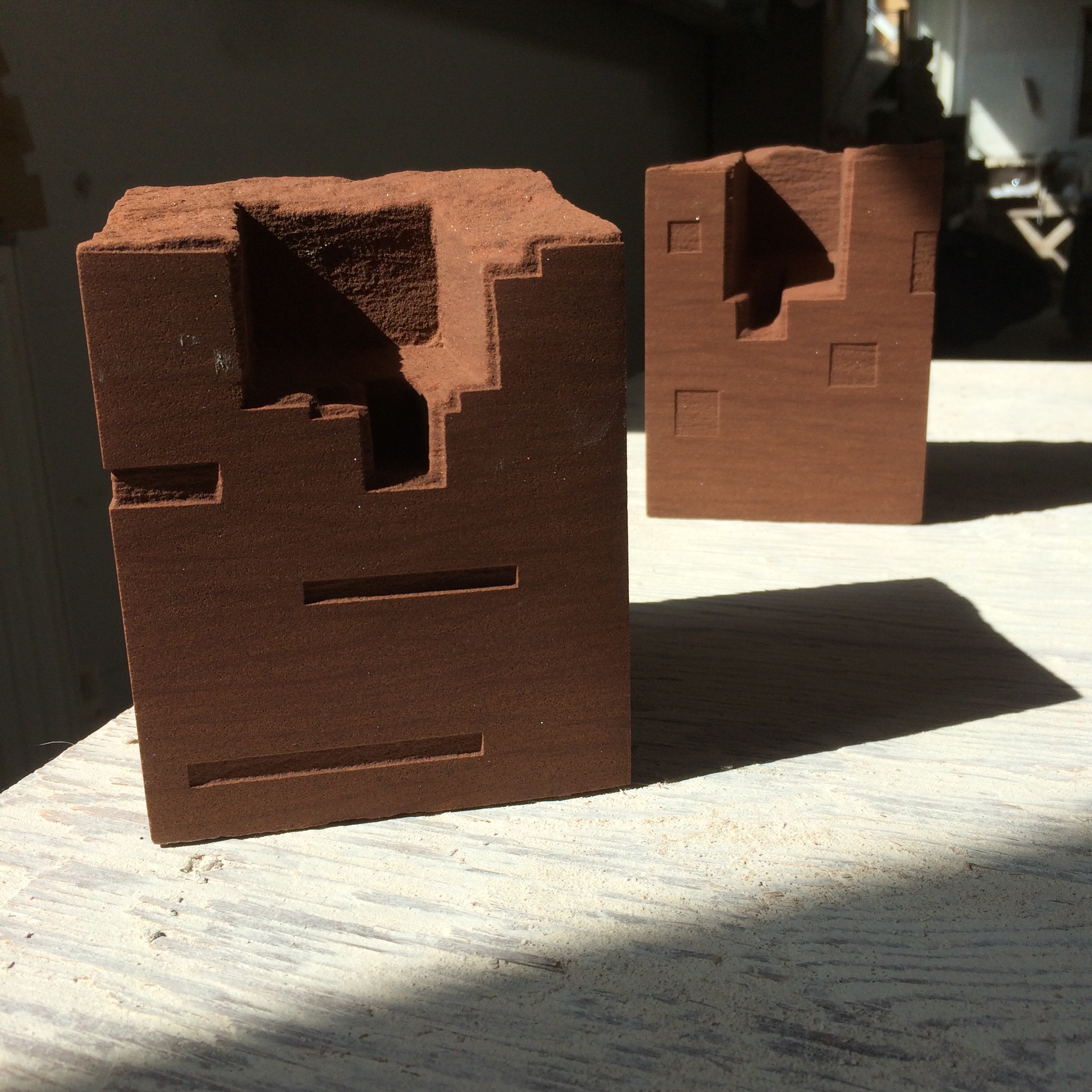
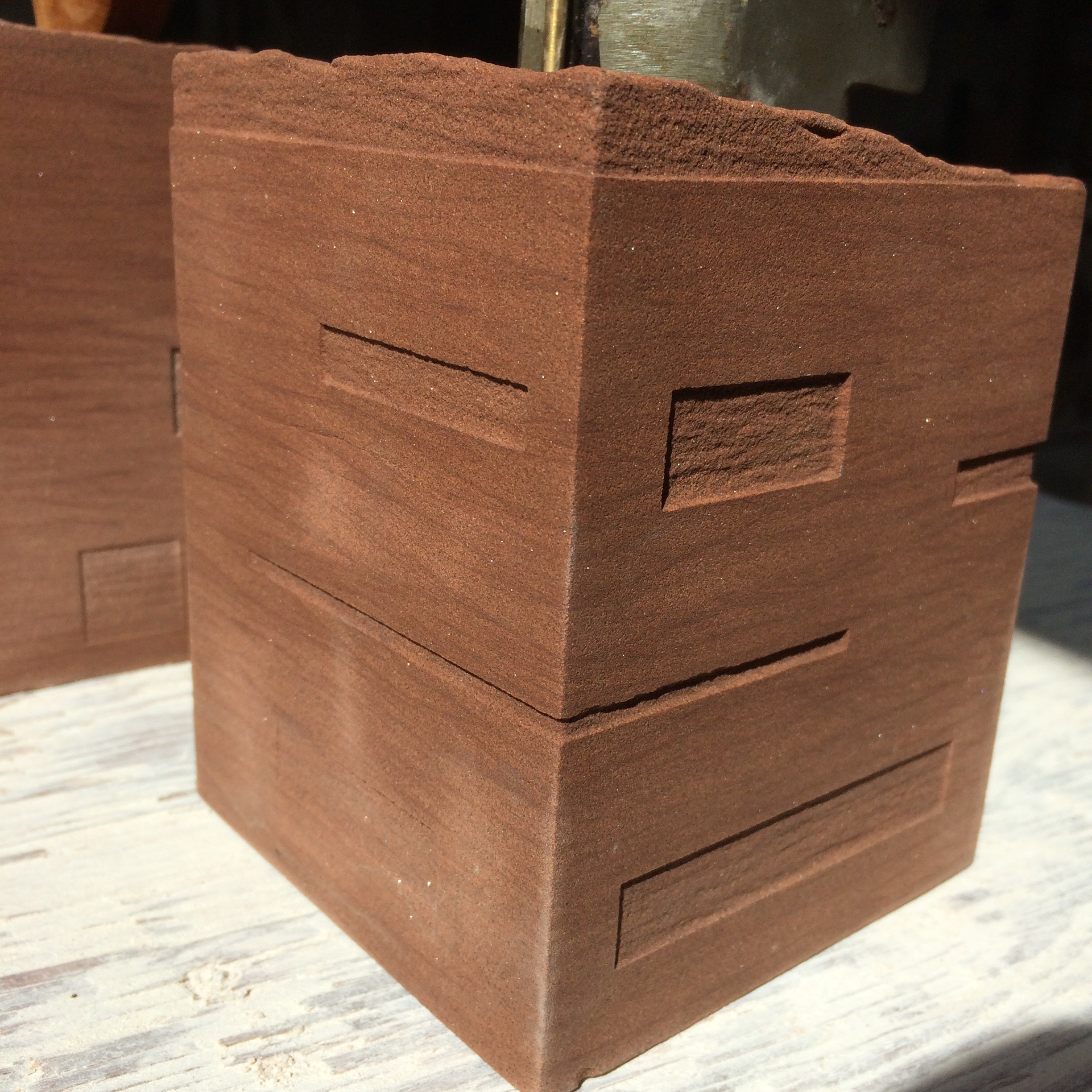
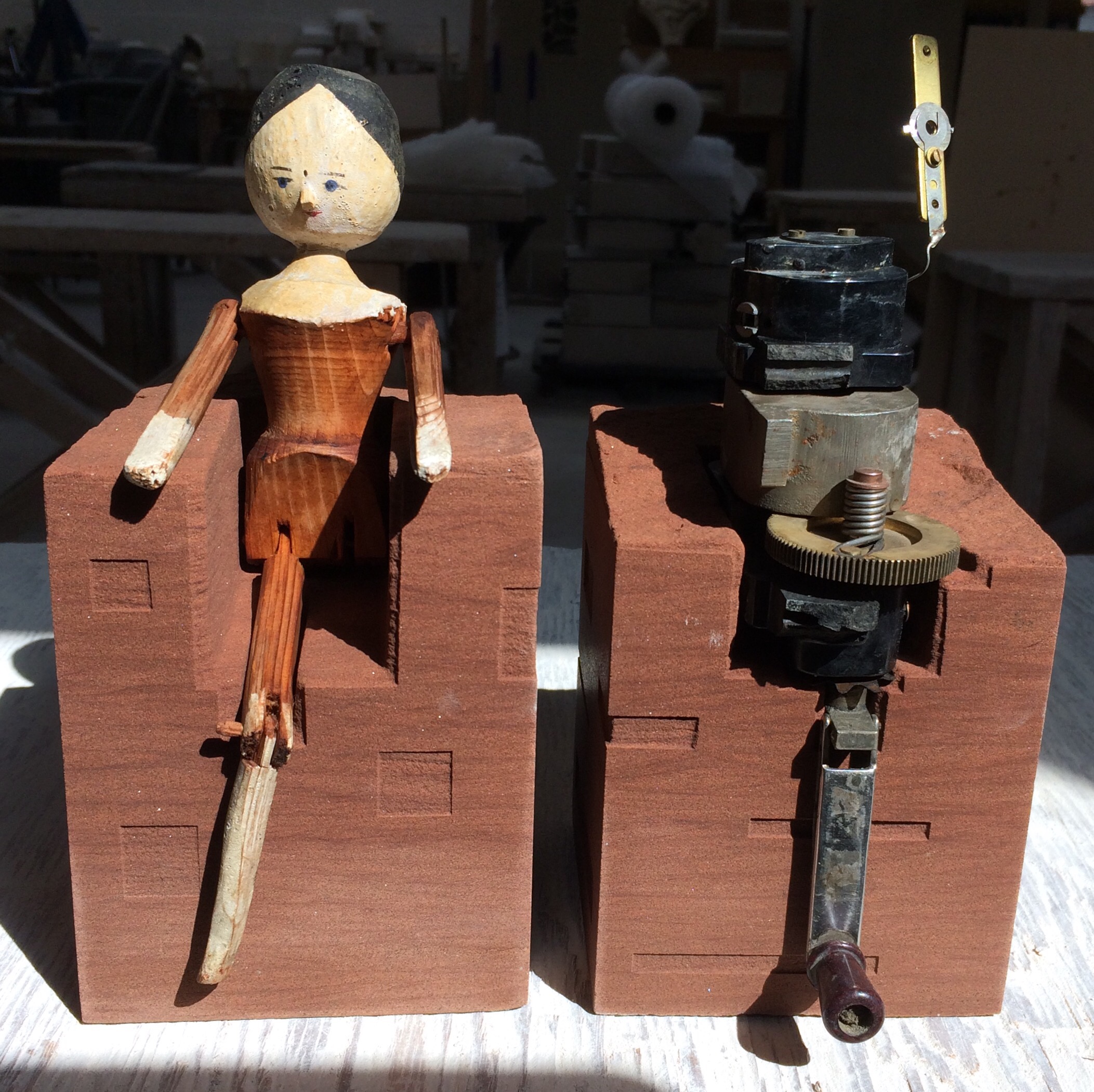
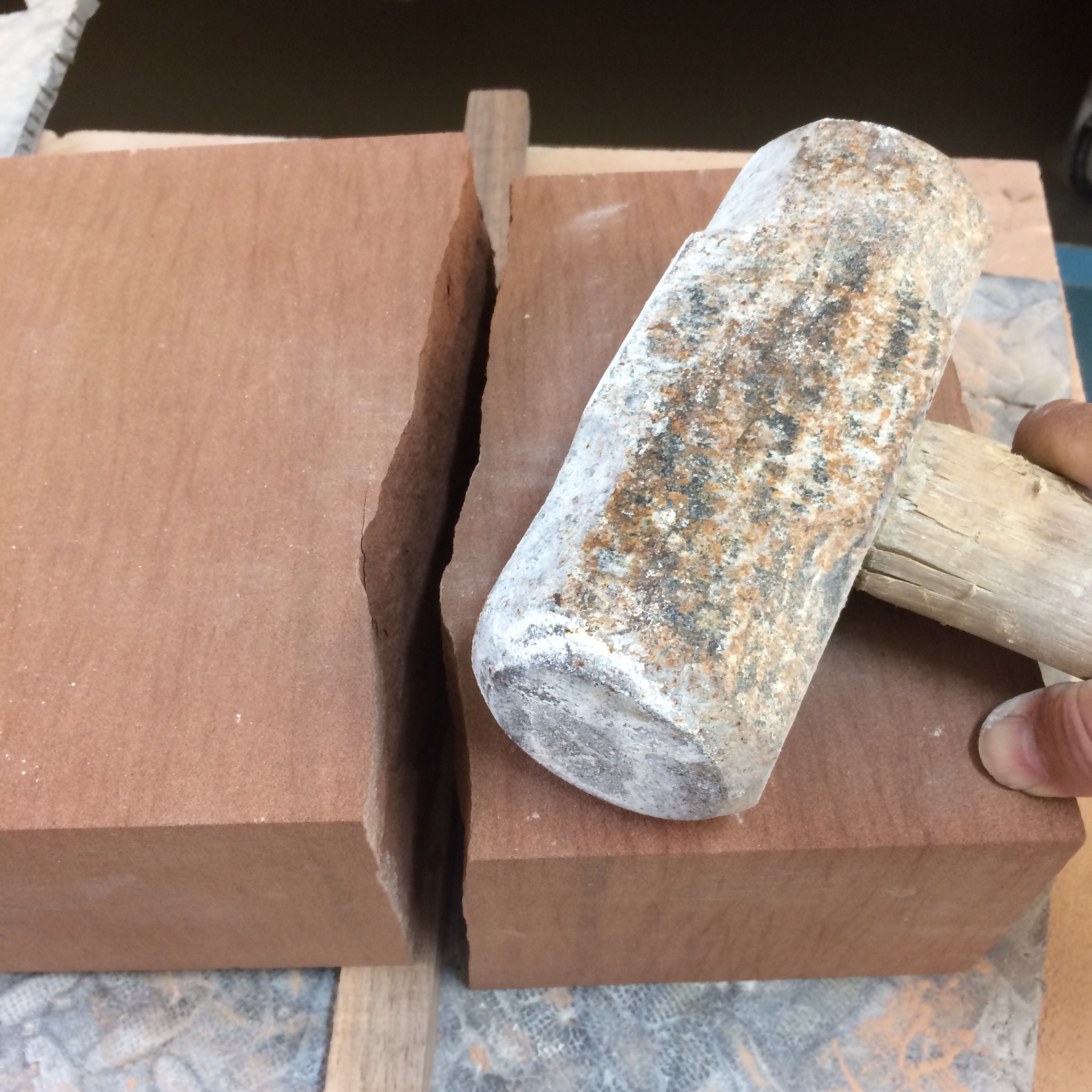
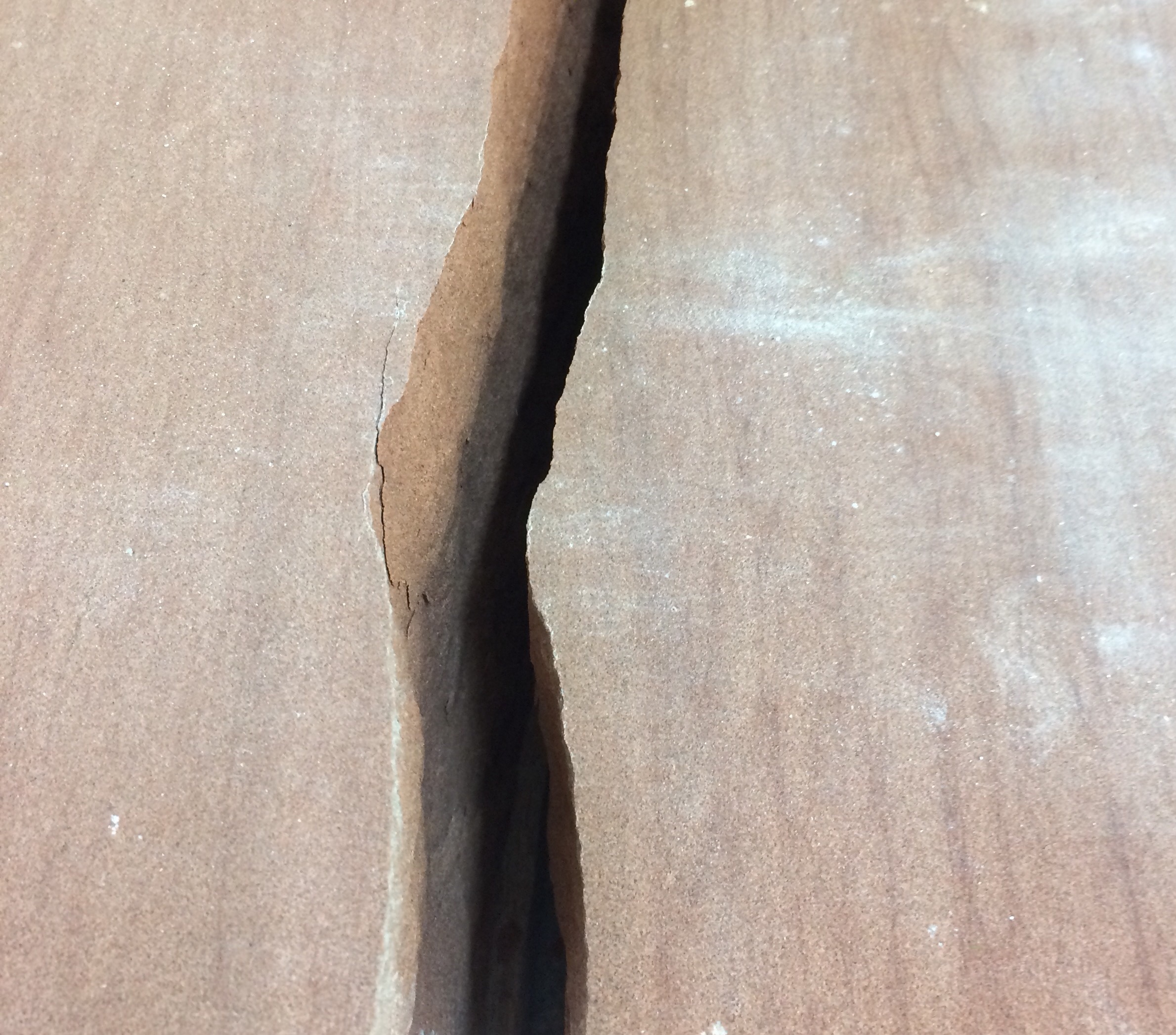
I had a piece of red sandstone from a restoration job which had a vent or natural weakness in the stone which meant i had to reorder it. I kept the flawed stone for sculpture. I gave it a good whack with a sledge hammer and it split along the vent. I cut the stone in two on the table saw. I then span it with a flex polisher to remove saw whips and honed the surface through the grades of grit 60/120/220/320/400. Any more (600 etc) and it would have started polishing and I wanted honed – less shiny and glassy. Not sure why – just an instinctive decision). I had no specific work in mind at this stage and no idea of which objects to provide plinths for. That morning id gone to the basement and taken the doll and the dynamo. theyd been sitting together on the shelf for several years.

The doll was my mothers as a child in Switzerland. my mums still alive but somehow this doll came to be in my basement. This is a typical swiss doll of the mid 1950s and i suspect beyond. In th 1950s anthropologists were still finding villages high in the Swiss valleys that had no communication with the lowlands and that practiced old ways and survived in a diminished gene pool. The dynamo was my fathers. he also is still alive. He was an engineer, socialist and humanist, a scientific realist who has since discovered a sense of spirituality. My mother was of Christian stock but sought her own spiritual path. They were/are both powerful people. My mother the spiritualist, my father the anti spiritualist. Both had/have light and dark aspects. Light can blind as much as absence of light. They separated 5 years ago.  they  have negotiated their own personal balance but i am the product of their experimentation.  My Dad would mock spirituality so i hid mine from him and for a while, from myself. I am negotiating my own balance of light and dark, science and spirituality. So here they are on their thrones. The Queen and King of The Light That Can Be Dark And The Dark That Can Be Light. Incidentally, if you turn the leg of the king and hold his crown you will receive an electric shock.

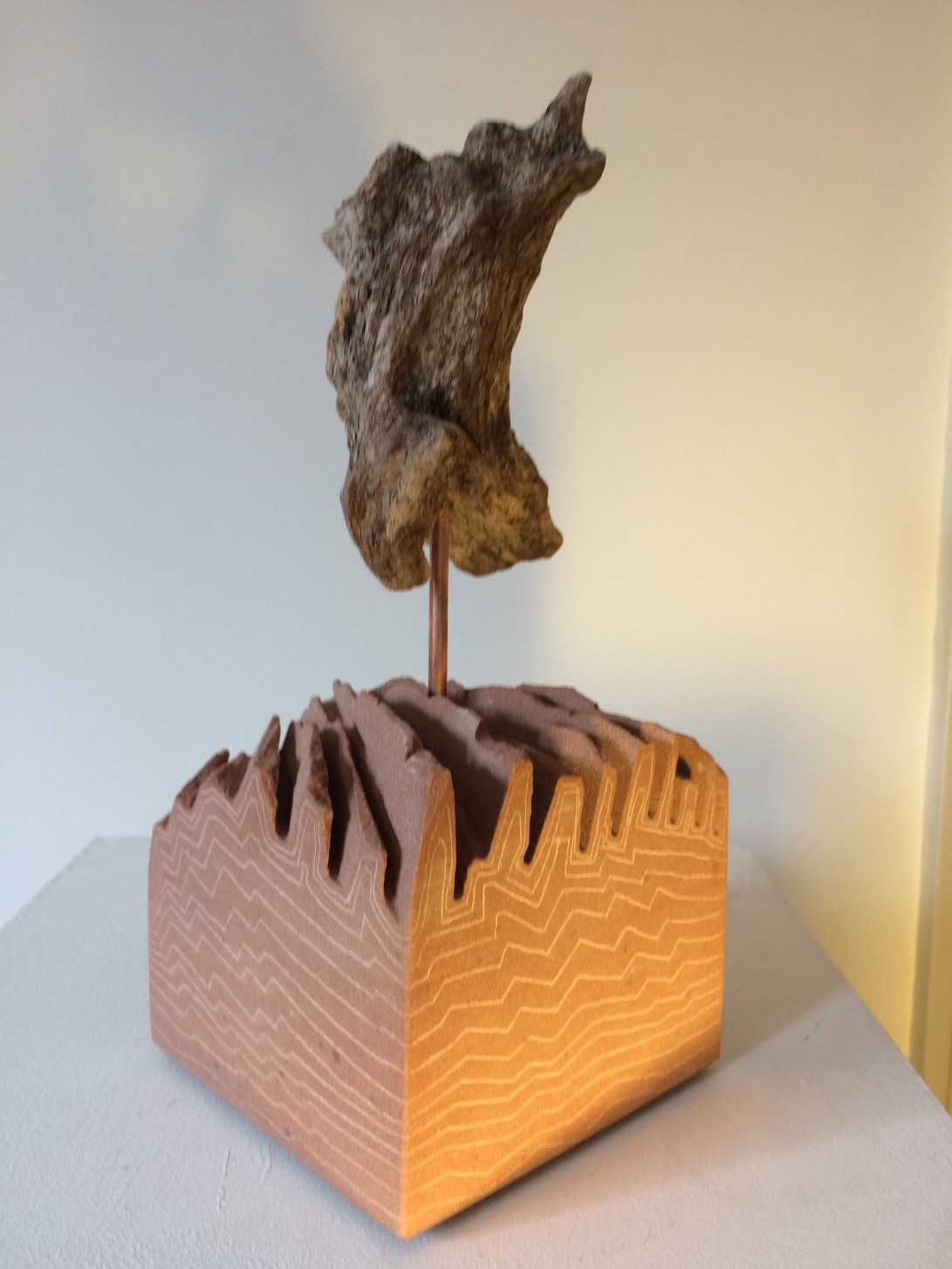
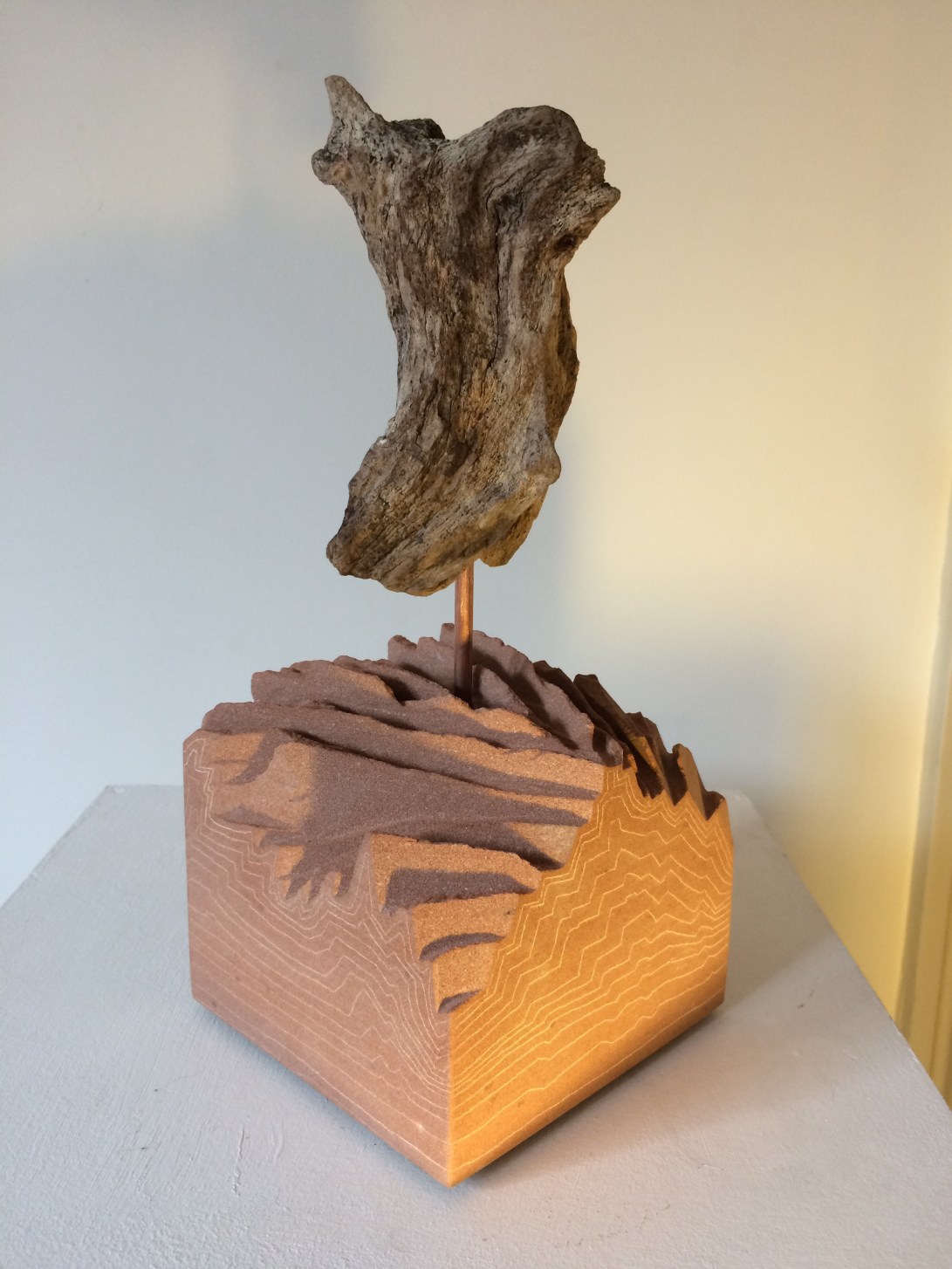
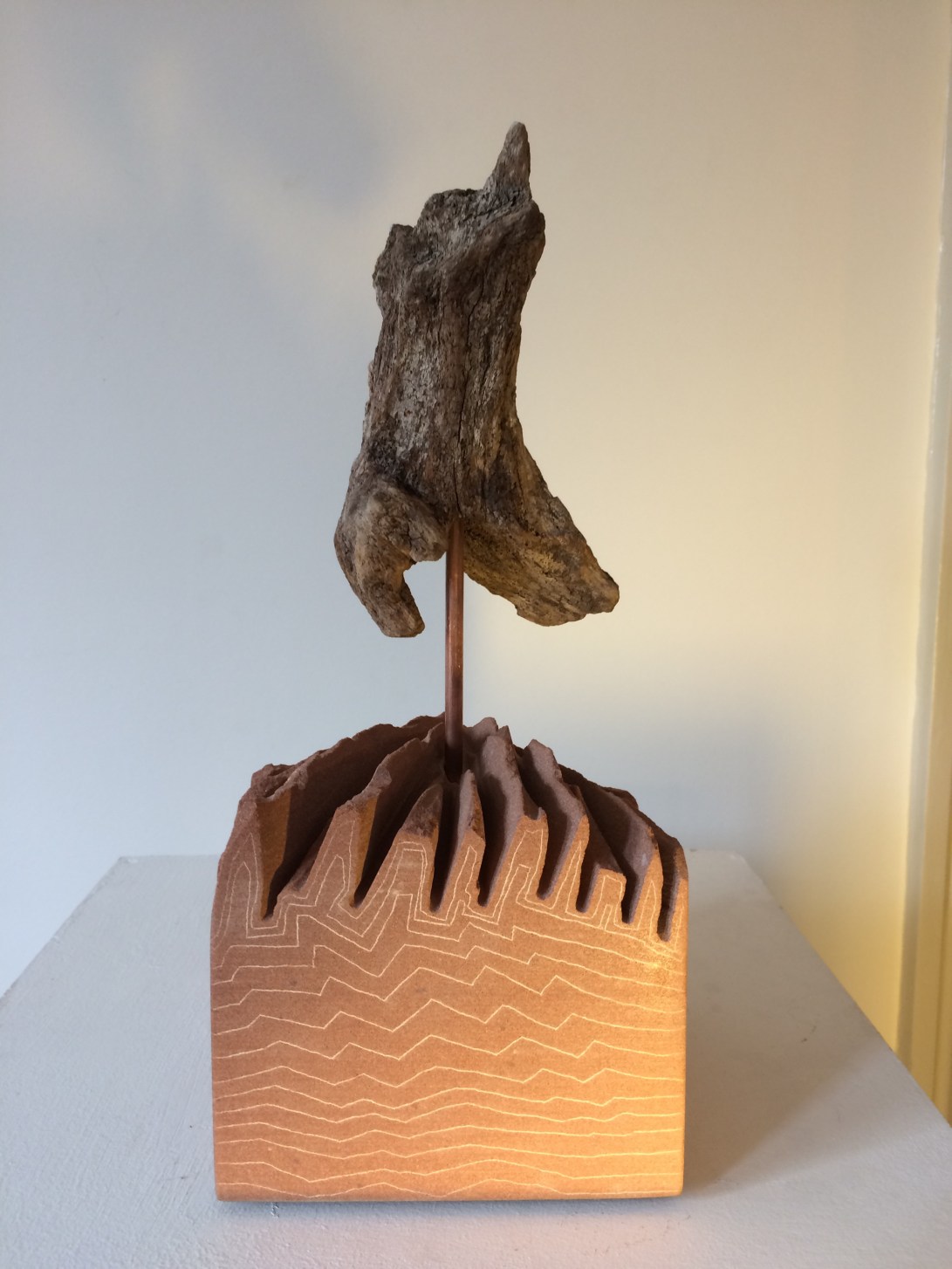
Plinths For Found Objects – Nike or Ariadne?

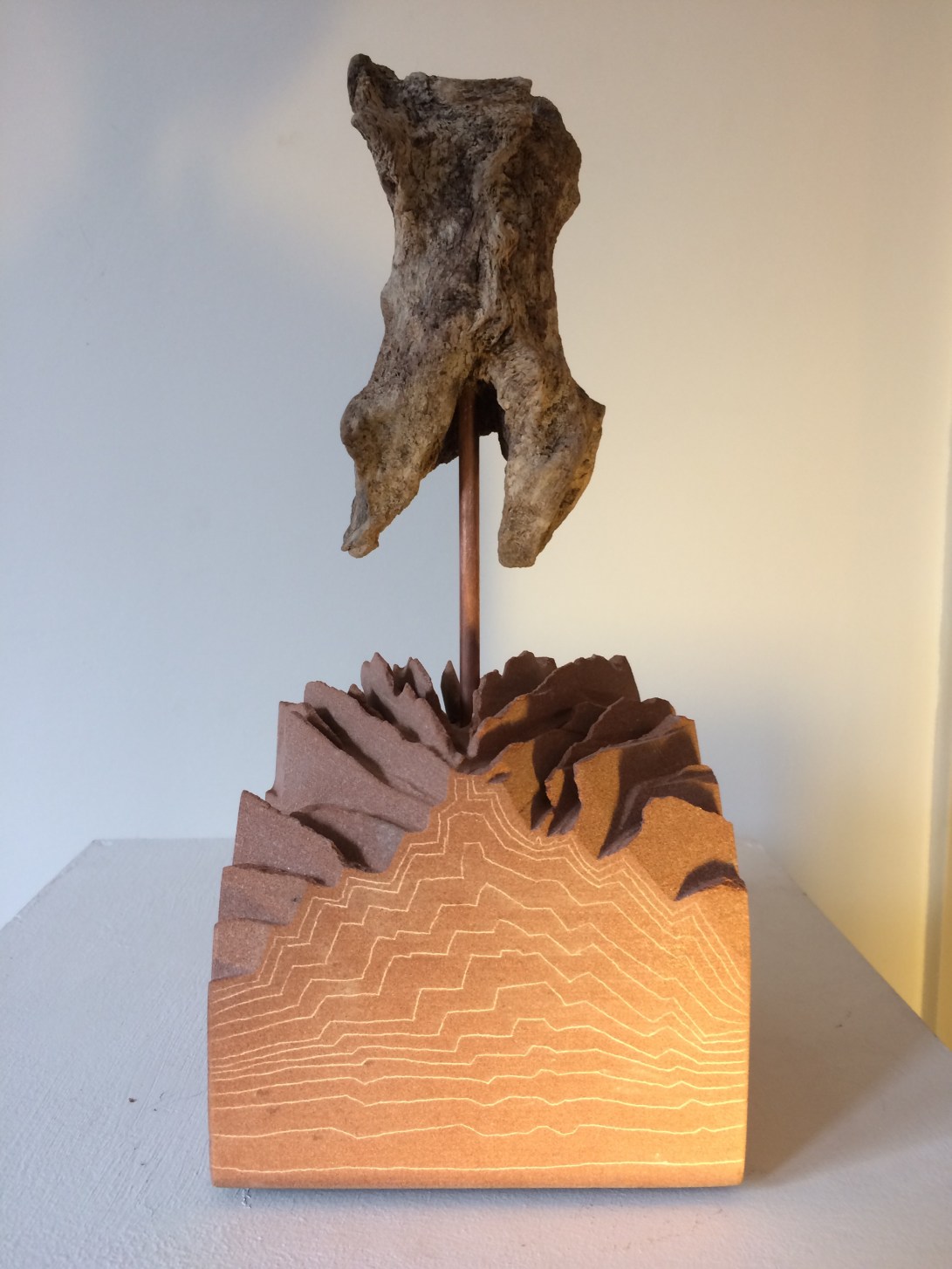
If as Dali/Breton said, ‘found objects have been waiting in the unconscious’ I might extend this to all art. I found this piece of what I think is pine, a wild and small sea pine, in Provence by the coast amongst vineyards and forest maybe 5 years ago. Its been sitting, neglected, amongst other found objects in my basement (!) since then.

At art school we would go to the British Museum and draw sculpture. I wasnt very good at life drawing but I was ok at constructing drawings of sculpture. Less pressure, more time.There are some draped figures of Nike there and the marble drapery is cut so deep I could put my entire forearm amongst the folds. This scrap of wood reminded me of the posture of the goddess of Victory, one arm raised, back curved, striding forward.

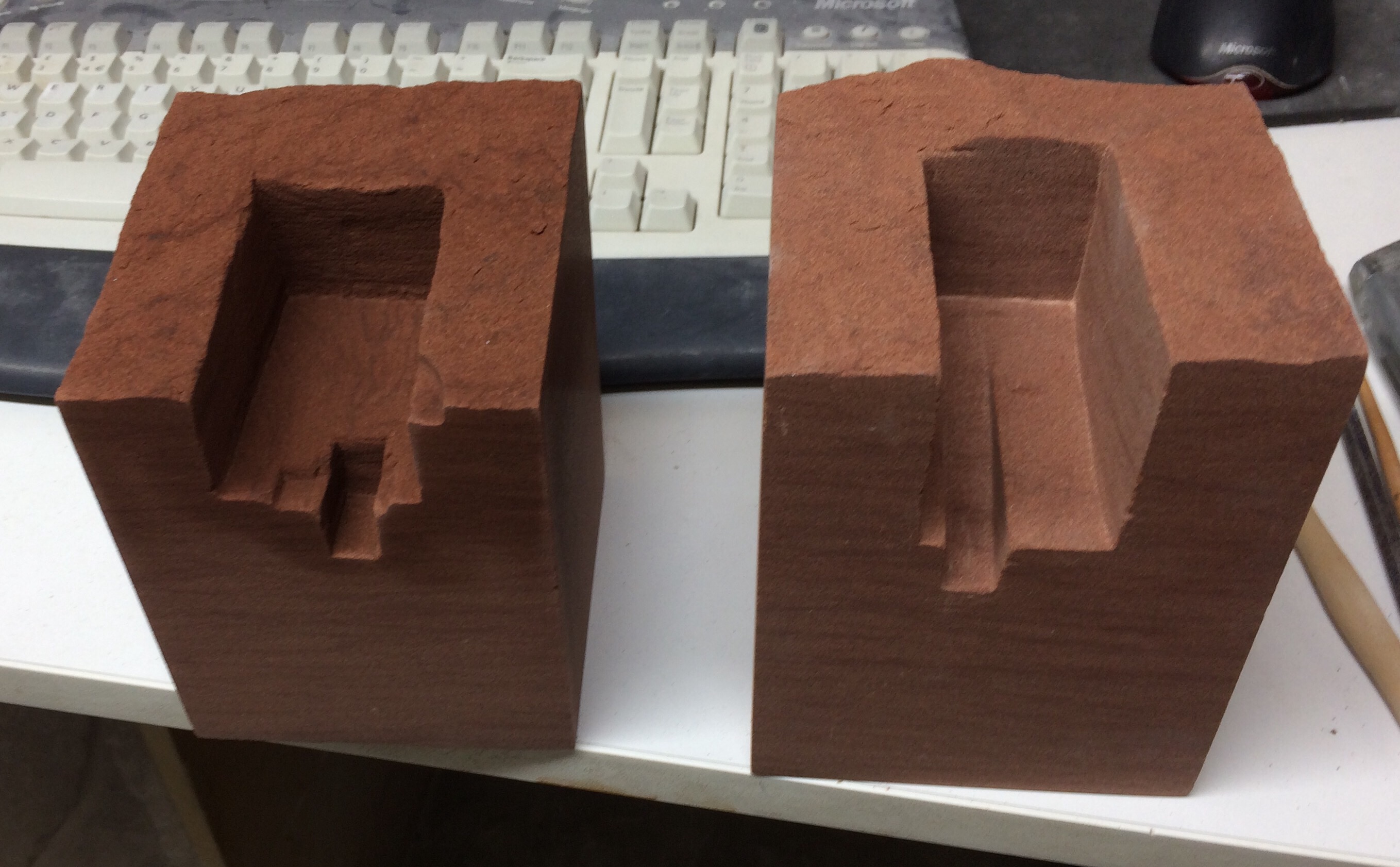
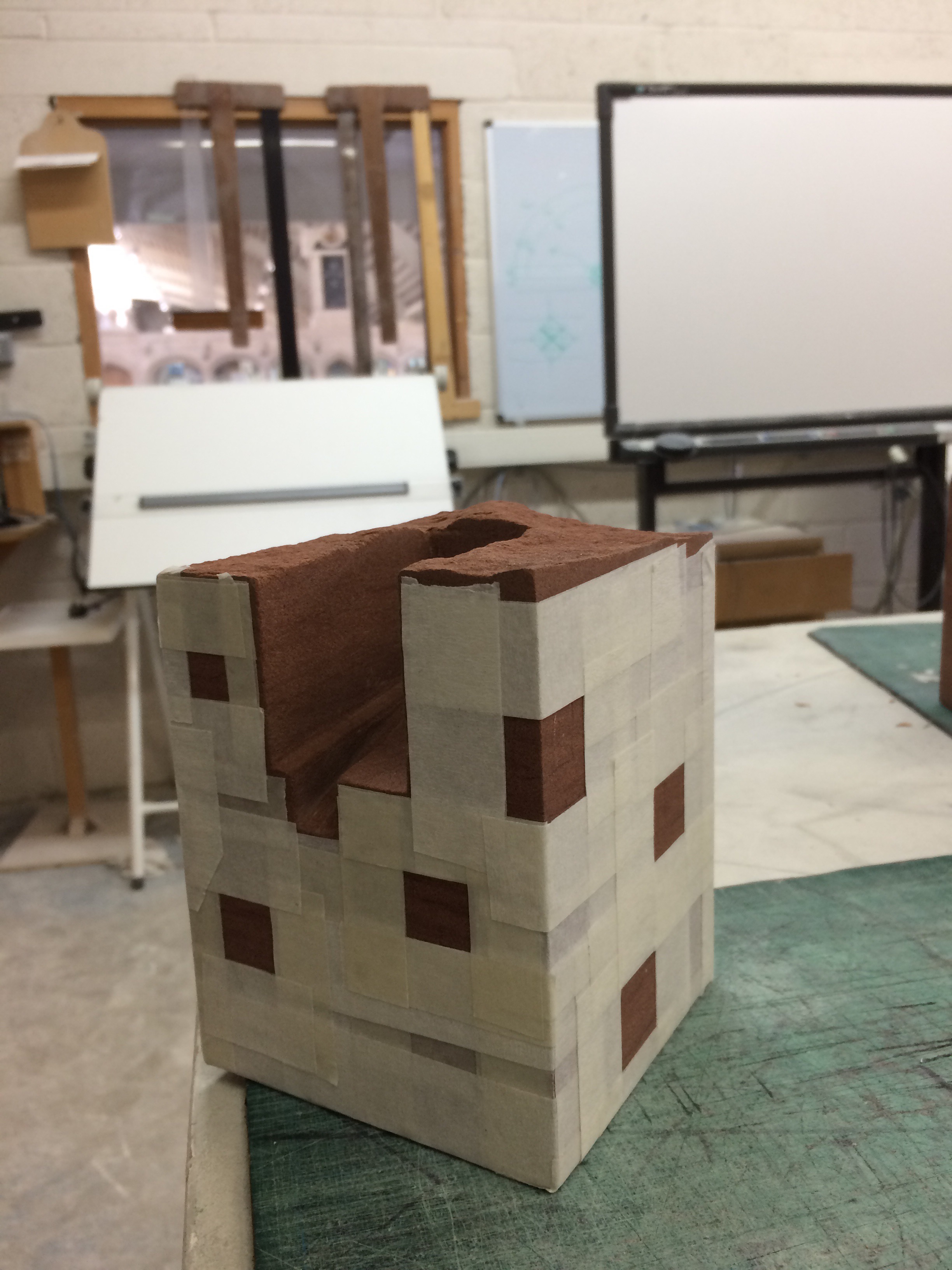
I started with a block of red sandstone as the proportions worked. I intended to act without intention. to simply act. as i began i thought of a ploughed field. I wanted to cut and smash. Id been thinking about why i worked with stone and i think one of the causes is that it involves destruction. where other mediums, painting, clay, involve smearing liquid matter stone requires destruction, removal of dry matter and this for some reason appeals to me. revealing through removal like an archaeology of the self. You get rid of stuff and whats left is Essential. I used a 5″grinder to cut the first furrows at varying depths and did so without drawn lines. I planned to then cut through them at 90 degrees but found myself smashing the ridges off with a lump hammer and cutting another sequence of furrows converging on one point i have no idea why. I smashed some of these off, kept others and continued until it was as seen. Then i had the idea of scribing lines that echoed the furrows like Chinese whispers down into the depths. This was strangely exhausting and I struggled to control my concentration and the tungsten scribe with both hands, the pressure hurting my fingers, trying to flat line near the bottom, little blips of activity popping up like signs of electrical activity, signs of life and then the line disappears into the distant unseen.

Since I wrote this a month ago I have reinterpreted this piece to be not of Nike but, of course of Ariadne partnered as she is with the Minotaur and connected as she is, it seems by a thread to the blood red stone. This is exactly the way I had hoped this project would evolve as the Archetype (this time of The Labyrinth)  uses me as a conduit to express itself.


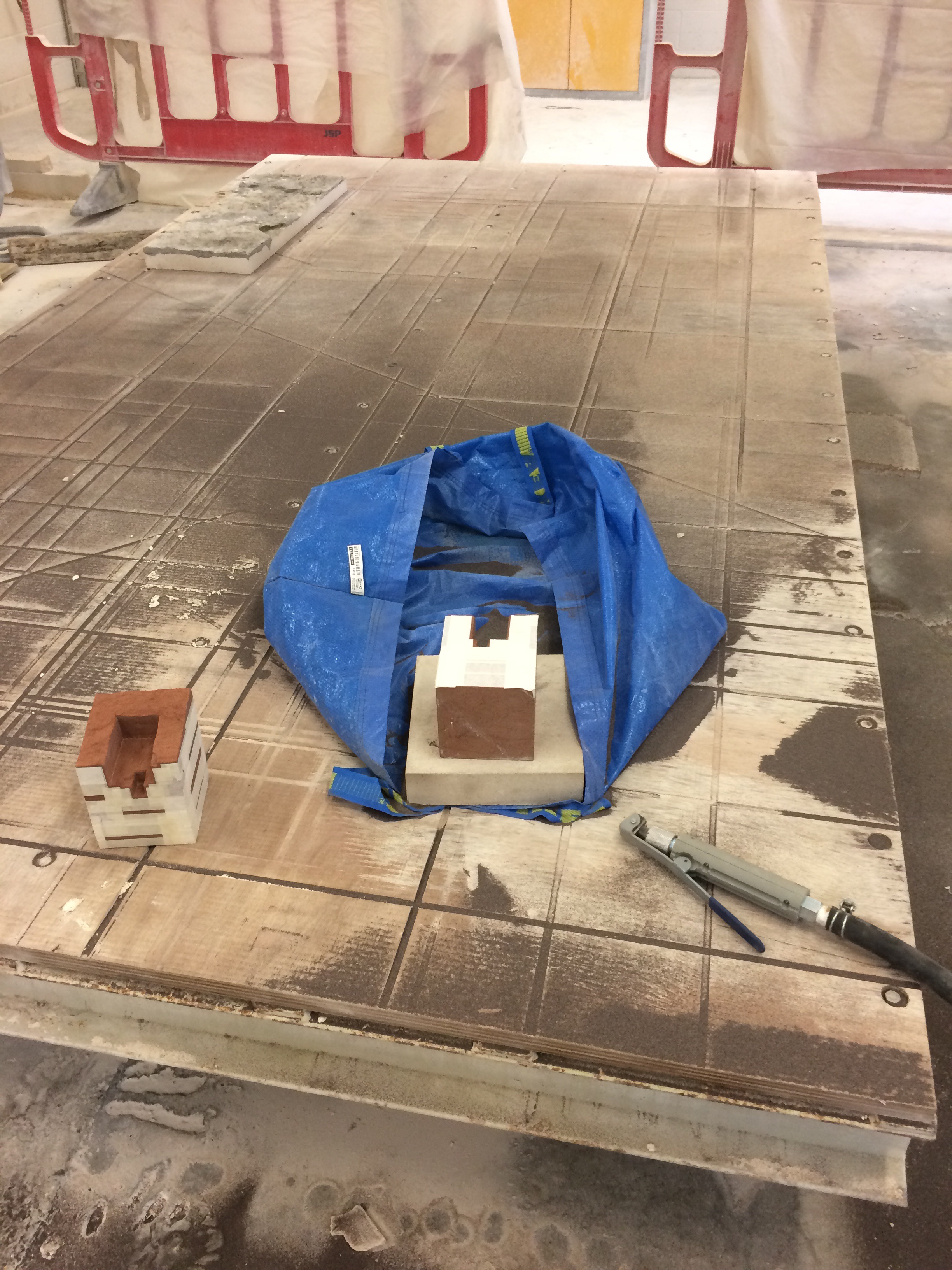
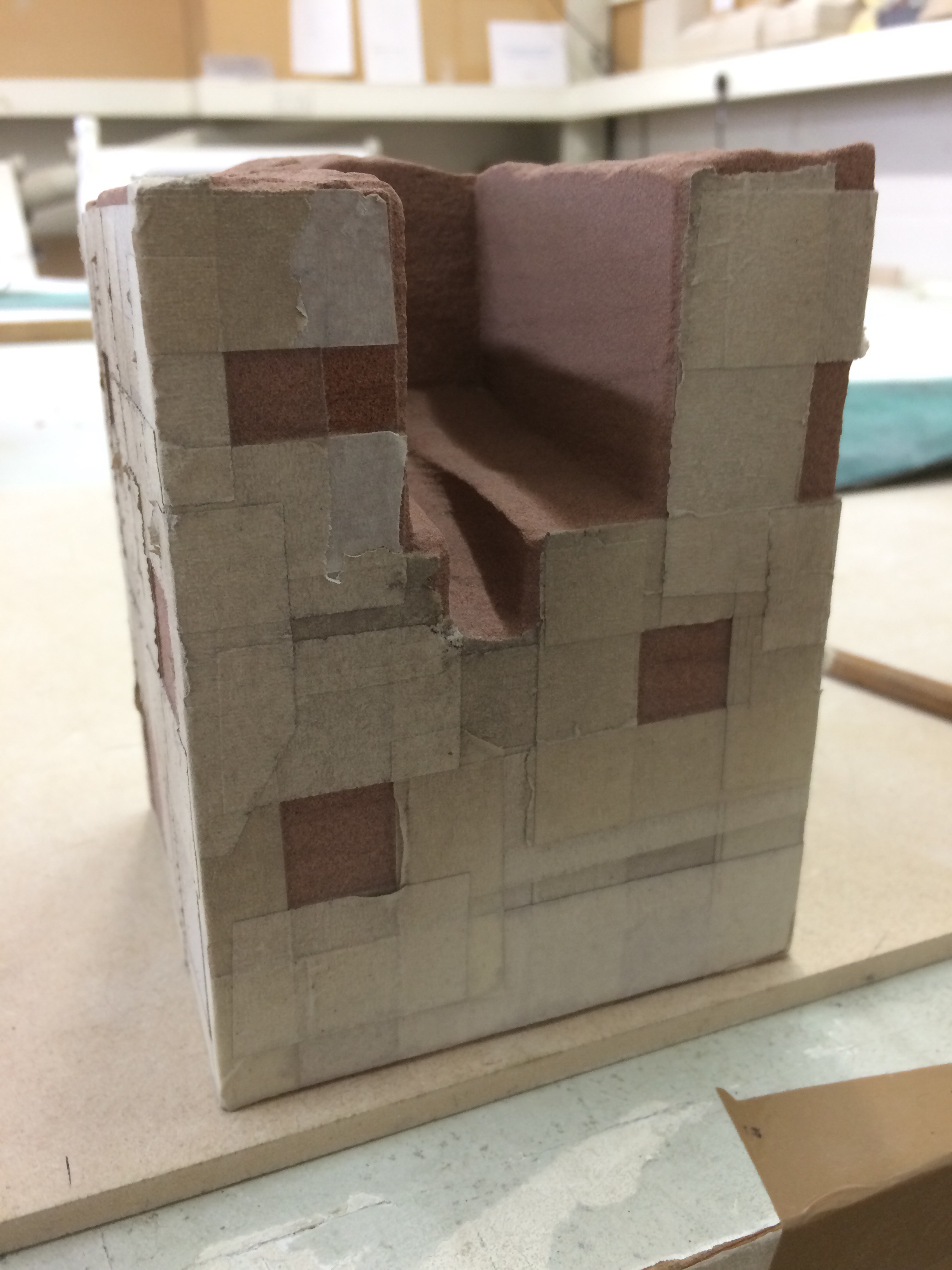
img_7232img_7231-2img_7228img_7230-2

Portal contd

when we say “I had a dream last night”

is this correct?

i actively dreamt?

MY dream?

i fell asleep, dreamt, woke up?

the dream begins when I enter rem sleep and ends when rem sleep ends?

and the dream is a way for me to process information from waking life, sift, siphon, distill?

or…

the dream is always there

I am conscious of it in different ways

i wake up and remember it

i write it down

the dream itself hasn’t ended

it continues but I am only aware of it at a different level of consciousness

not one that is immediately recognisable in the waking state

the dream is always there

always

for everyone.

it is a way for the Unconscious to feed data to us

to nudge us towards what Jung called Individuation, Consciousness.

The data is fed to us from an ocean of information, just as instinct and DNA informs our physical behaviour

this sculpture is about the portal through which the data passes.

Sold

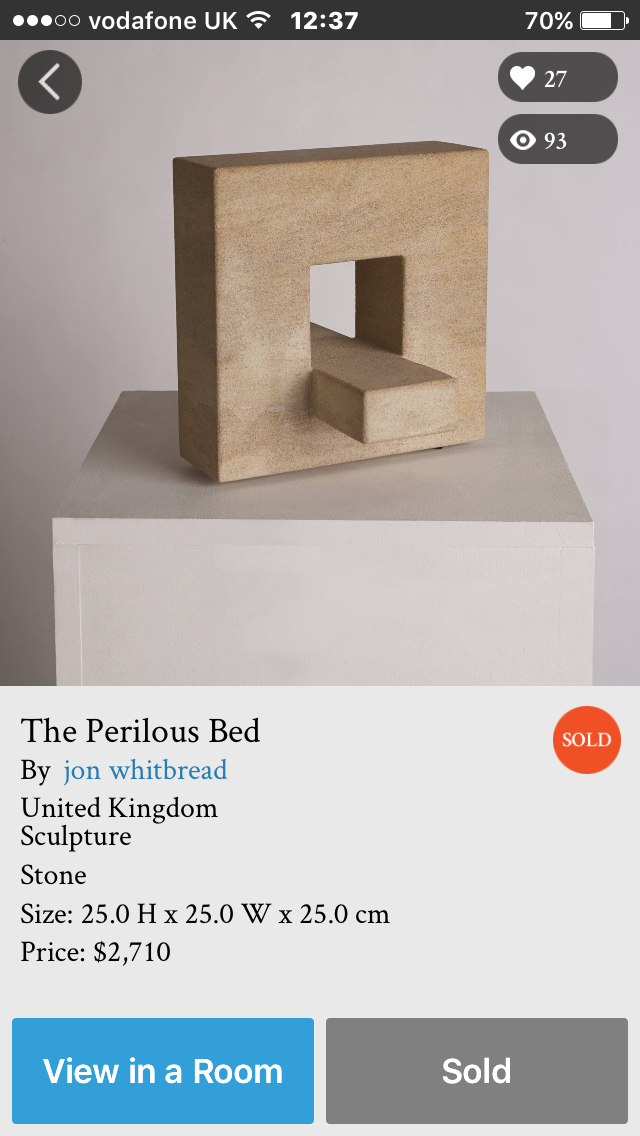
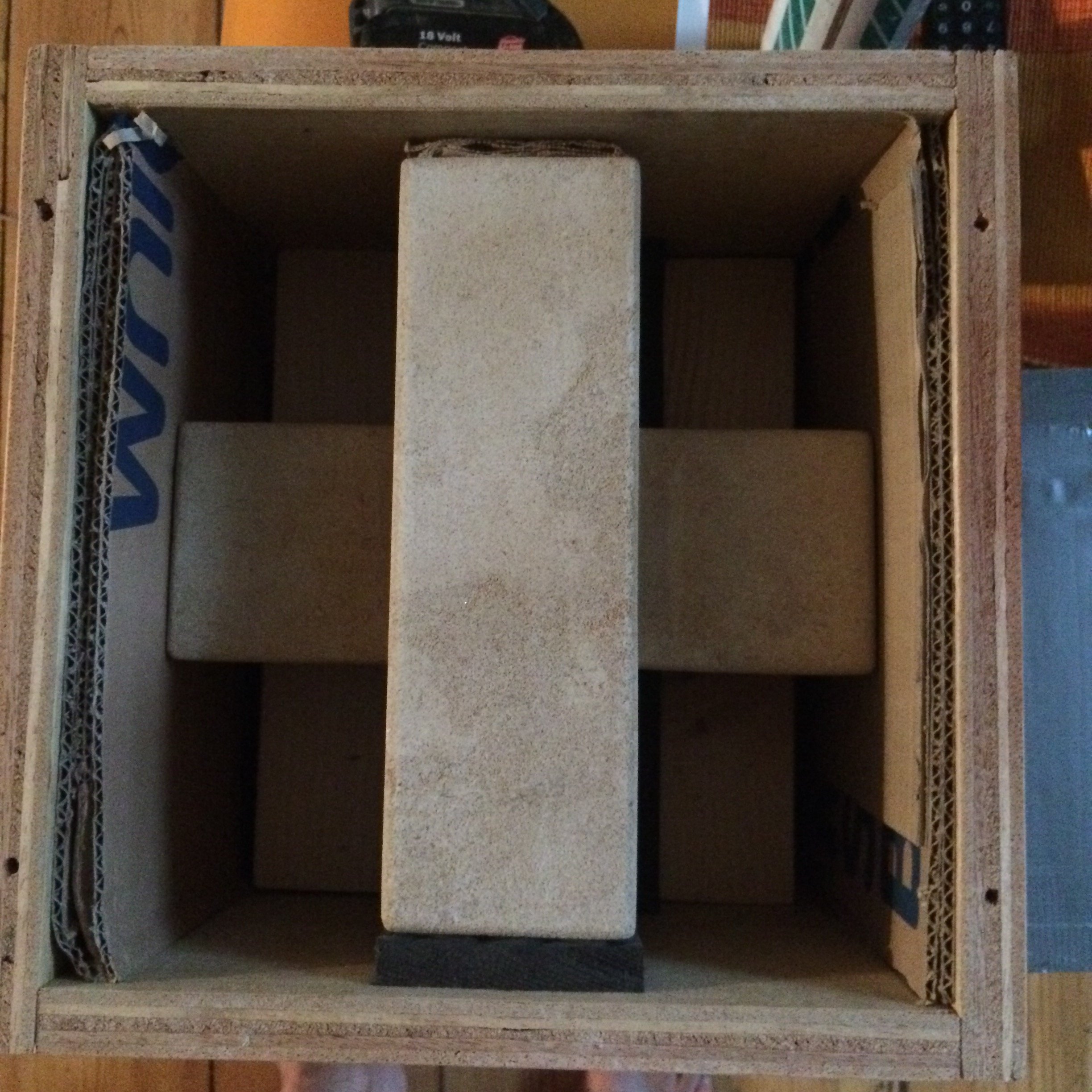
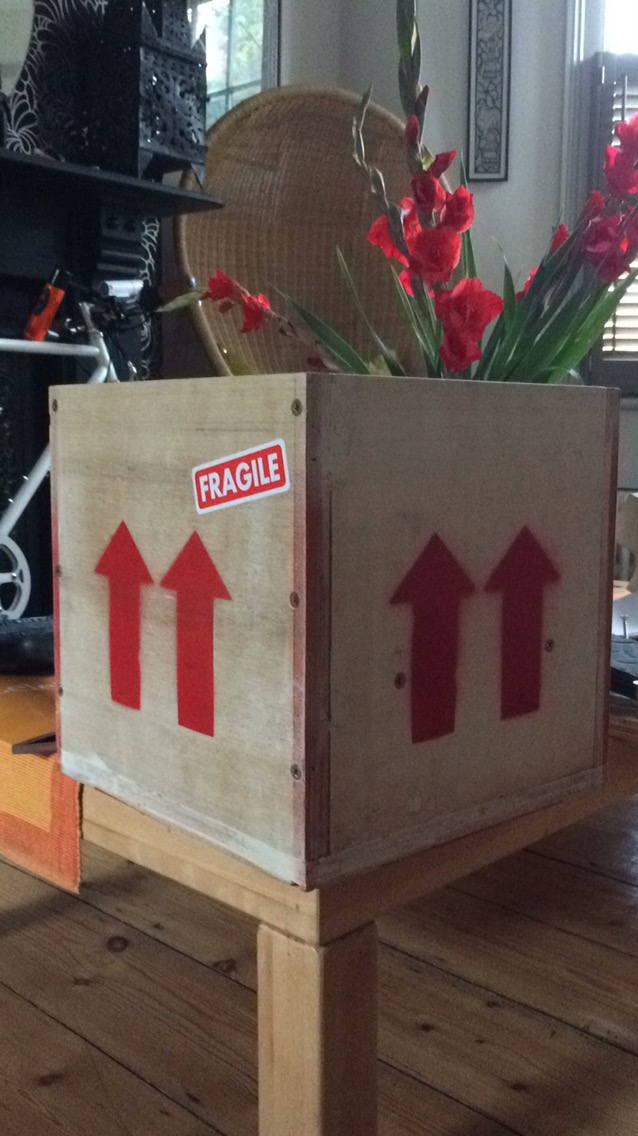
In July I received an offer for The Perilous Bed, designed a crate for shipping, filled out lots of paperwork and a courier took it to the buyer in France. The experience was surreal. I had no contact with the buyer. The money is held by the broker ( saatchiart) based in the States who take a fairly standard 35% and the buyer has a buy or return option lasting 7 days. So it’s great for them but disconcerting for the artist. The sale was completed so my sculpture is now in the collection of a person I have never met or spoken with.