


closing time at the BM
Home page
closing time at the BM
Experiments with sandblasting


Create
Curate
Collect
all attempts to address (control) ownership of the creative act and its issue.
Owning is a form of creativity.
Looking at the primal matter and activity of human consciousness is like staring into the crater of an active volcano filled with potential for creation and destruction and its going on ALL THE TIME.
Art is a concretisation of value in all its definitions.
Money is a symbol of value.
Art Is Value.


I approached the publishing house Faber and Faber based in Bloomsbury, London with a view to placing one of my sculptures in their offices. The sculpture (Wasteland (2014) Ancaster limestone, approx 13/13/5″) is one of a series i made (2014-15) in response to my reading of The Wasteland (TS Eliot) and its notes and references. TS Eliot was published by and worked as Editor for Faber and Faber from 1925 to his death in 1965 (the year i was born).
The sculpture references the episode in the Modernist poem called ‘A Game Of Chess’ and is intended to convey a sense of desolation in the space between the two opposing collonades, suggesting abandoned avenues and buildings, as conjured in the Modernism of De Chirico. The space can, however be occupied by the viewer.
They have accepted my proposal and I now need to arrange insurance, a time to deliver the piece (which is very heavy) and think of a way of harvesting reactions, if any.
Dead Sea Scrolls, Torah, Kerouac.
Scroll (noun) continual length of parchment/paper. Images and text as potential, actual and expended. What is the nature of the material while it is potential ie in the future and unseen, actual ie present and viewed and expended ie past and seen.
Scroll (verb) participate in the act of moving data in and out of view in a linear way. Somewhere between passive and active.
When we scroll and click to like on data platforms we are behaving as hunter/collectors.
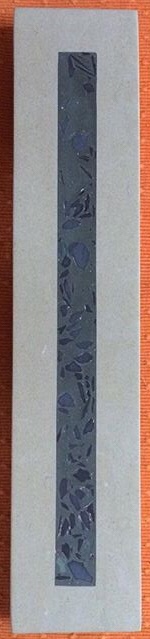
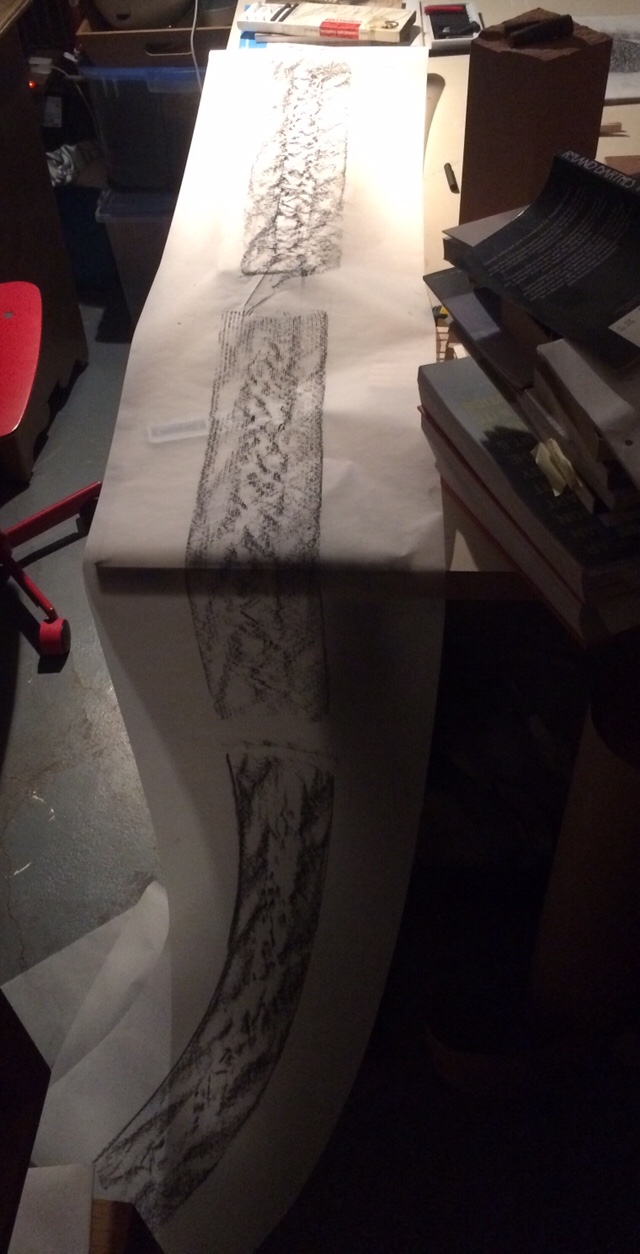
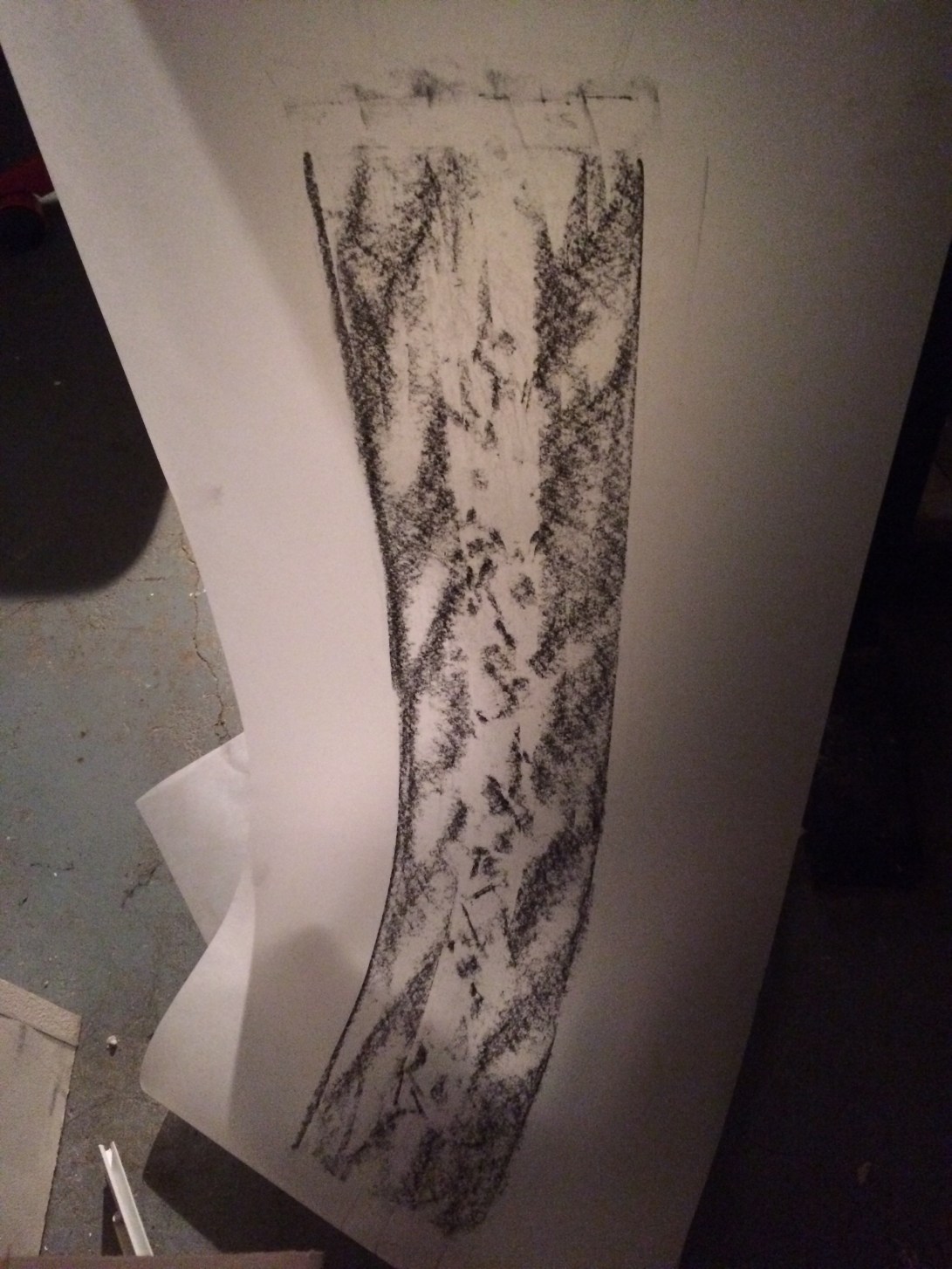
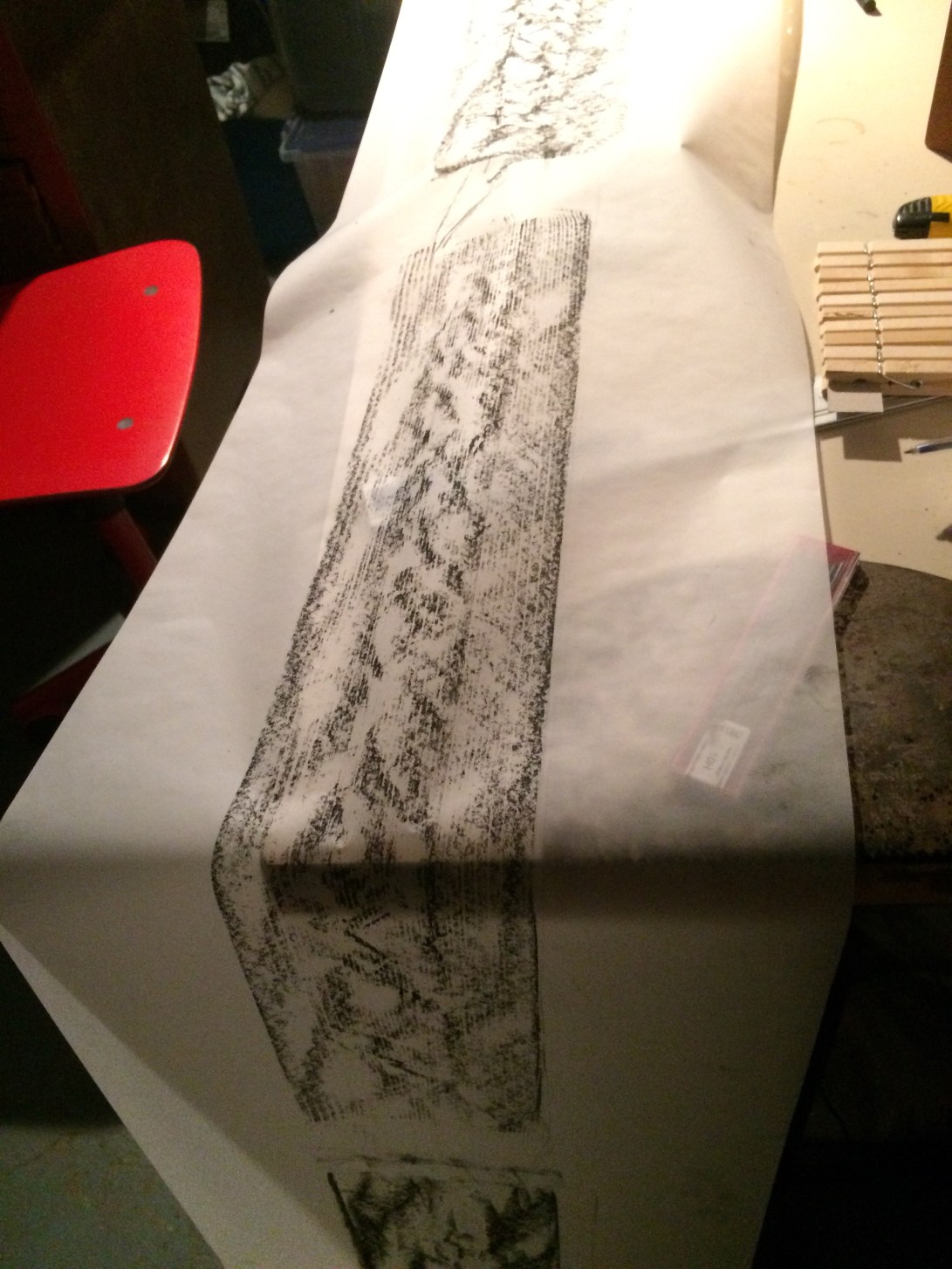
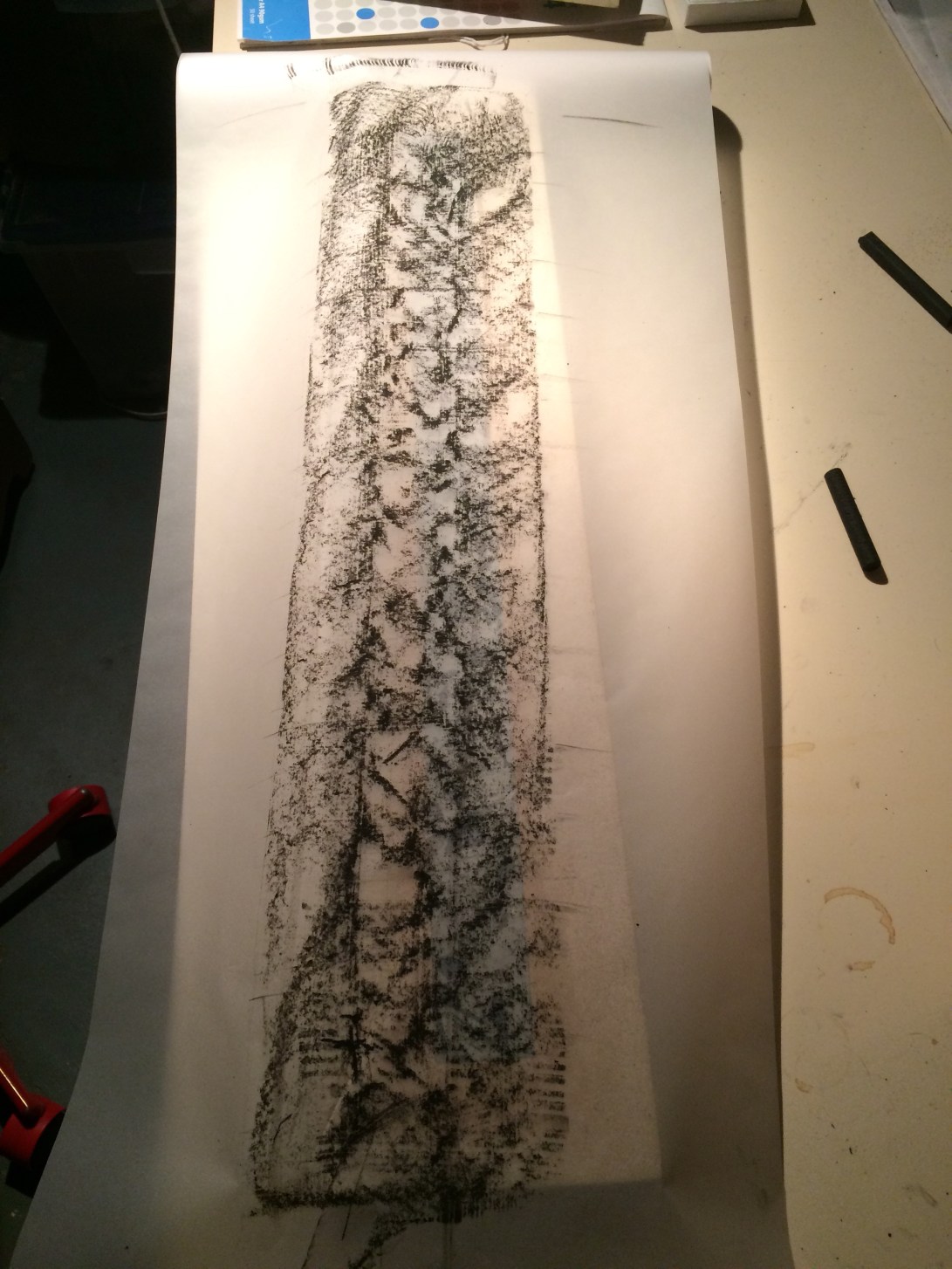
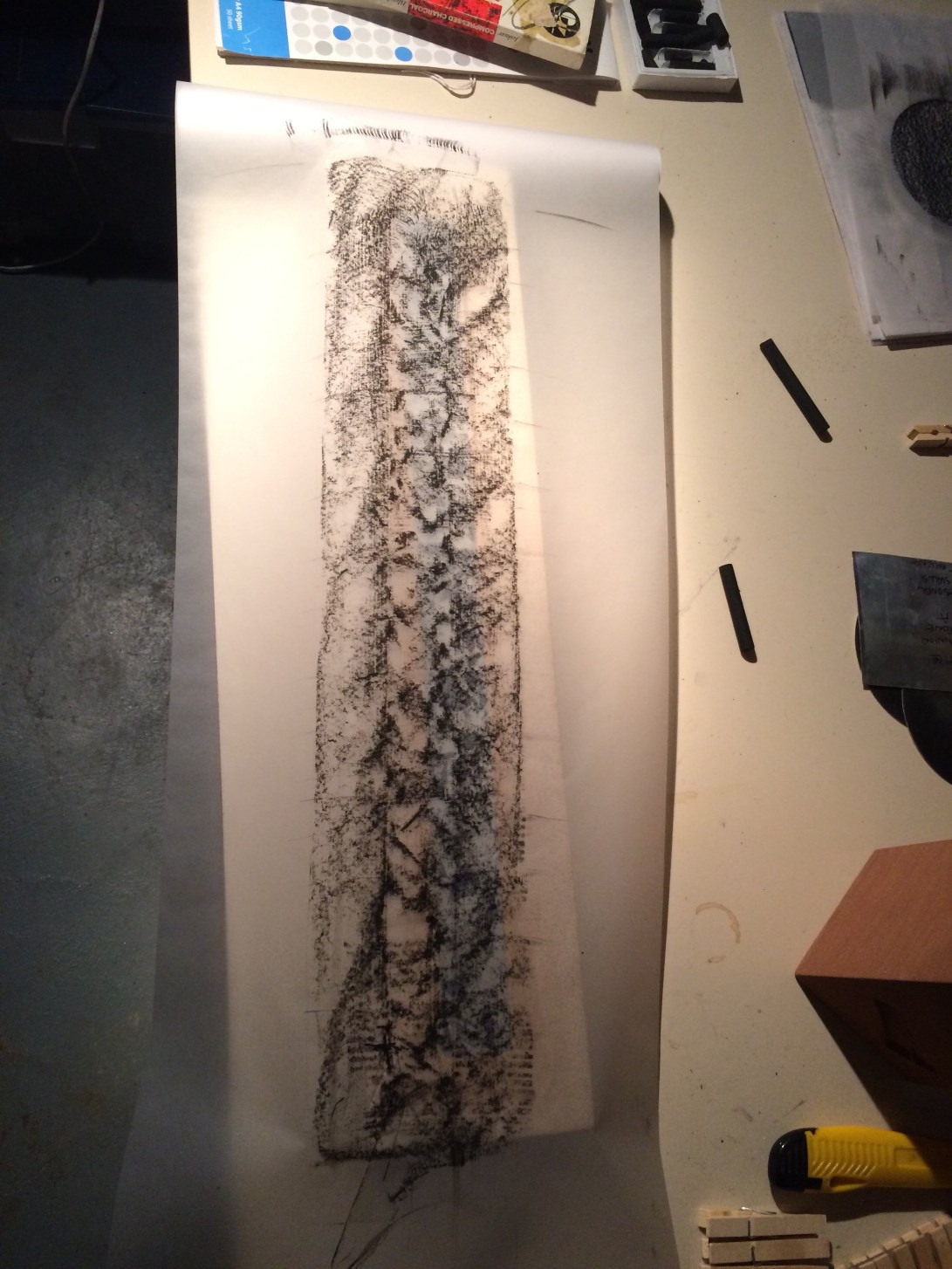
Here Im using a roll of tracing paper to rub/trace one of my sculptures (Portal (2017) 800/100/50mm Portland stone, slate chips, cement) with carved and uncarved pastels in different directions and with differing pressure.
Bad stone sculpture. By what criteria are these considered not just good but great? If they had been arrived at after a long exploratory study of the female head and neck then they might be of passing interest. However they are fine examples of a painters understanding of 3D form. Detail stuck on flatness. This is not arrival at or inclusion of the primitive or the addition of mask to classical but basic failure of technique or understanding of anatomy forcing form. Something I deal with when students attempt to carve or model the human head. So he tries to find movement in approaching the block from the corner or edge or by extending the length or height resulting in a kind of cod Easter island cliché. Style over content and no real form at all. No intent. Just absence of ability.
After the movement and tension of the Caryatid drawings the rest of the exhibition shows, to me, a lack of any technical ability or adventure, demonstrated by the lengths he goes to to avoid painting or drawing hands and feet, which results in curtailment and incompletion with some figures feet cut off by the frame like bad photographs- all energy bleeding out into nothingness. Where he does attempt feet and hands they’re weird and sausage like, self conscious and embarrassed. Love the eyes. Like the cylindrical necks. Interesting pallet. But where’s the fervour, energy, direction, experimentation of the world in which he was living? A caricaturist and illustrator.
LOOK AGAIN
A ferocious Modernist mind unencumbered by academy protocols and deliberately adrift from classicism and the strictures of anatomical accuracy. Paintings about paint and sculptures about stone, and both about his own psychological involvement in the process and with the subject matter as represented by the blind but seeing eyes. The deceptively playful colours, long necks and reptilian eyes serve to expose humanity as viewed by the artist. We are seeing the subjects not through the artists eyes but from inside the artists mind.
the casts of the beehive undersides of chairs is beautiful and some how evocative of my childhood – translucent colours of exotic soaps or perspex skateboard decks and wheels full of trapped light – desperate to touch them but the non-touching is a type of touching.
But once in I spent very little time in front of each piece. I marvelled at the craftpersonship of the casts of course and at the technical audacity and ambition. I think the sheer density of the effect of the holocaust memorial is overwhelming. The demolished house cast joyous, magnificent and tender.
But mattresses and hot water bottles whilst fun are less demanding of my time and i find myself outside after 10 minutes thinking that she needed to diversify somehow.
The idea of flipping void and solid, representing space as object
 JON WHITBREAD ART