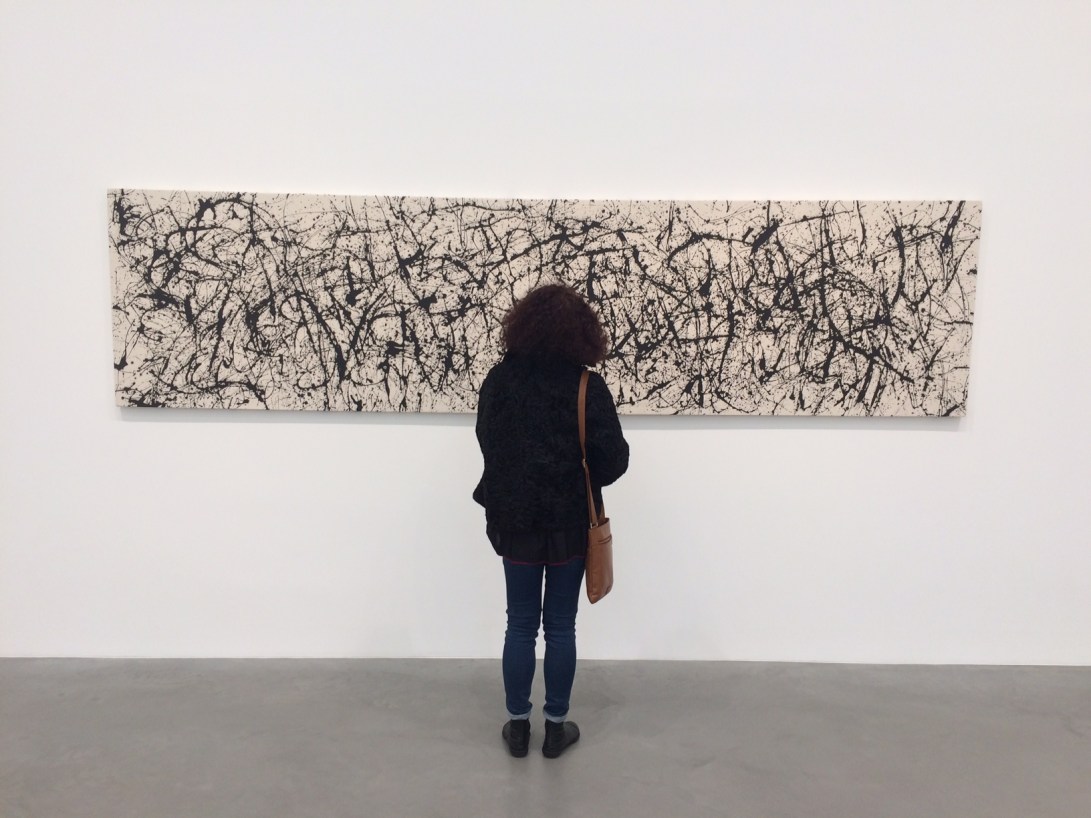
David Kefford

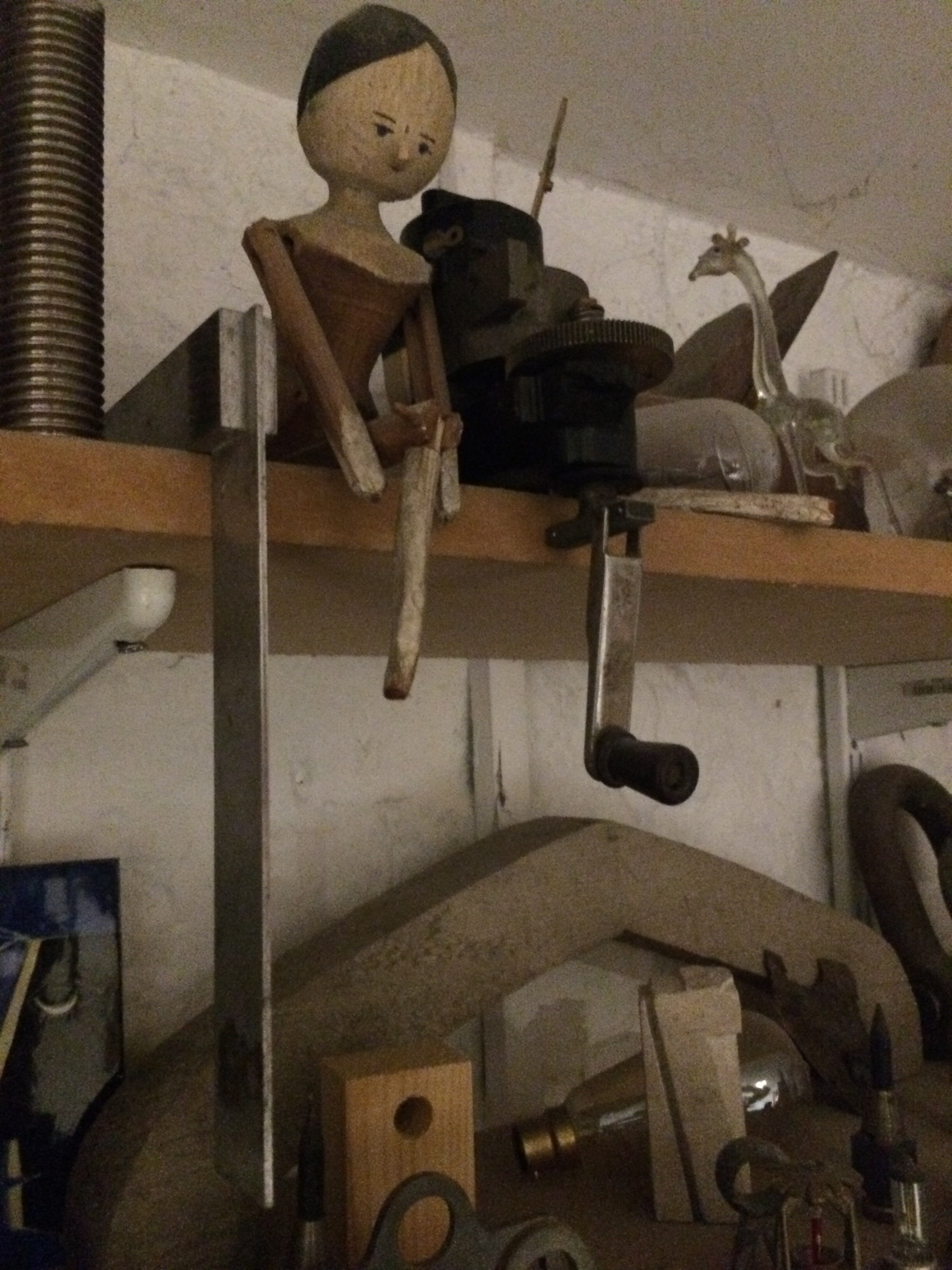
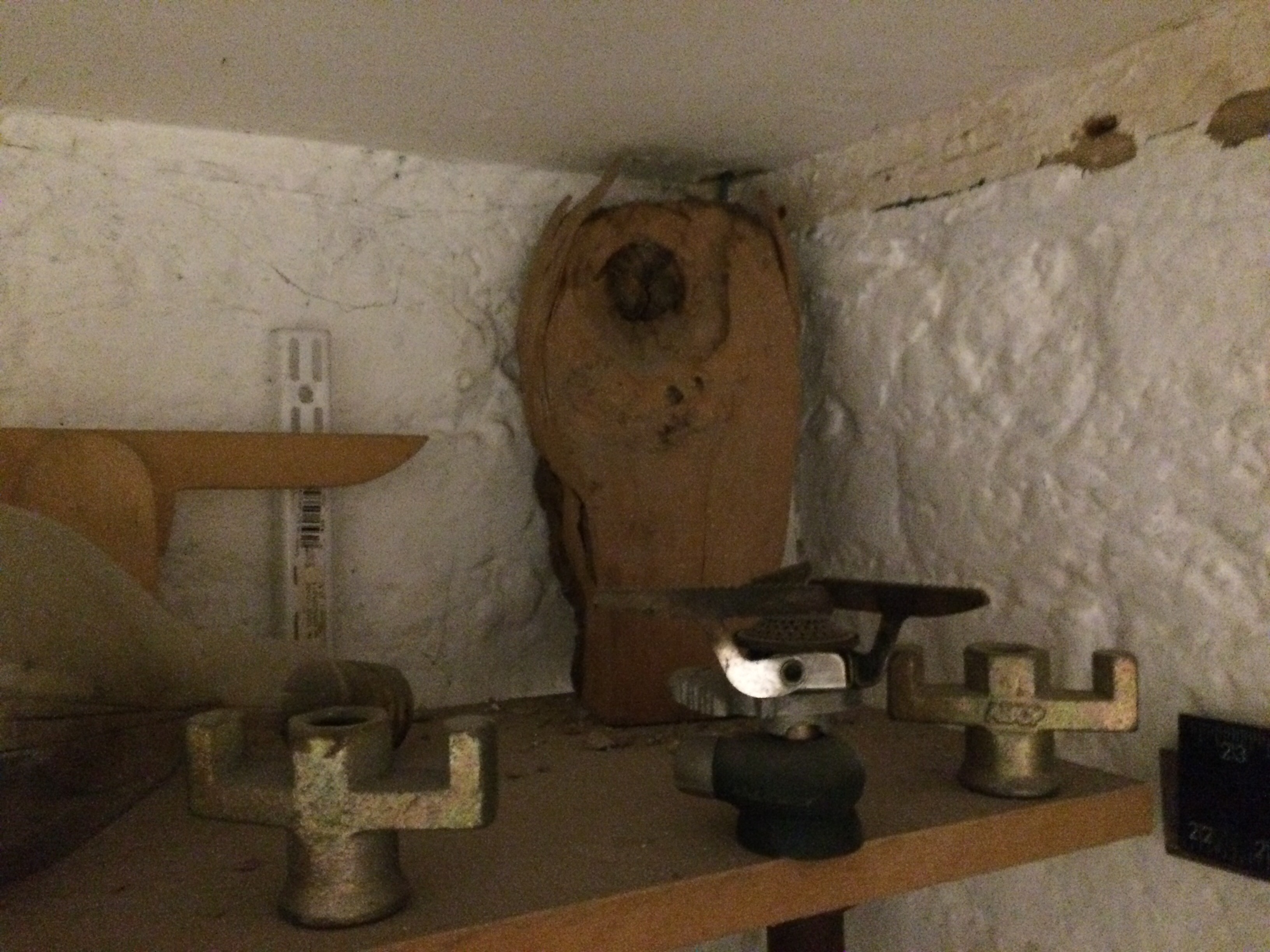
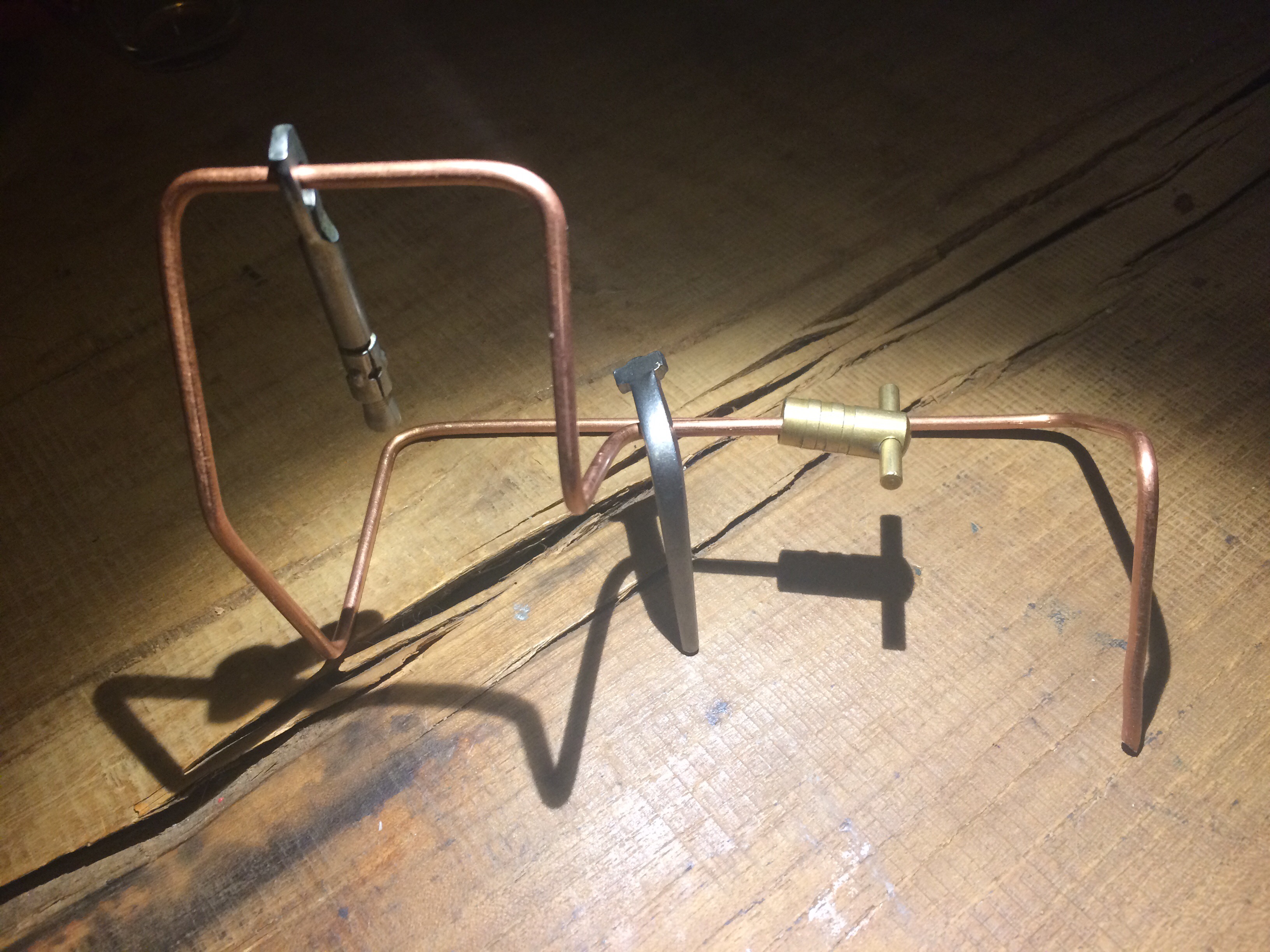
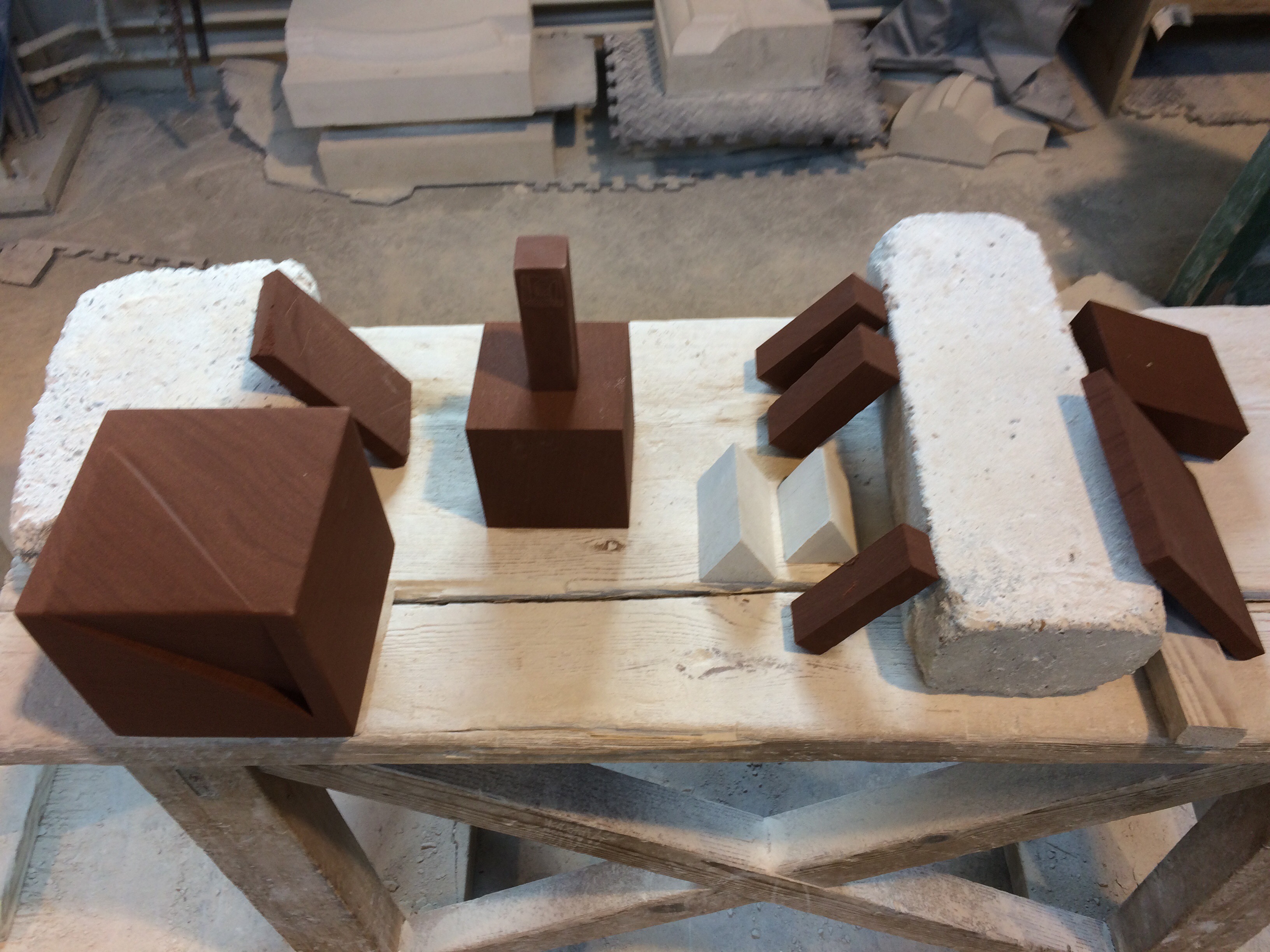
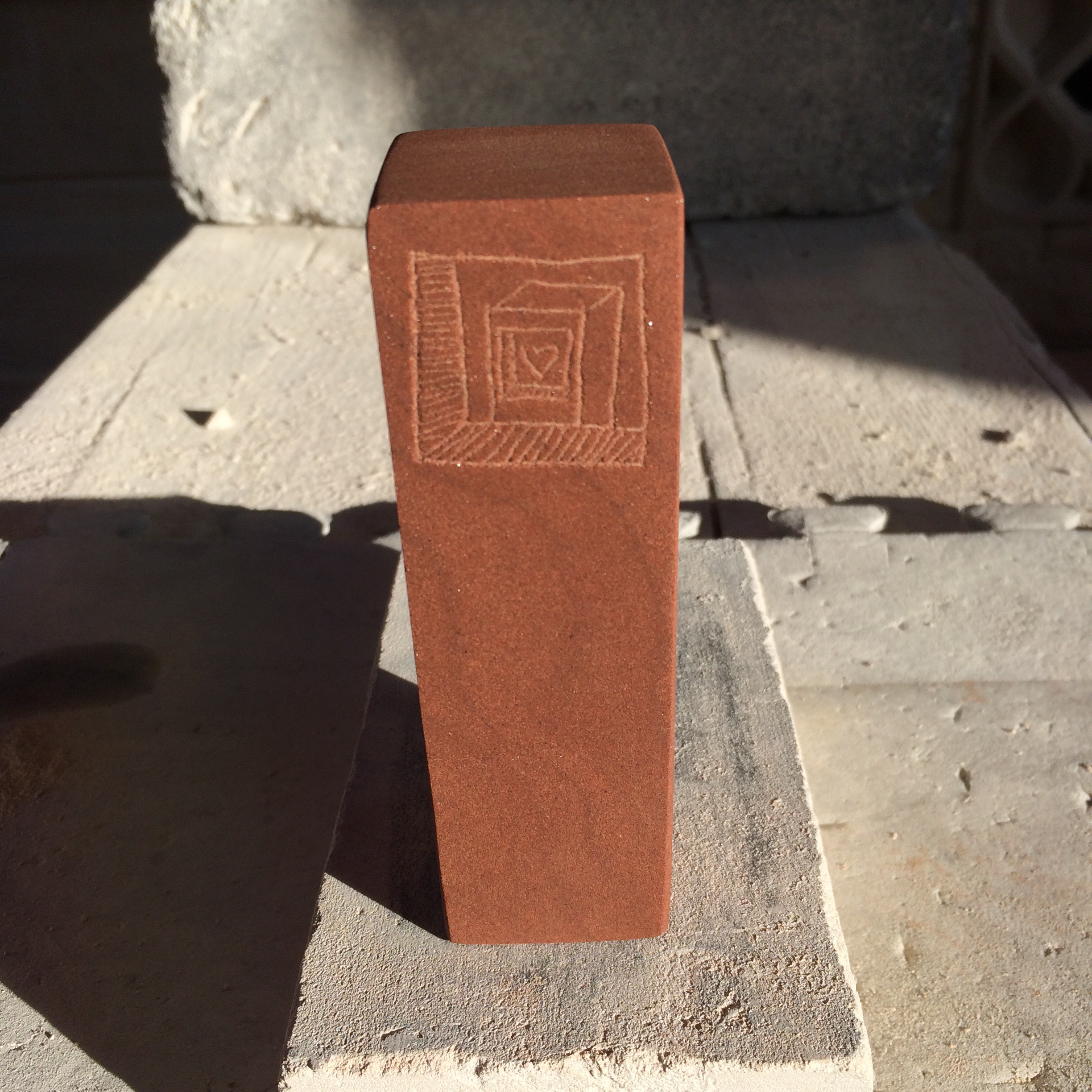
Inspired by Keffords ethic I revisited my neglected collection of artefacts found and acquired and “clumped and clustered” as he put it. During his presentation I also played with some copper wire from work and combined it with what I had been carrying around in my pockets for a while – a radiator key, bent floor board nail and wall fixing Ive used for years as a doorkey thing.Then at work in half term making sculpture I took the plunge and started making some mini sculptures using the off cuts of sandstone from a larger piece.

Working without squares and straight-edge!! Hugely liberating! Using a motif Ive used before in a more controlled way – a window in a tower. here a window in a tower in a window. A riff on cliches about finding the form within the block (which i reject as nonsense based on misconceptions). Here playing with the idea of St Valentine and the difficulty of getting to the heart of things etc..

Further reflections on galleries and curation

  • one of the problems I face as a sculptor in stone is that while most people have an understanding of the process of painting few have the same of stone carving. Their understanding rarely goes beyond the Michelangelo accredited cliche of ‘finding the form within the block’ and ‘what happens if you knock the wrong bit off?’ or “you must be very patient’ (Im not patient – a good stonemason isn’t necessarily patient but is highly trained – you have to work fast to make a living!).
  • this makes it hard to price one’s sculpture, find a gallery that understands stone sculpture, at least a little ( i have had work damaged by mishandling and even by wet paint), or find a market.
  • I am lucky in that I have a teaching position that enables me to make sculpture. I have decided to focus on building a body of work that expresses the things I need to express. Uncompromising but I have spent 20 years acquiring the skills I need to do so by working as a restoration mason and carver.
  • would I like to live by selling my sculpture? its not a straightforward thing. Right now I am working with tools and equipment rarely available directly to sculptors in stone. In order to make the work I want to make right now I need access to a big table saw. I am trained how to use it. Without it I would have to show my designs to others and get them to do the primary cutting. But the thrill of doing it myself, basically directly drawing in the stone in 3d and seeing whether or not it is a success or a failure, is a huge part of what I do and why I do it. If I ‘succeeded’ as an artist ie gave up the day job – I would have to do so to the extent of buying my own table saw. £80k. And hiring a space to use it. etc.  Also the tension created by balancing life, job, family, money and sculpture is part of the dynamic.
  • Would I like to sell more? Money is always welcome of course. Recognition of my work as a thing of monetary value? All good for ones ego and self esteem! But the most pleasure I can get outside of making the work is seeing it all together as a BODY OF WORK as it is intended to be and offering it to the public, with or without my guide notes, for them to have their own experience of it. (And if one sells in a gallery then the percentage cut paid to the gallery that took a chance on showing my work comes as a great relief!)
  • just listened to

    The New Curators: Who Decides What’s Culturally Important?

    On BBC Radio 4.


  • when we first discussed the curator in class I came at this with considerable prejudice which has dissipated since hearing the cohorts input. My feelings towards what i saw as an artificial layer of self-invented non-artists were of suspicion and irritation. Yet another Management Class between the worker artist and the consumer public that is not needed and in fact is a barrier to real communication. Like Gallery owners and Auction Houses commodifying creativity: not art lovers or even art understanders but niche marketeers playing percentages etc etc. 
  • I now realise that as with everything there is a spectrum of curation ranging from enabling to controlling. Helpful.

Abstract Expressionists at the RA 2016

thumbnail_IMG_5274.jpg

On Pollock

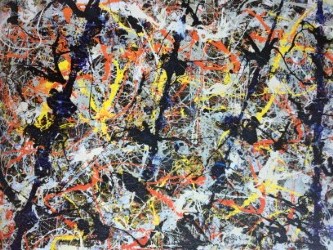
There is a scaffolding to some of Pollocks work that the painting hangs off/onto that can be detected by staring at any given point whilst allowing the periphery to emerge in multi dimensionality out from the canvas and into/inside it. Stare at one shape, one line or one colour and the painting reveals itself, its rhythms, mechanics and layers of thought, non-thought, behaviour, response to internal landscape. In fact its only when one has scanned the surface, letting ones eyes run helter skelter around the lines and forms, finding nothing, and then focusses on any point that the universe of multi-dimensional electrical activity opens up in all its glory. Wave, line and particle and terrifying rhythms of dark matter and gravitational waves of the macrocosm and the ageless archetypes of the macrocosm.


)thumbnail_FullSizeRender.jpg

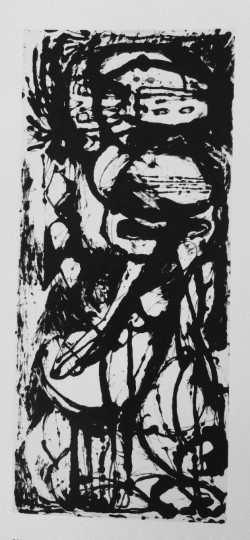
Pollock No. 4 (1954) Above. whole figures, beasts emerge until I detect a twisting, squatting female form allowing itself to be seen by him (or him forcing his way through the undergrowth of the wild wood (The Unconscious) attracted by the sounds of goddesses and nymphs at play, to see her) three heads, buttocks exposed, menstrual blood gushing into the earth, its Diana/Artemis seeing him, Actaeon, seeing her, the Anima in all her terrible beauty and there is a price to pay. (In the myth Artemis transforms Actaeon into a deer and he is torn apart by his own dogs. Pollock died in alcohol related car crash – pursued perhaps by his own Black Dog). On the left 2 penis fish and a penis whale stare entranced, at worship. (or are they the severed heads of Kali’s necklace? see below). Jung suggested that a mans encounter with his Anima ( or the Woman’s encounter with her Animus) is the “masterpiece” of his development and central to the creative process. Pollock was interested in such matters.

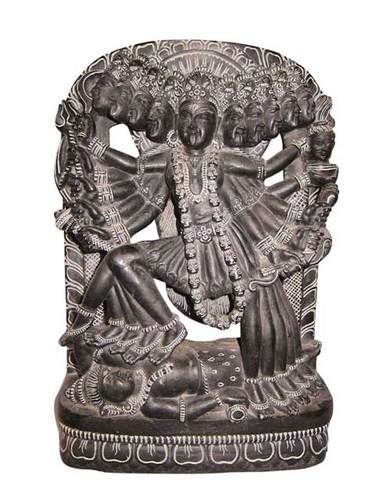
Or is it Kali, Goddess of Destruction that is required for Creation often represented as being bathed in blood, many headed, bent at the knee and standing over Shiva

kali.jpg

On sculpture

The sculpture i find is thin and spindly with no mass or volume. one view point. 3d paintings. of no interest to me. But I should look again.

De Kooning

cave painting and hieroglyph in particular of the female form – comparison with British Museum Ice Age Art (Netherland Neanderthal? ouch)

Rothko

7 paintings beautifully hung and lit on 5 sides they provide a backdrop for the visitors who move in the choreographed rhythms of a congregation observing a religious rite, pace pace pace stand stare adore pace pace pace its mesmerising. But i think Rothko would be appalled – he was trying to express human emotion, not have others consume his. Theres too much worship here to allow the paintings to speak.

Note: re-reading this I realise that to say “I think Rothko would be appalled” is a silly statement. What do I know about what he would think of it!?  However he did say “im interested only in expressing basic human emotions…The people who weep before my pictures are having the same religious experience I had when I painted them.” (reference pending). Which suggests an interest in empathy and common humanity rather than the worship that this exhibition seems to cultivate. But dont all gallery exhibitions invite or deliberately design in, this sense of iconography and is this a good, bad or natural thing?


form frame fracture (update)

v and a.png

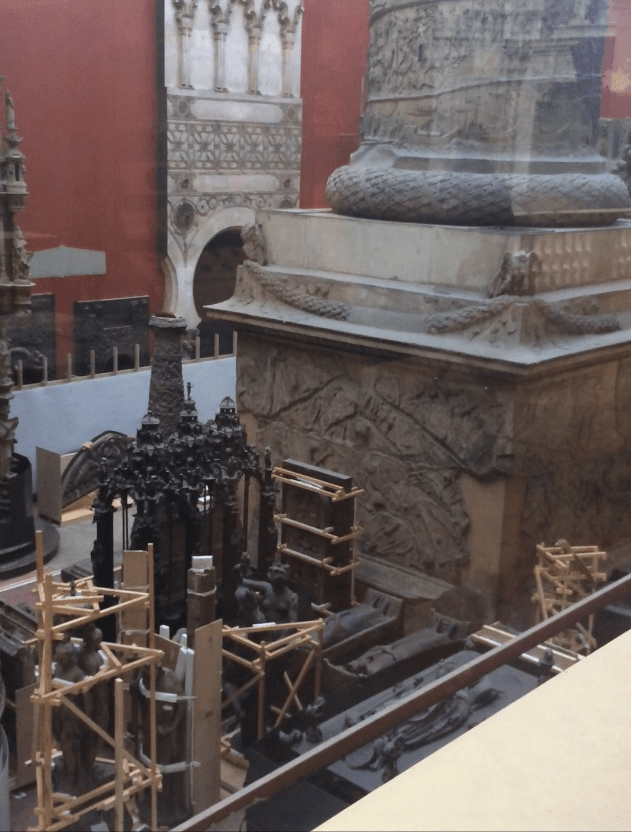
Top – Victoria and Albert Museum Cast Room undergoing works.

The casts, as artefacts that are not only valuable as secondary source reference and as a Victorian alternative to stealing the primary artefacts, but also as a primary source for students of the art of plaster casting, are crated up just to be moved around the floor of the gallery. The combination of the timber batten, polystyrene softening and casts make fascinating structures and a great literal representation of Form, Frame, Fracture. they are like sculpture turned inside out. And they’ve all huddled together – a new conversation.

However here is my FFF project so far:

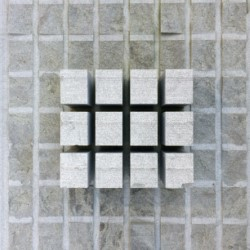
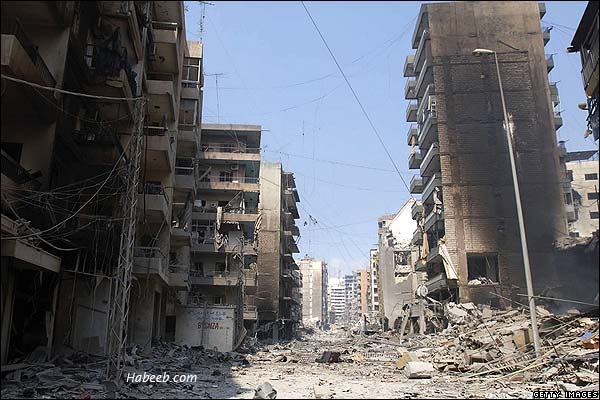
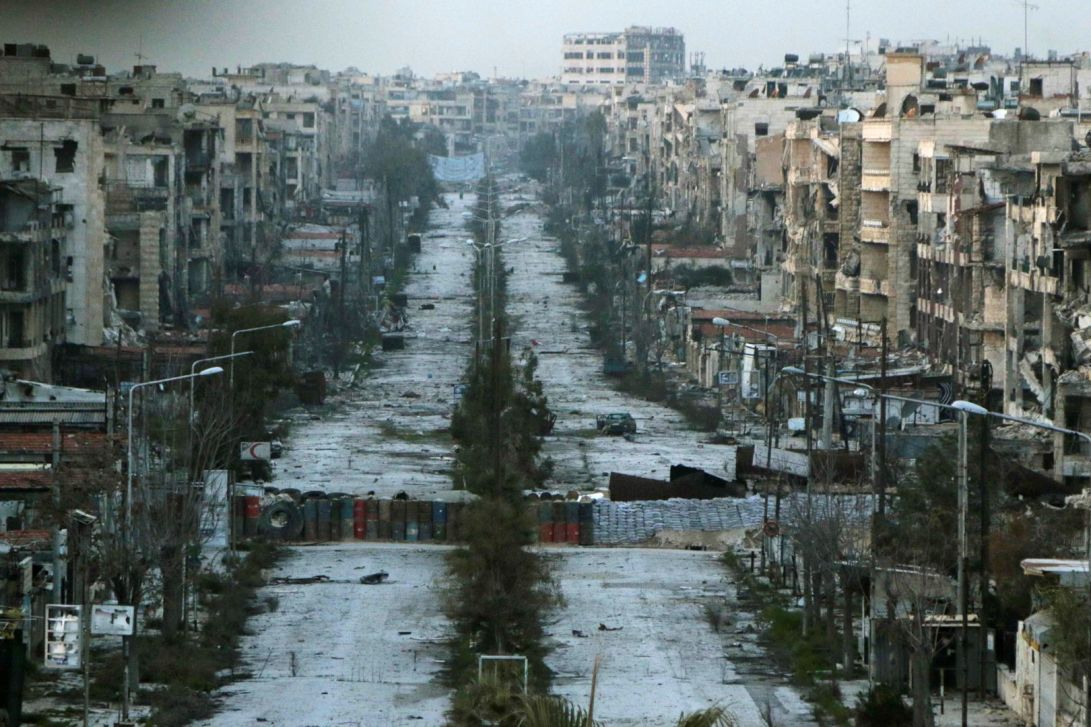
Below – The Wasteland II (Pennant Sandstone) trial sculptures. April 2016.thumbnail_IMG_5231.jpgthumbnail_FullSizeRender.jpgthink I have been resisting using my current practice to address this project – Perhaps I thought it was too obvious an interpretation to create the form within a frame and then smash off parts of the form. But in fact it gives me the chance to revisit this work that I had set aside after doing them as kind of trial/maquettes. The initial sculpture was conceived as a landscape, resonating De Chirico and H G Wells deserted structures at the end of the Human era in The Time Machine, as well as images of the great Mediterranean avenues of Beirut during the civil war 1975 – 90 when I was young. beirut.war.2006.007.jpg

And now seen again in Syria. Aleppo.aleppo.jpeg

The Wasteland (Ancaster limestone 2014)

d5bb408c-f4bb-457a-97f6-b5f3b9c7880d.jpg

I had already decided that Form would represent birth, Frame life and Fracture death, but that the word Fracture was an open ended word that leads back to Form – Death and Life are inseparable. Here is Beirut now.

NN_BeirutDowntown_0011419873970.jpg

Rebuilt but underpopulated.

The Square by De Chirico (1914),512a0b41b2b285de58c0377dd70dc1f9.jpg

Strange similarities with the photo of Beirut Rebuilt. The photo almost out-Surreals the painting! The painting is full of Phallic dream imagery. This makes me think of the ruined buildings as phallic. In the Arthurian Romances (15th Century Europe) the land is wasted because the King is wounded. His wound is described as being in the groin or thigh, a metaphorical impotency. He was wounded by a boars tusk or by a spear thrust, both having phallic symbolism. Can the ruins of Beirut and Aleppo be seen to symbolise, or be an expression or a symptom of the impotency of those who are causing the destruction?

Meditations On Form Frame Fracture

thumbnail_FullSizeRender.jpgHenry Moore On Sculpture Ed. Philip James Pub. Macdonald 1968 p.62.

I agree. However here goes…

I try not to approach commission work head on – I have to try to allow it to approach me. 

I have been chanting this mantra of the three F’s in all its possible orders but Form Frame Fracture has stuck, partly due to the music and poetry of Van Morrisons “Slim Slow Slider” (1968 Album “Astral Weeks” Warner Brothers) which has attached itself like an earworm to my musings on this project.

Analysing why this is, its obviously to do with the rhythm and stresses of Form Frame Fracture and Slim Slow Slider (with the last syllable of both ending with a Schwa sound

Ə

-the most common sound in  English diction

A, the, sister etc

which has almost become invisible, de-emphasised through frequency therefore open – leading into something else, something next. Hence Fracture is open ended, malleable, useable, indefinite as opposed to Form and Frame – finished words starting and ending with hard consonants and defining something whole and complete – inflexible).

So stuck with Form Frame Fracture in that order for now I began thinking about why the imagined client who commissioned this piece chose those words in the first place.

Its a tryptich of words in the great tradition of

Father Son Holy Ghost (oops thats four words)

Lover Beloved Love

Beginning Middle End

and as I tried to approach it as a psychoanalyst might in order to make a connection, to find common ground, I began thinking that Form might be connected to Birth, Frame to Life and Fracture to Death. And if I connect this with my previous musings on closed sounds and open sounds and concepts this suggests that Form/Birth and Frame/Life are closed – while Fracture/Death is open or maybe not Death, but Rebirth? that schwa again.

Hmm this is all a bit far fetched and not getting me any nearer to an idea of what to do with this.

In the meantime it seems Van Morrisons song was also about Death. In Ladbroke Grove, where I was born.

And hang on, Henry Moore got many of his ideas from

“Catching pebbles (from) some sandy beach”! – Something I am suspicious of.)

Its all out of reach.


Lyrics to Slim Slow Slider

Slim slow slider
Horse you ride
Is white as snow
Slim slow slider
Horse you ride
Is white as snow
Tell it everywhere you go
Saw you walking
Down by the Ladbroke Grove this morning
Saw you walking
Down by the Ladbroke Grove this morning
Catching pebbles for some sandy beach
You’re out of reach
Saw you early this morning
With your brand new boy and your Cadillac
Saw you early this morning
With your brand new boy and your Cadillac
You’re gone for something
And I know you won’t be back
I know you’re dying, baby
And I know you know it, too
I know you’re dying
And I know you know it, too
Every time I see you
I just don’t know what to do

Written by Van Morrison • Copyright © Warner/Chappell Music, Inc


Half Term

Half term next week so Im going in to finish this sculpture, cut some blocks for new work and do some work on a restoration contract, shaping a block and cutting some numbers for a keystone on an Edwardian drinking fountain.

img_4813

Whilst meditating on Form, Frame and Fracture!

My News

This is my first blog so let me know if anyones out there!!


I started my MA Fine Art!!

Plus

img_4846-1fullsizerender-3fullsizerender-4

Flash (ancaster limestone) made for Eleykishimoto Design appears in Autonomy at Gallery 46, Whitechapel, London.


Three of my poems and one of my sculptures appears in Across The Margin online magazine based in New York.  acrossthemargin.com/jonwhitbreadpoems


fullsizerender-5

First glimpse of new stone handrail in The Science Museum, London, for MUF Architects.