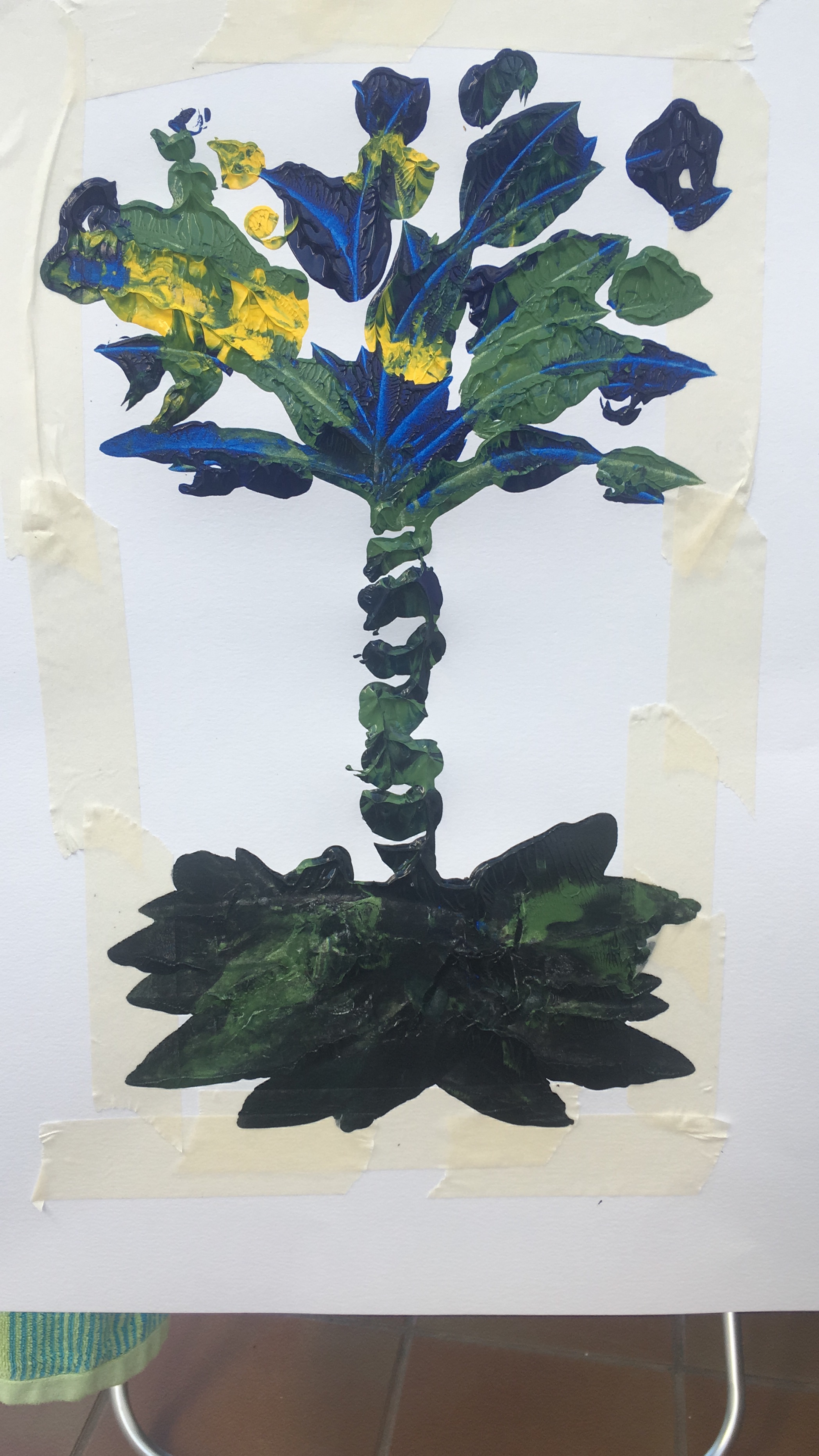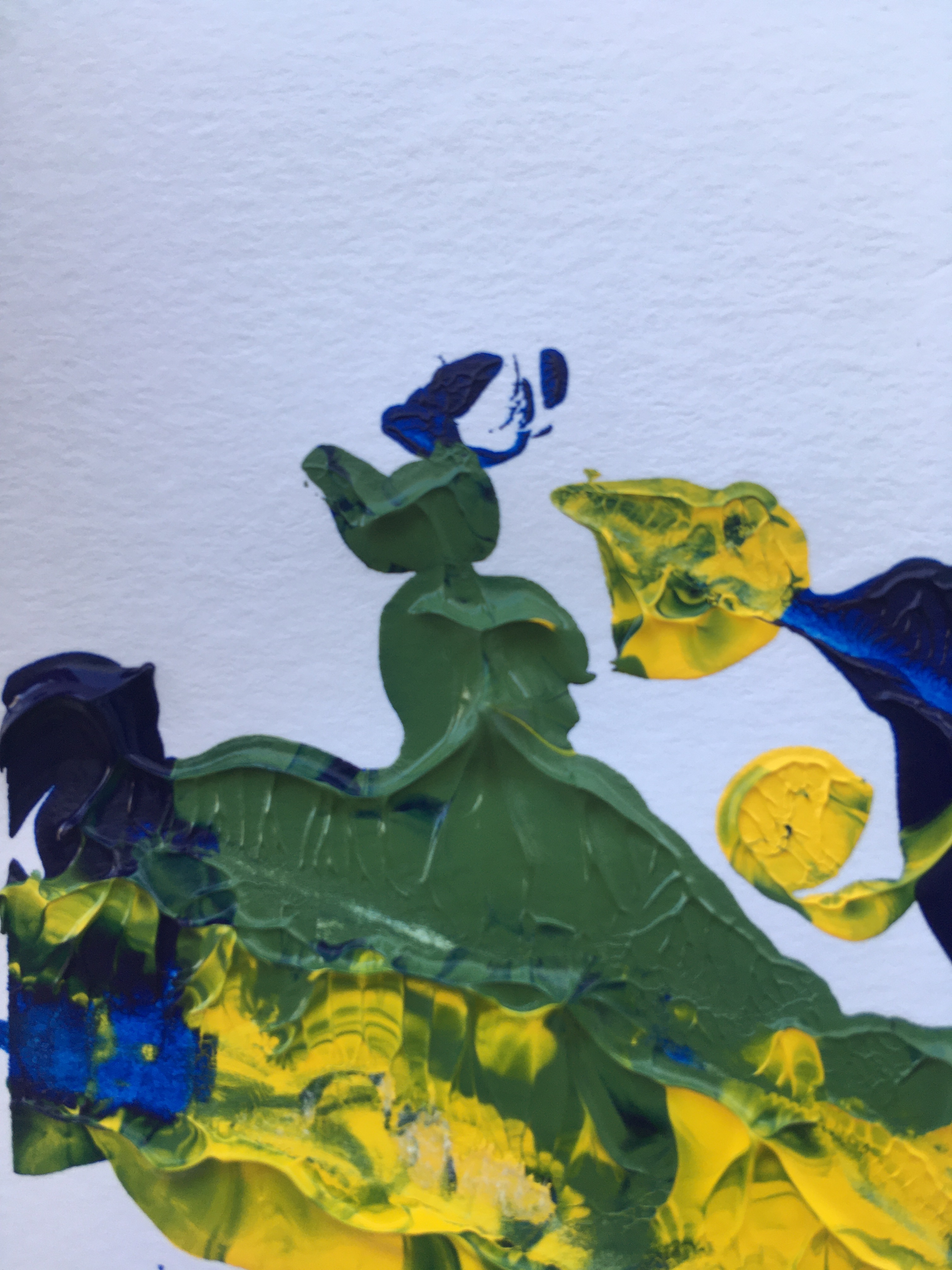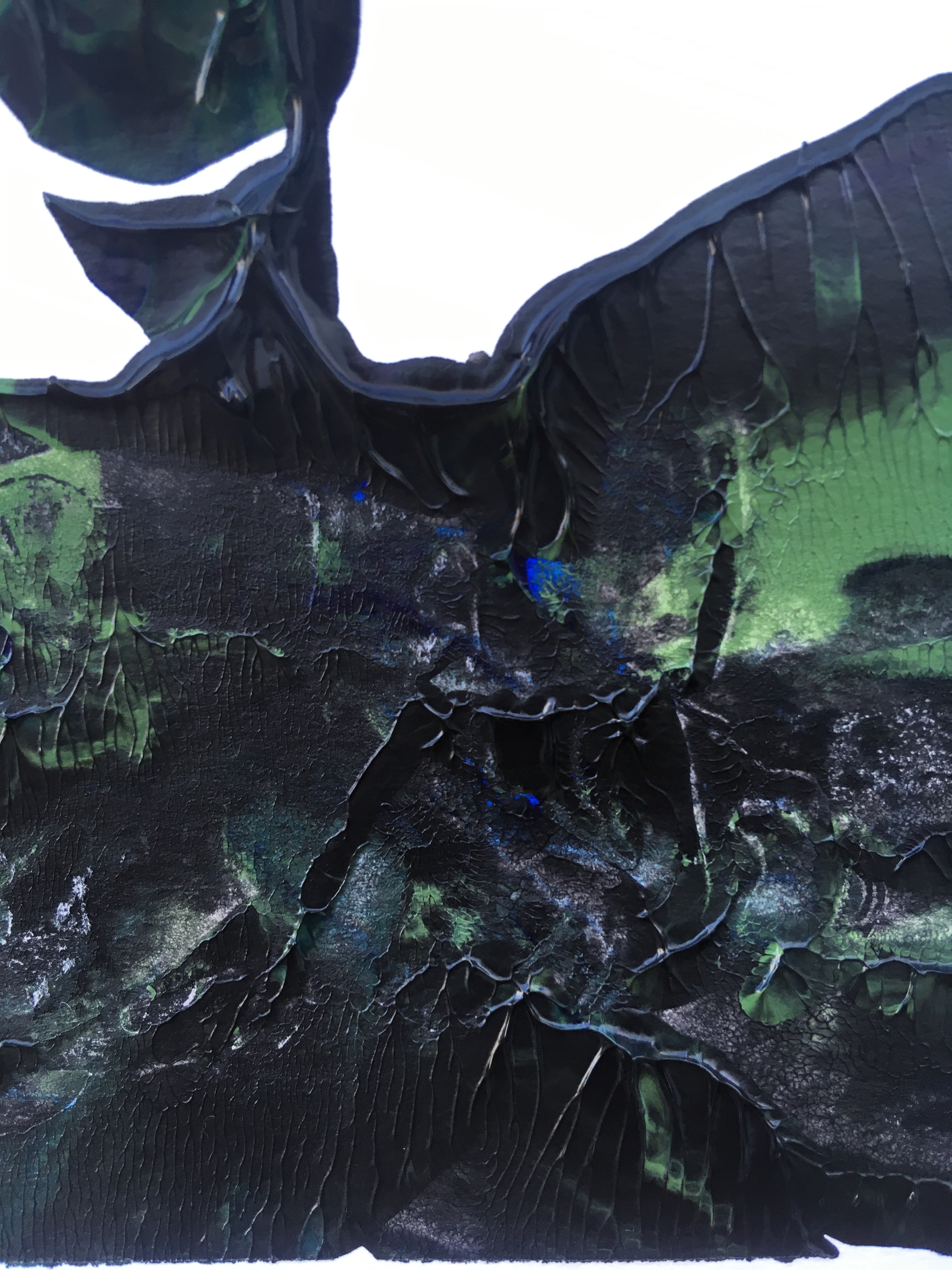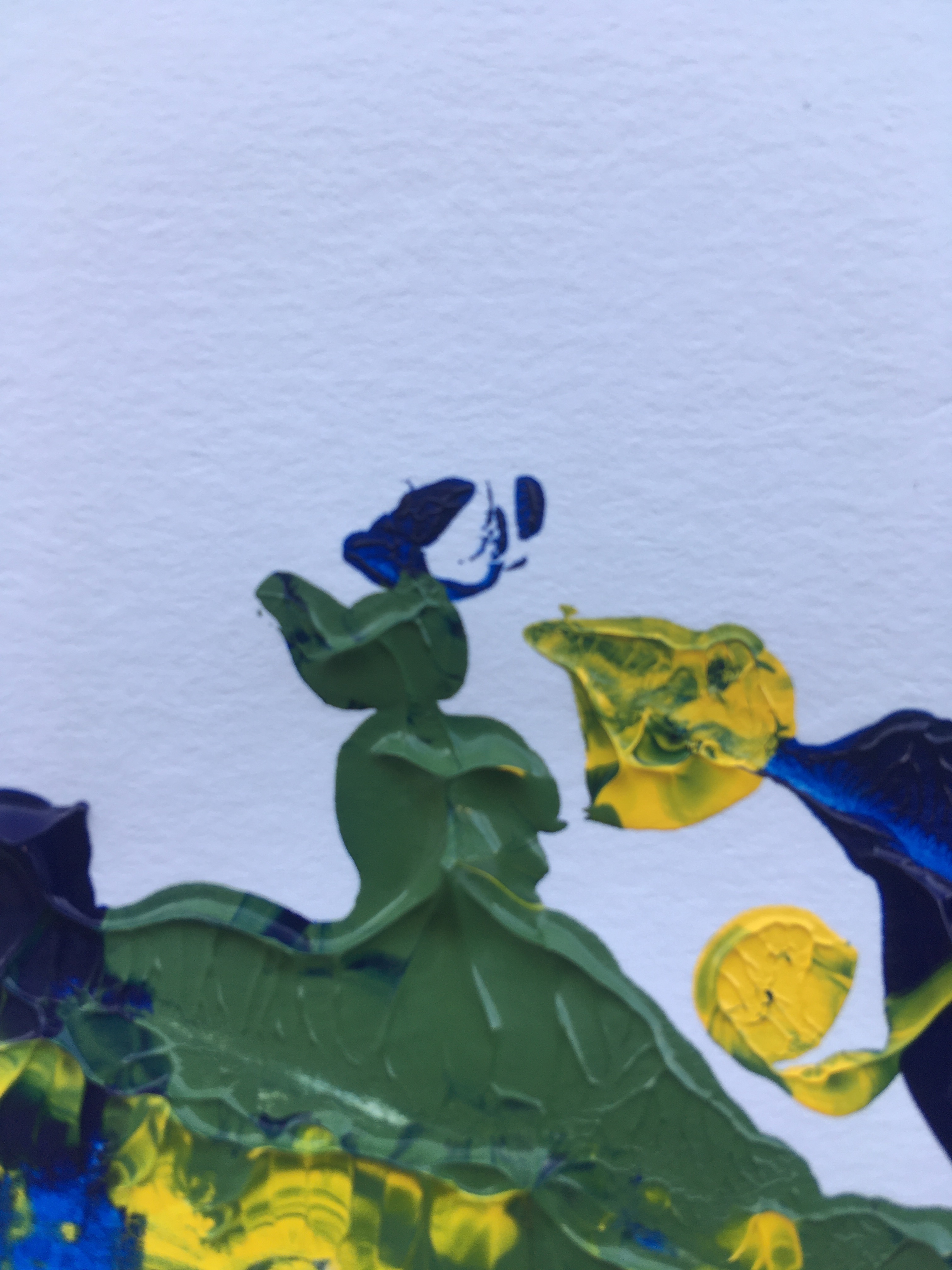
“God is a lobster”

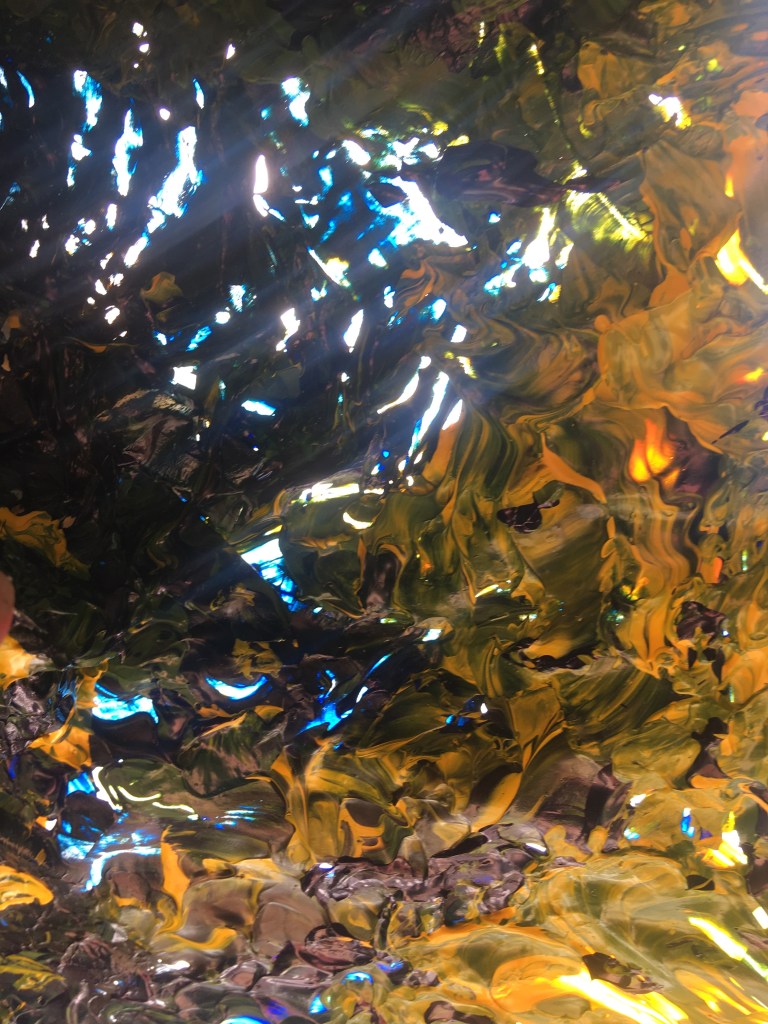
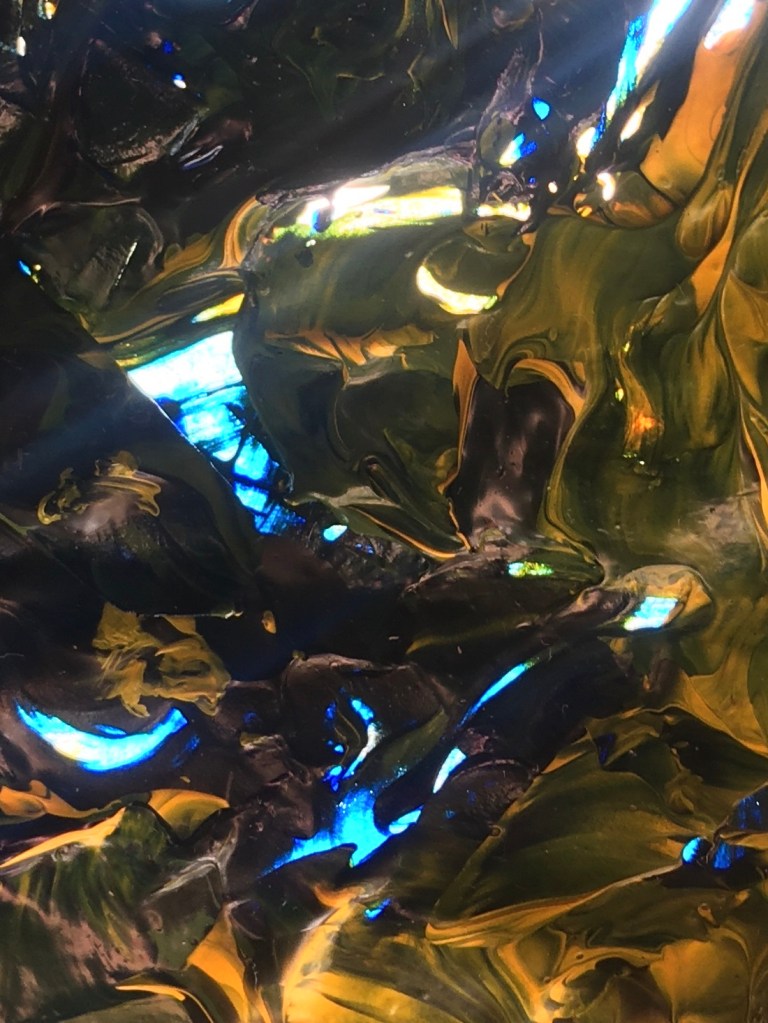
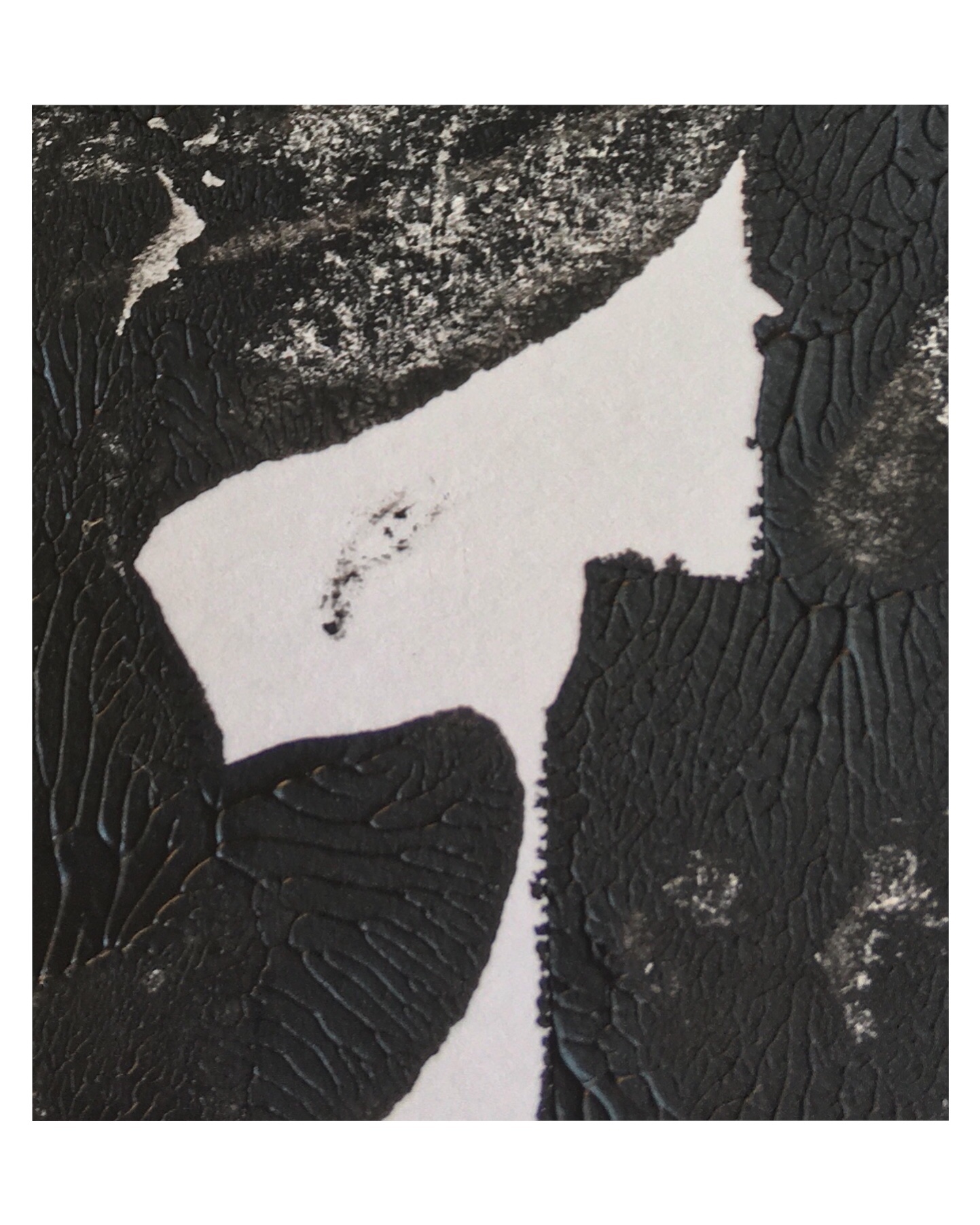
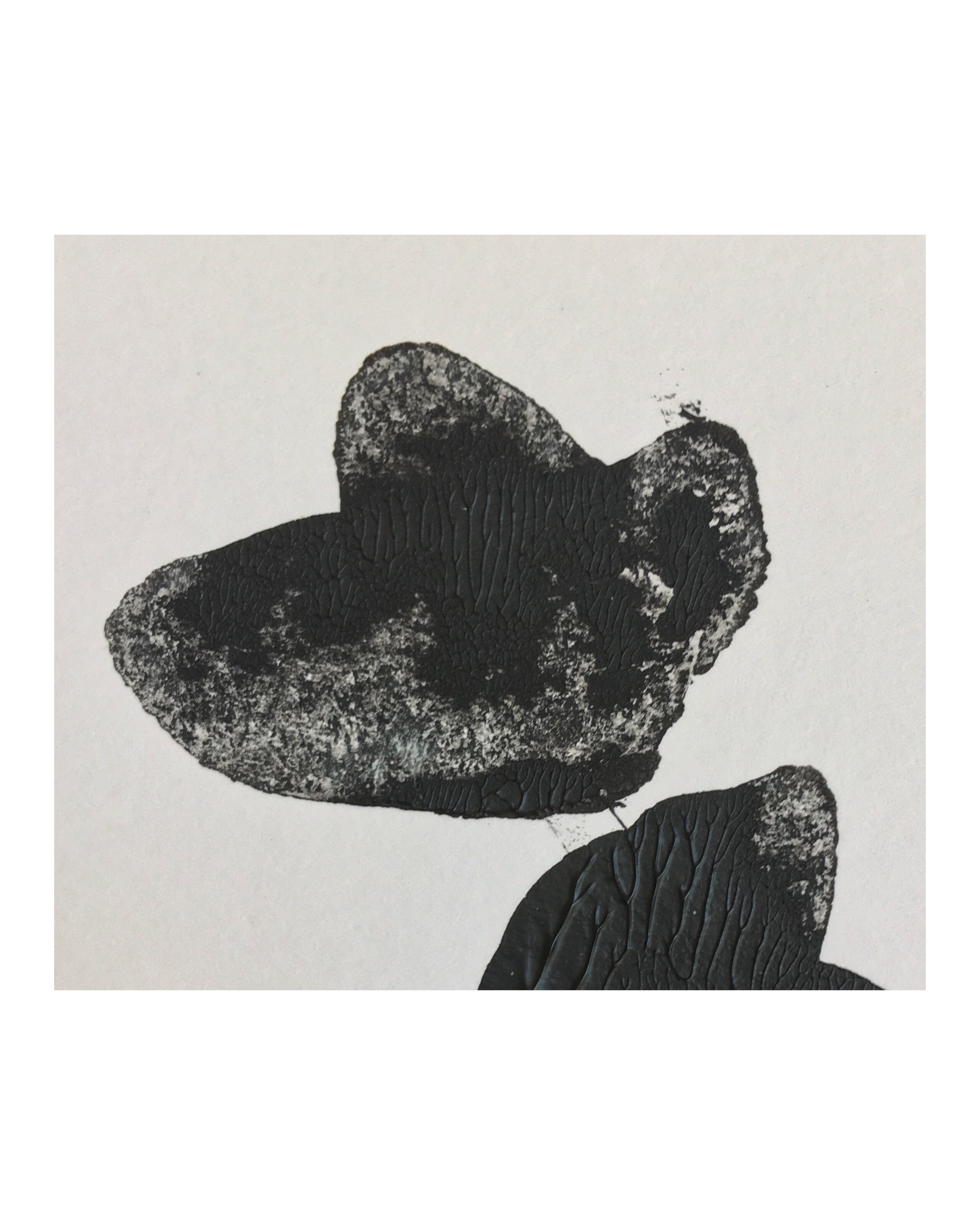
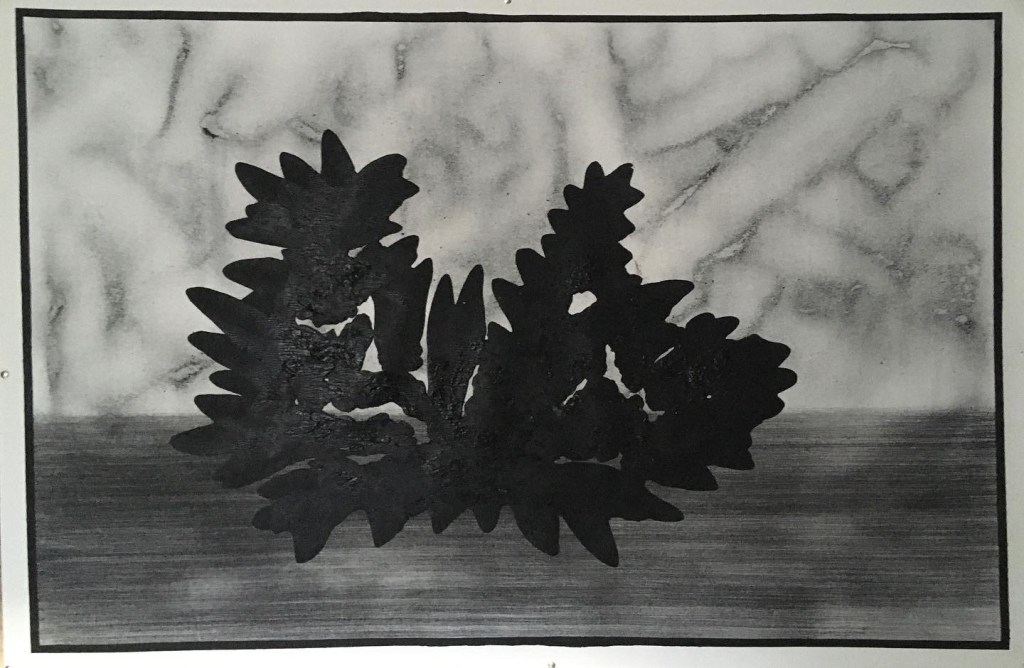
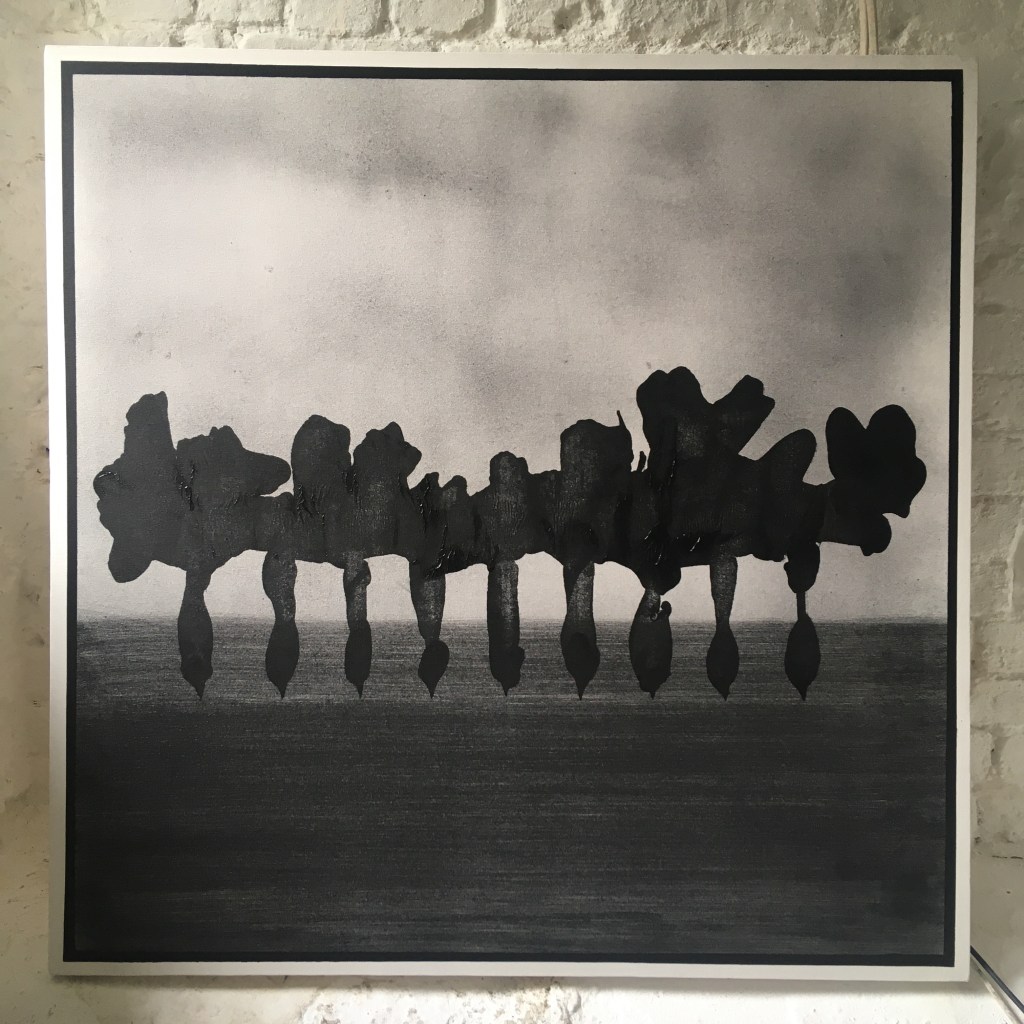
A 1.5 by 2m length of canvas pinned to a piece of 3mm ply. The canvas was fairly floppy. When I shook the board the carbon settled into interesting drifts which I sprayfixed. Ive been using acrylics because of the drying time so I had a large tube of oil paint left over. I squeezed it out randomly, this time with the canvas still on the floor to avoid any run off, put a sheet of tracing paper on top and started moving the paint with the blade. My only intention was to try to keep the paint from closing all the internal gaps so that the background wasn’t completely covered by a blot.

When one is trying to surrender some agency to the material, the picture self-composes. I don’t mind that. There is tension in the off-centred paint in relation to the frame. It’s unsatisfactory and adds to the movement and nausea. It’s trying to avoid the centre. Or find it.

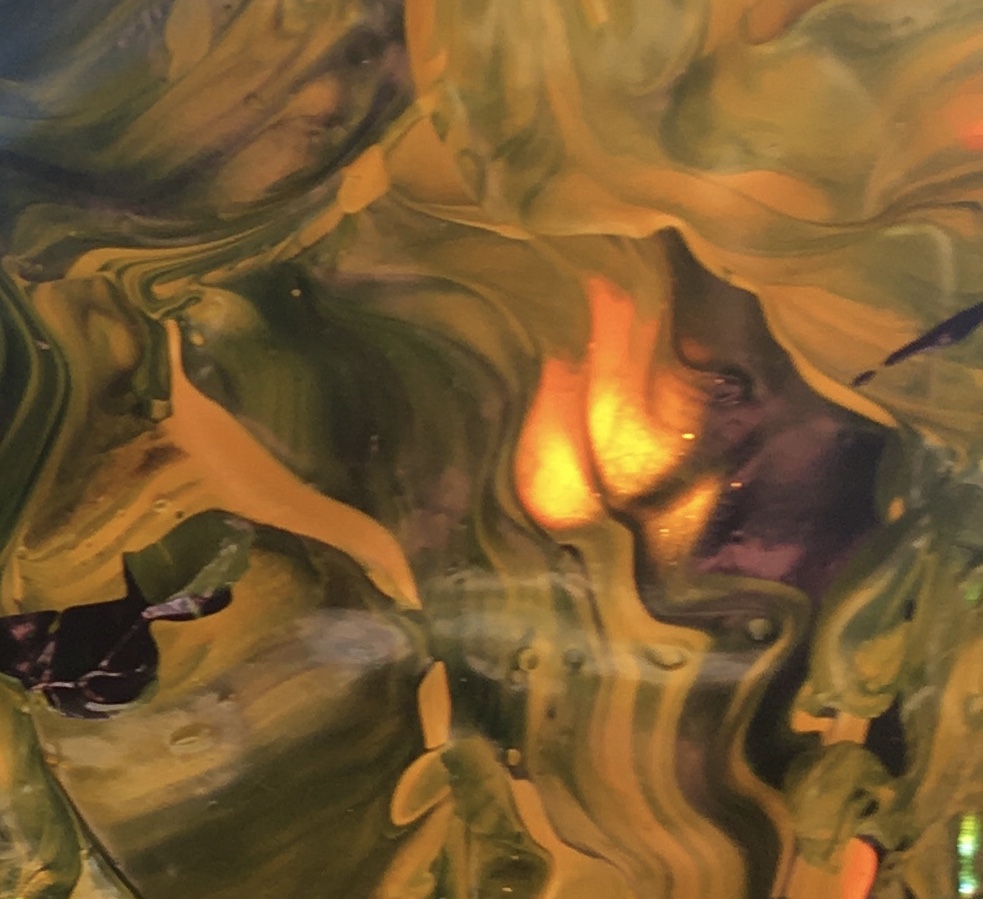
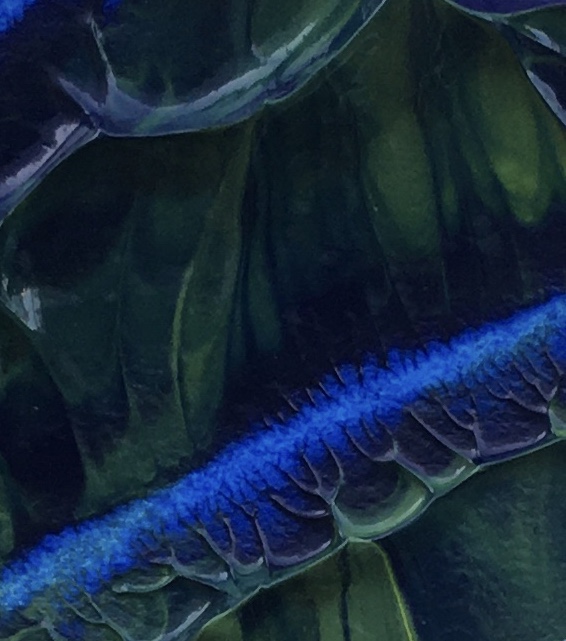
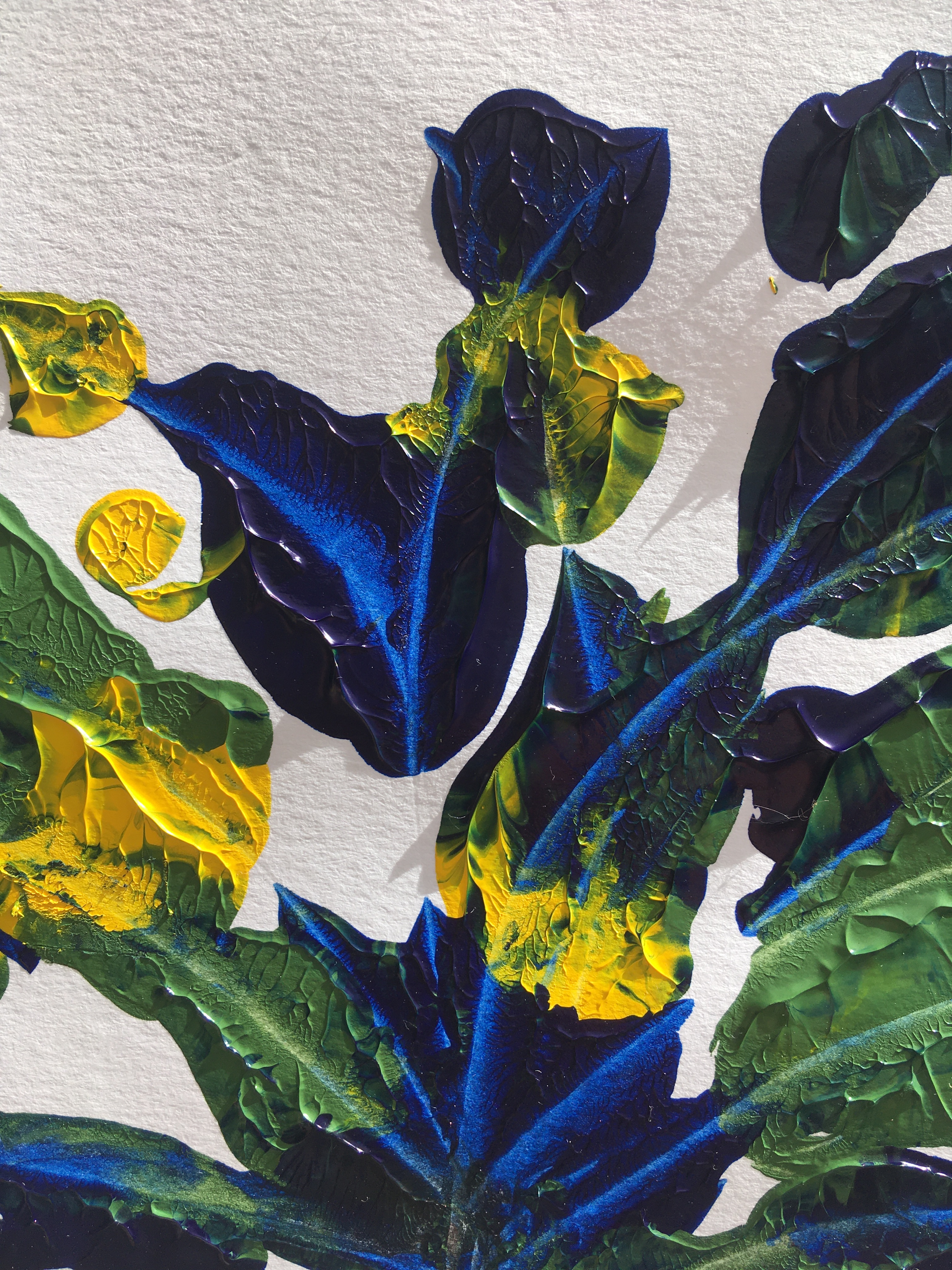
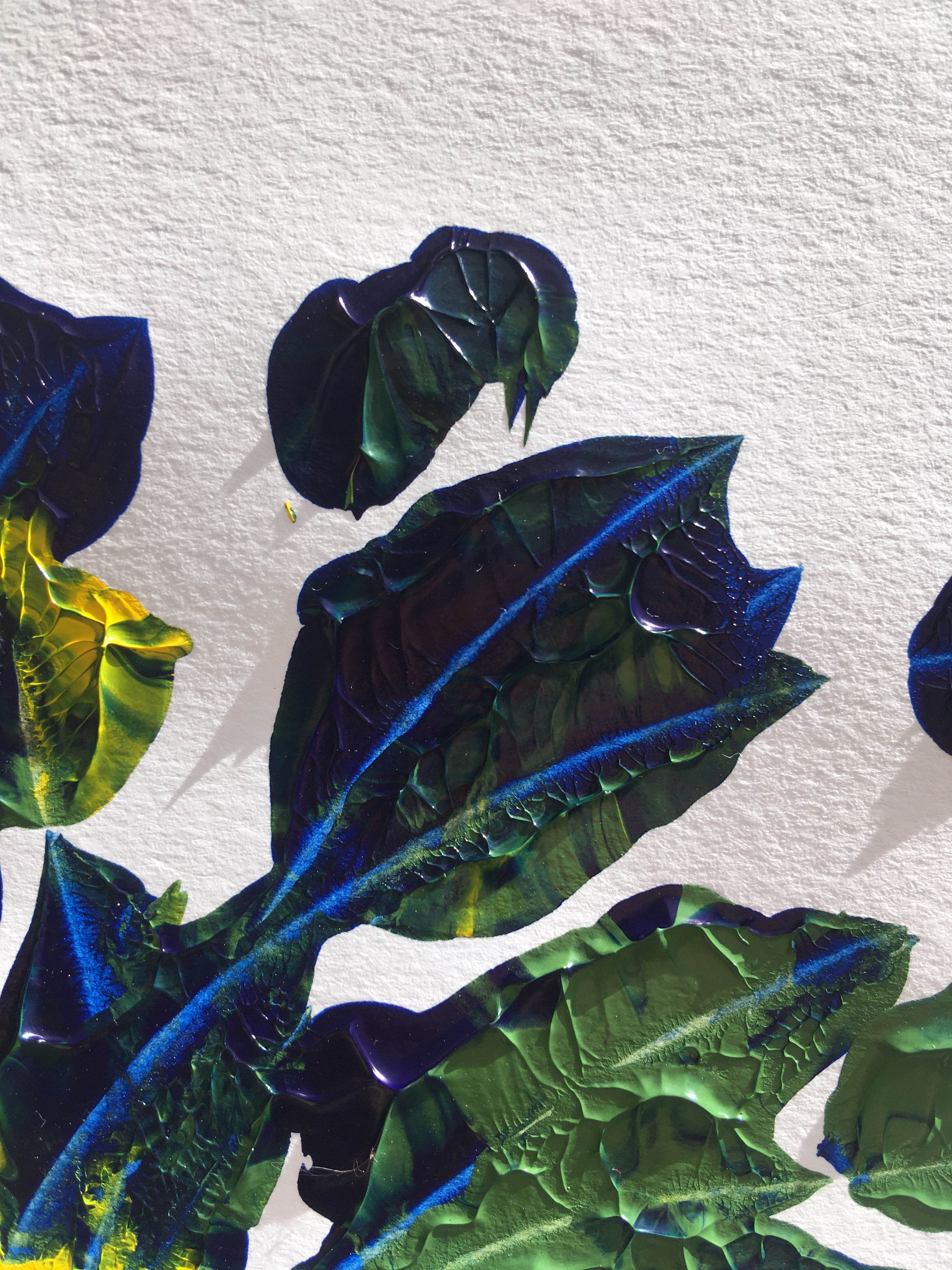
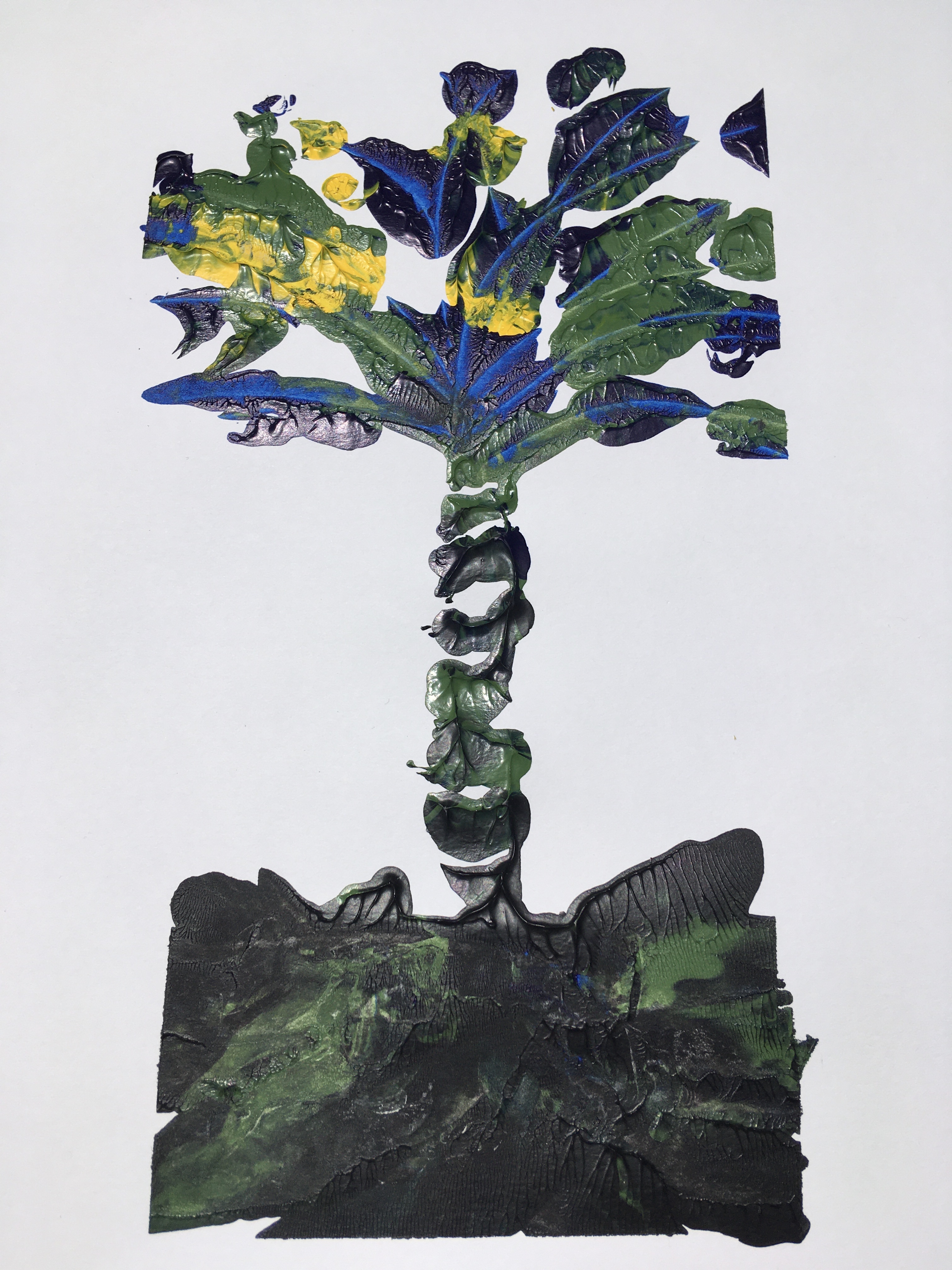
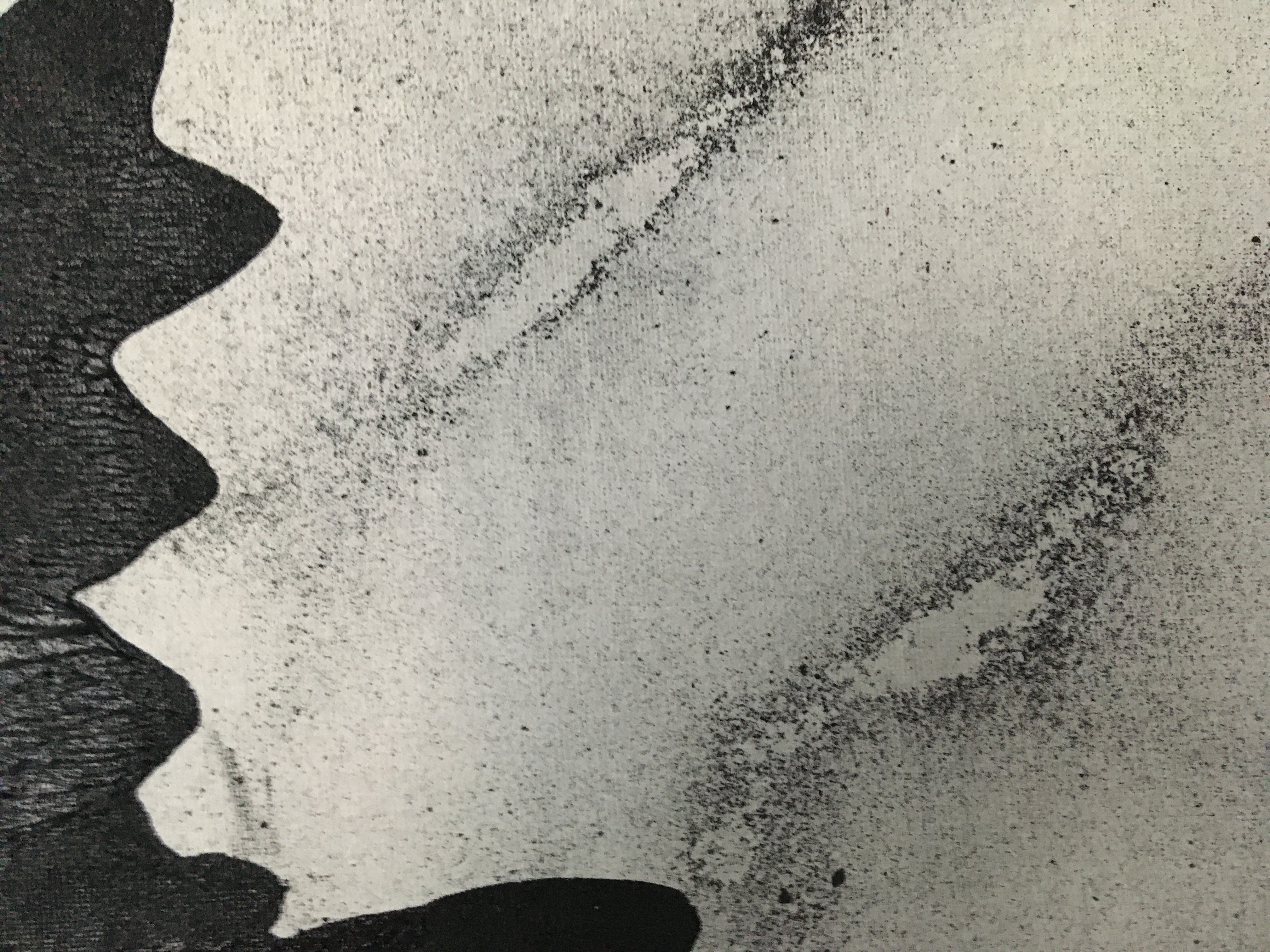
I like the carbon dust coalescing into tube like clouds of spores that seem to emanate from the oil that has taken on a kind of plant crustacean form. Or maybe the plant-crab is forming itself from the particles that pour in through the cracks.

Gives me the creeps.

Deleuze talks about rhizomes, striation, smooth shapes, holey space, lobsters

(“God is a lobster, the double-pincered abstract machine of natural stratification, and thus part, but only part, of nature”)

And i seem to see a kind of representation of all of these things here.

In fact I haven’t read any Deleuze for over a year. Though I have just finished Federico Campagana’s Prophetic Culture, Timothy Morton’s Hyperobjects and Nagerastani’s Cyclonopedia which have all combined to bring on a feeling of creeping Deleuzian nausea in me.

But I have never sought to paint or sculpt a representation of what I have read, like an illustrator. And there is no conscious intention to the painting beyond the mechanical practicalities – the behaviour.

Perhaps its the plasticity of the finished oily forms that lends them to what one has read, or heard, or seen. Or the placing of an apparent blob in an apparent landscape. I make the painting and then I look for meaning. Or familiarity. Or metaphor, sign or symbol.

That’s what the human mind does.

And it watches itself looking.

I’m interested in making art that is unopinionated, that isn’t a representation, statement or metaphor, or sign or symbol.

The work happens quickly.

Materials + Process

No slow building up of detail and generalities or layers.

But I can’t stop the mind, any mind, then taking the finished piece and colonising it. It does this in two ways. First it invades the space, the canvas or sculpture, occupying it in detail. Then it absorbs it whole, categorises it, placing it hierarchically, externally with opinion as the weapon of control.

Opinion, good or bad, is generally unhelpful. It raises barriers, closes doors. To live, or die, without opinion would be a good thing. We express thousands of little opinions every day, about every little thing our senses encounter. They are little closed units of categorisation and judgement that serve to defend our sense of our own importance in the world. They are an expression of vulnerability. And they are invariably boring.
New Artists Statement!

You are walking along a road, on a pavement, past trees, people. You consider the path ahead of you. You can see it ready and waiting for your shoes contact. You can see the corner of the street where you will turn. It’s ten minutes away but it is there waiting. It exists in your immediate future! So the path, trees, people and their particles exist in the future? How far into the future? All the way to eternity? Or does everything coagulate and coalesce out of nothing in the present, into solidity, certainty, truth in an act of perpetual worlding?
I am interested in what either of these possibilities might look like before our senses, mind and language conspire to paint our reality: the potential of pre-objects prior to their being subjectively observed.

In this series of paintings I bring particles of carbon, black oil or acrylic, paper or canvas together, allowing behaviour and material to engage with each other in mutual activation. The dust is worked in with a broom and agitated, or activated with a stick. Paint is applied directly from the tube or trowelled on indiscriminately before being covered with tracing paper and spread with a blade, allowing the tools, materials and gestures to make unsettling shapes in tension, that appear to have not yet decided on their final forms.

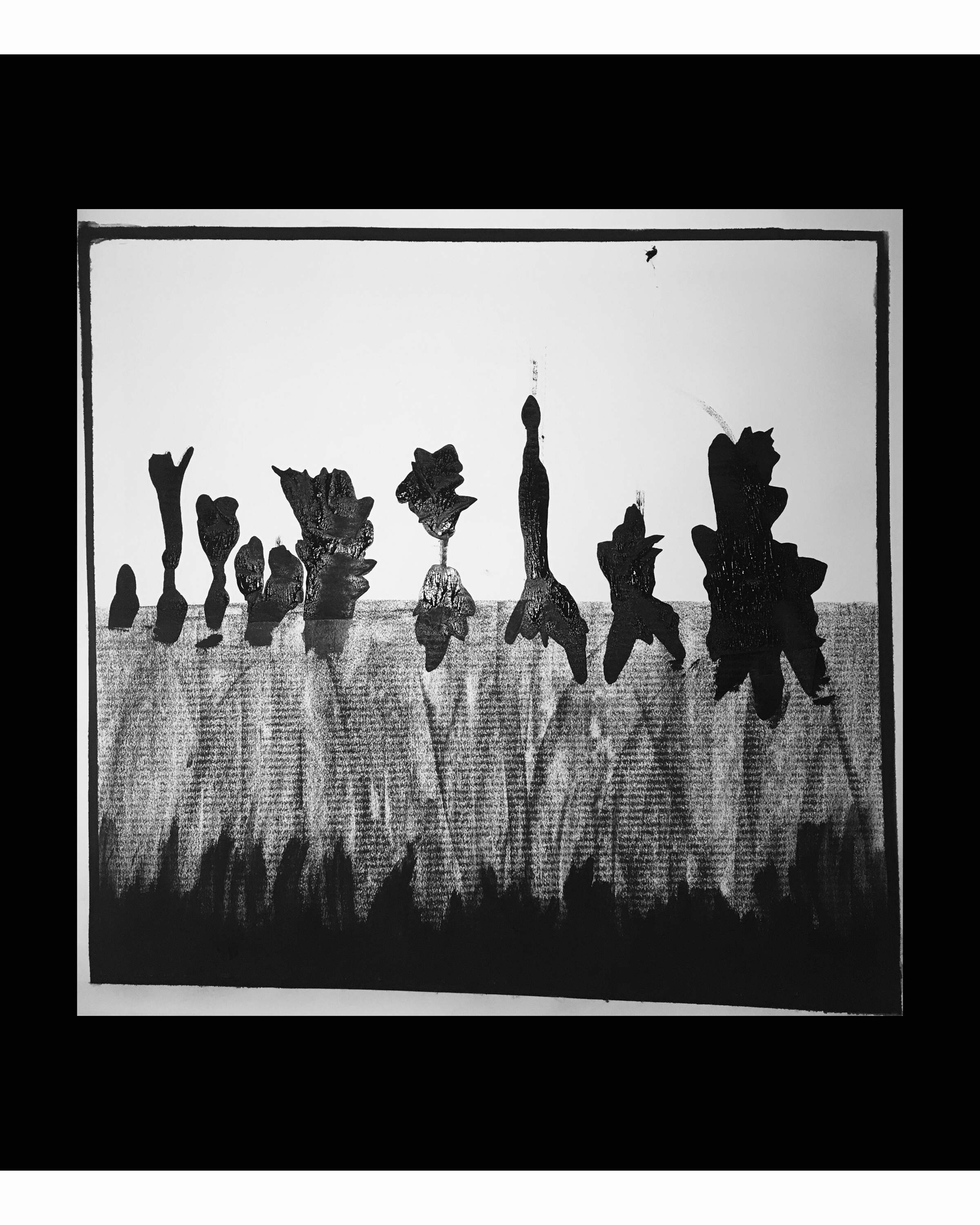
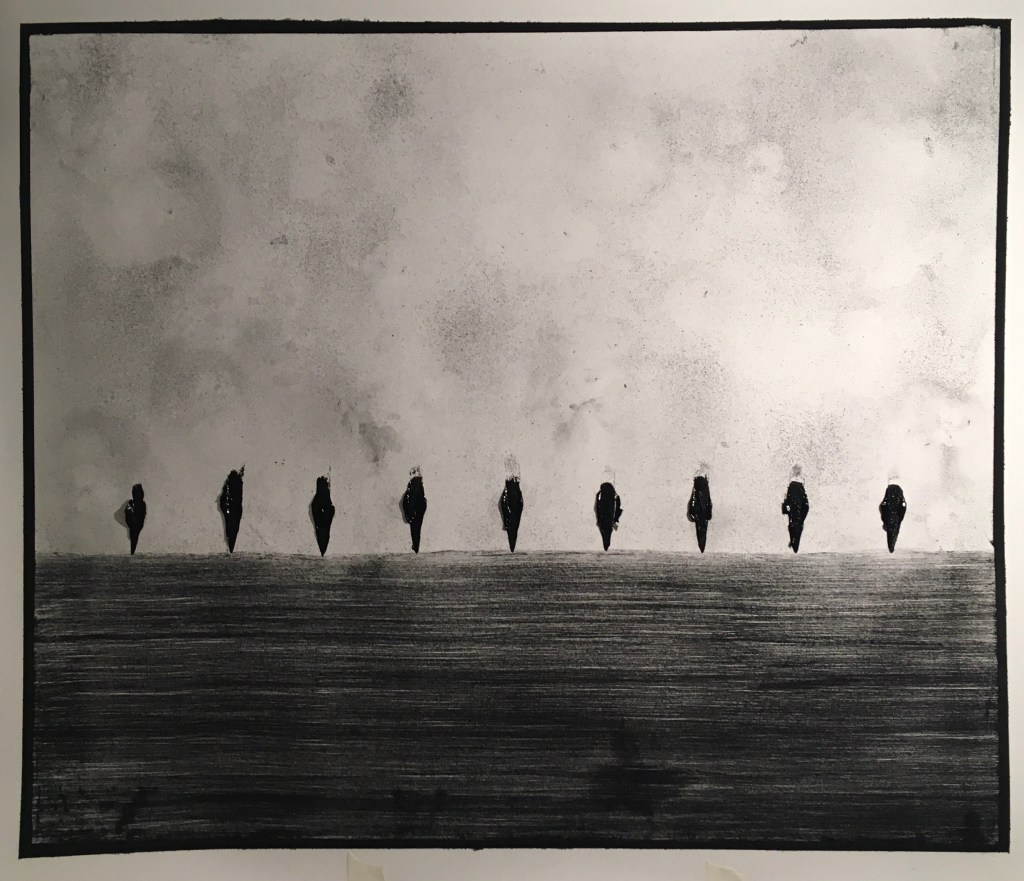
Nine for the nine bright shiners

Materials: About a metre square Arches paper, compressed charcoal, spray fix, black oil paint

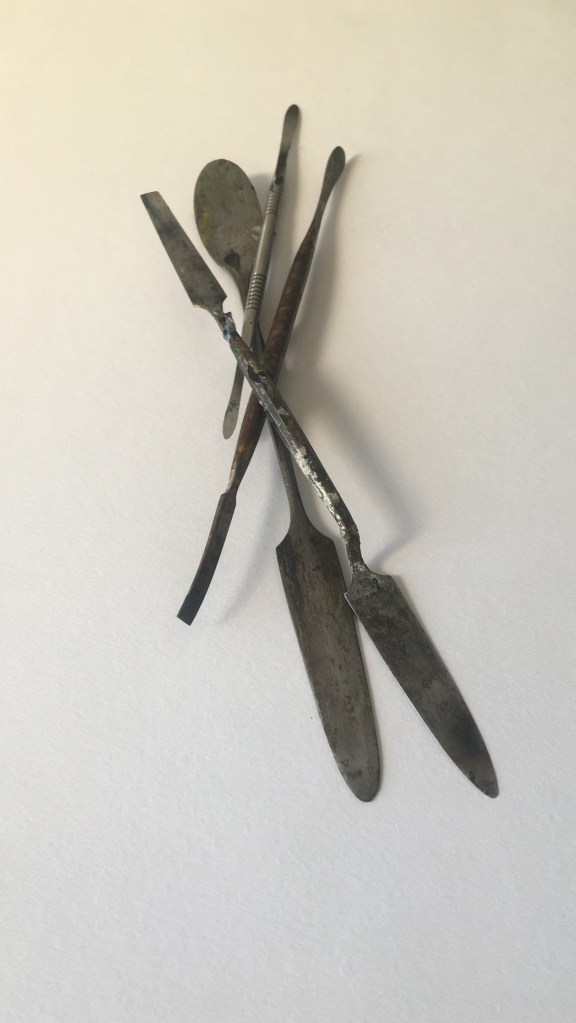
Equipment: Masking tape, coarse sandpaper, garden broom, small pointing trowel

Made the frame the usual way. Tending toward a thinner frame, resembling, it seems to me, a hand printed black and white photo frame. I worked in a darkroom for a while and remember the thrill of the alchemical processes, the risk of pushing things too far, knowing when to stop. I like the excitement and fear when confronted with the delimited area.

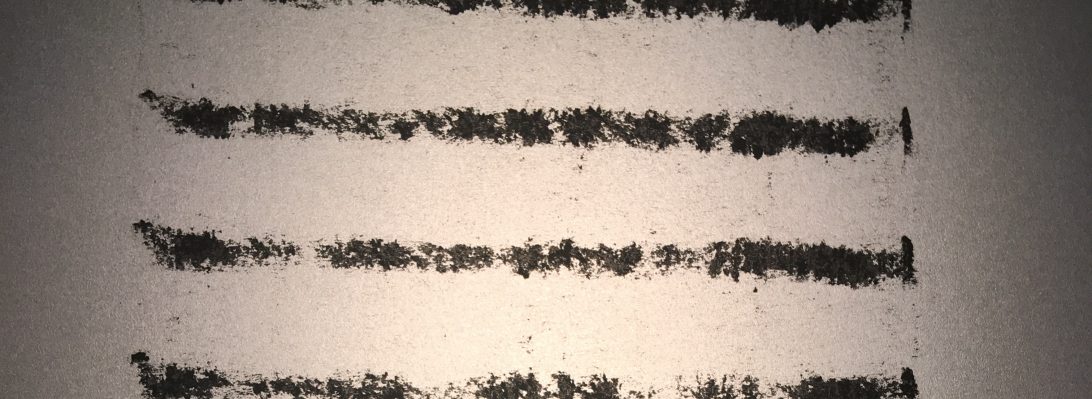
Once the frame is made what happens next is unplanned. I’m coarsely grating compressed charcoal over the paper mixed with the sweepings from the previous work. I look around the studio. There’s a broom here, part plastic part wire bristle, from the garden. I’m brushing the width of the head across the paper. It’s making beautiful lines, picking out shapes from the cardboard beneath. Shadows. It’s difficult not to think strata, radar, horizon, sky, cloud. I’m mark making, interacting with material. I’m not trying to represent landscape. But the human mind, in league with senses, does what it does and once done its hard to undo, though its fun to try. Without language everything would be two dimensional. With language even two dimensions become three. It’s fun to remind oneself, force oneself, to go back from three to two.

Now I’m confronted with this moody flat landscape and I want to place some oily sculpture into it.

I poke the thin trowel into the tube of paint as far as it will go and pull out a sort of wedge of oil paint. A shining black sliver of potential.

I place the point on the brushed pencil lines where they meet the dust and push the flat of the blade onto the paper slightly drawing it upward. Paint squelches out the sides and blurs at the top. I repeat, trying to divide up the paper equally.

At this point I might apply my tracing paper technique with the Stanley knife blade and see what happens. But I like these strange little monoliths all in a line. Pilgrims? Refugees? Soldiers?

None of the above.

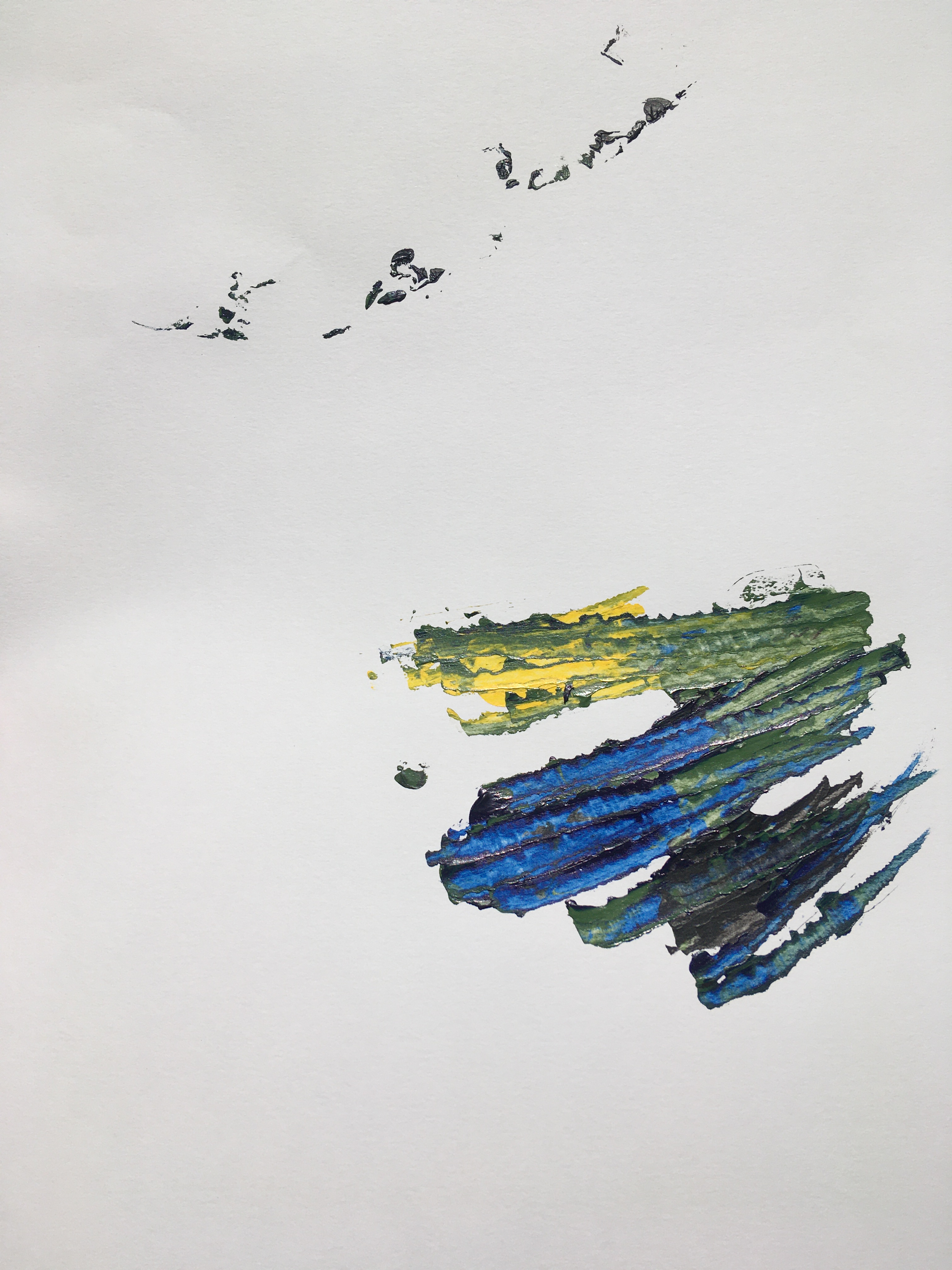
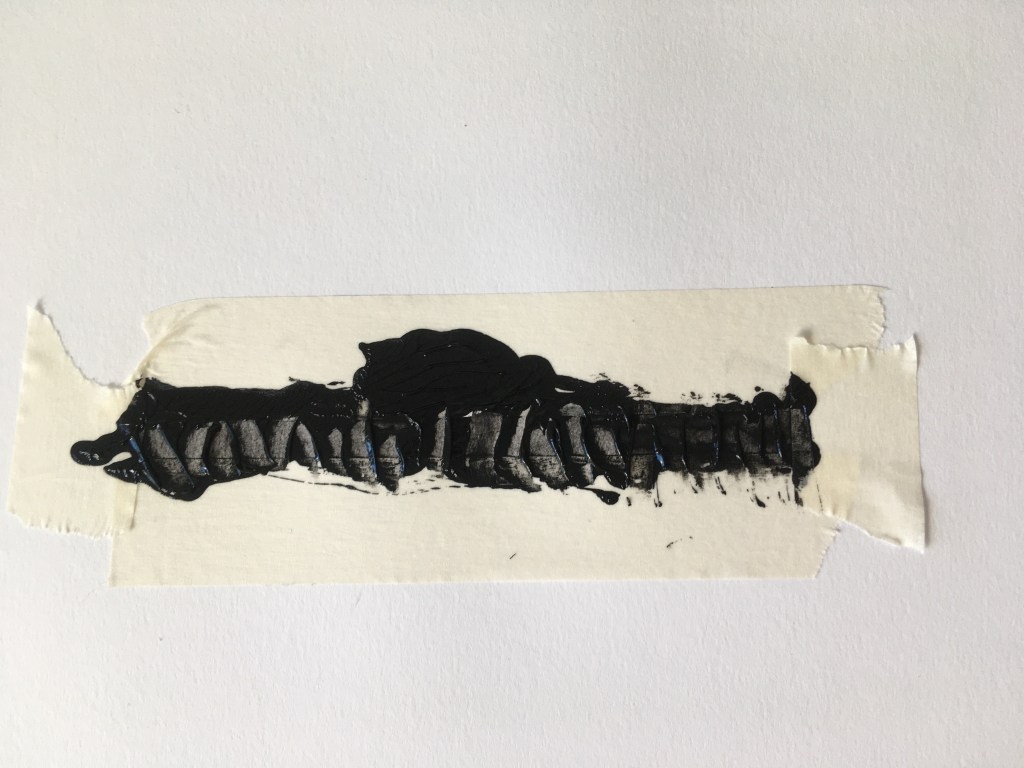
Smears of paint and manipulated carbon on paper.

Is When Here?

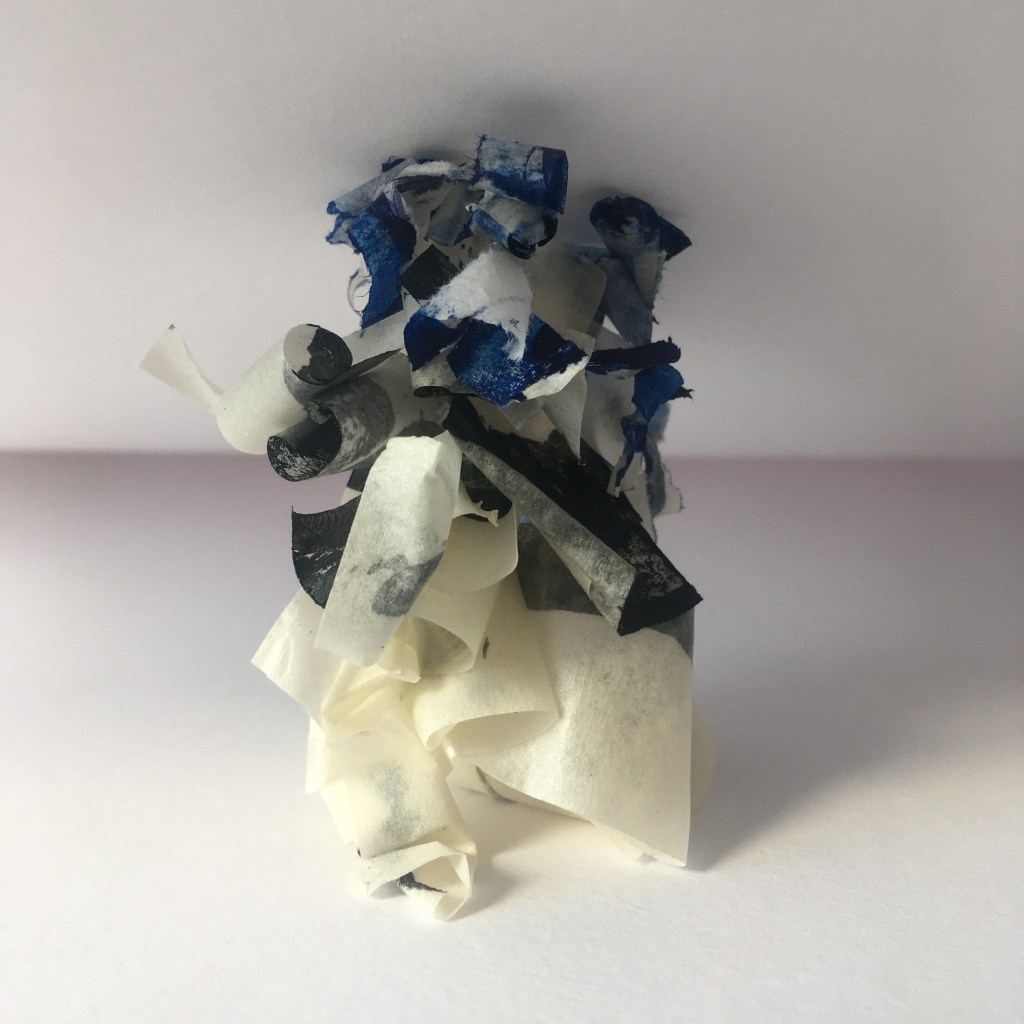
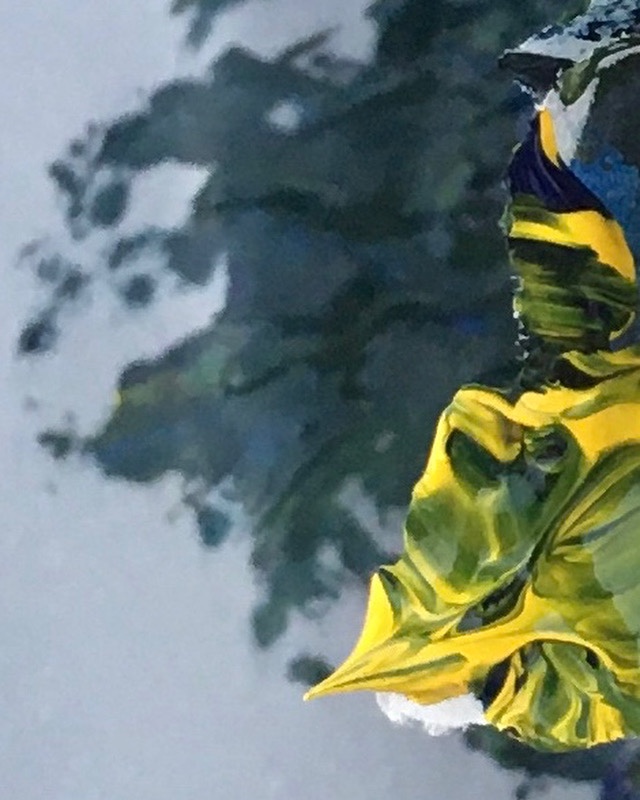
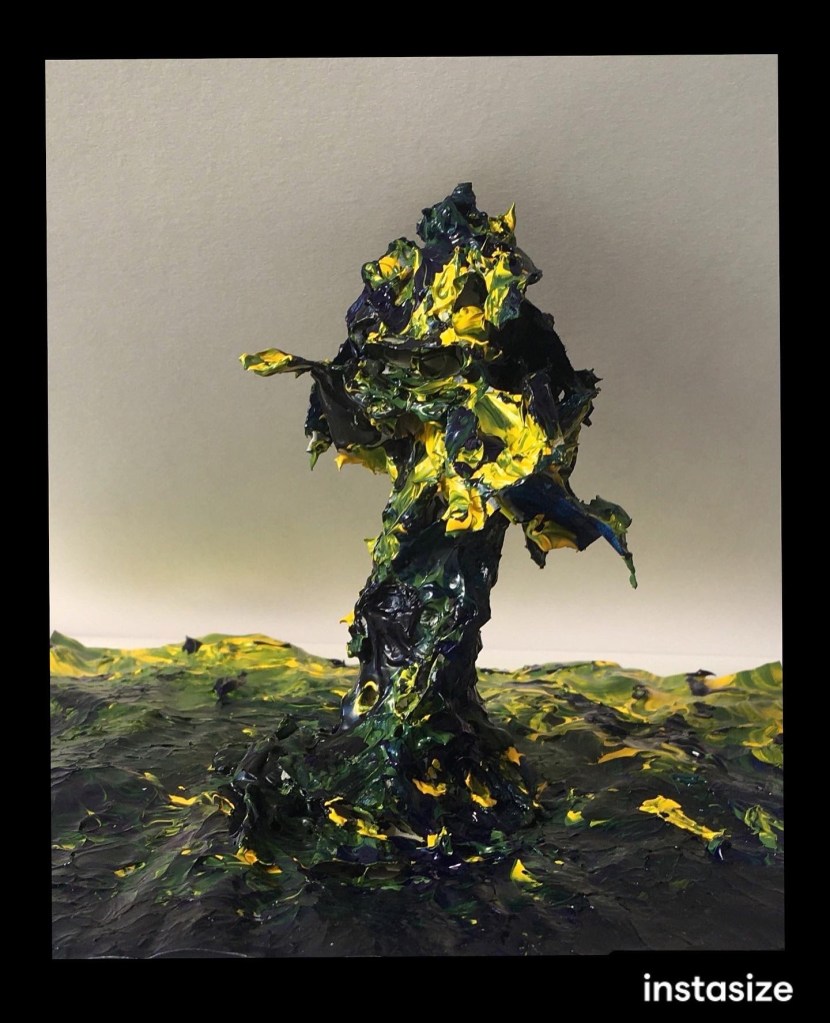
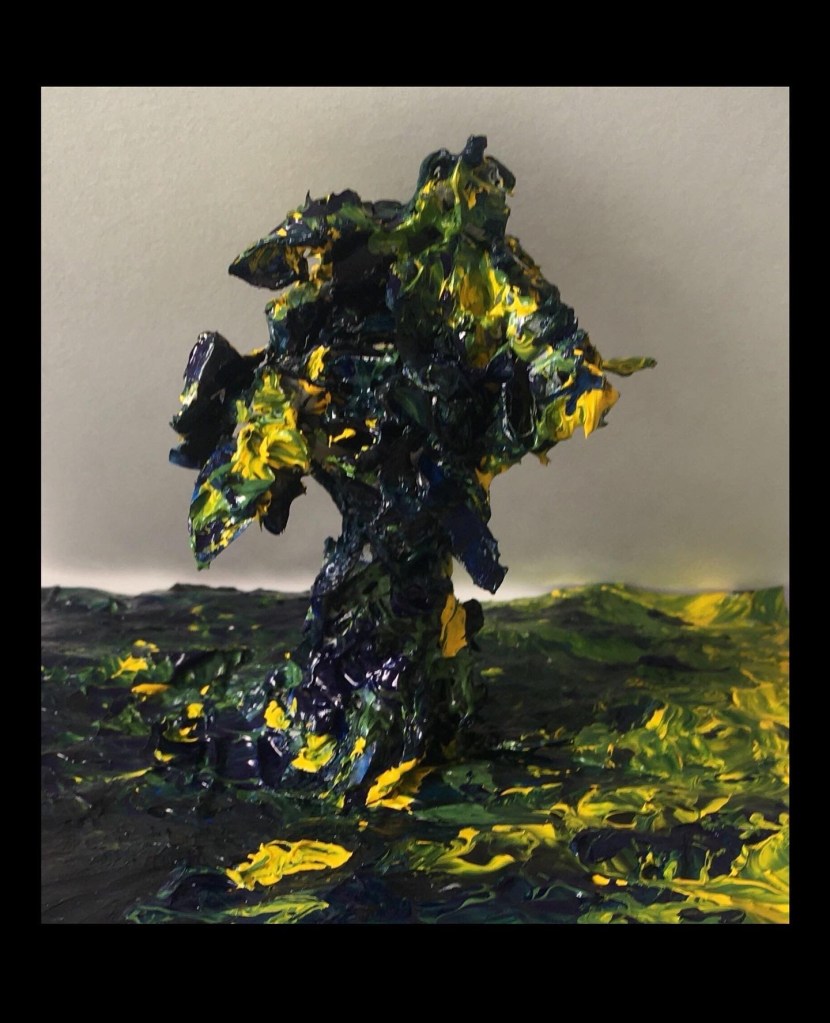
Nearing the end of the holiday I have a bunch of used tape and oil paint left. It metamorphosises into this – a sort of three dimensional emergence out of the two dimensional as a manifestation of my imaginings on the interaction between time space and matter as present and future collide.

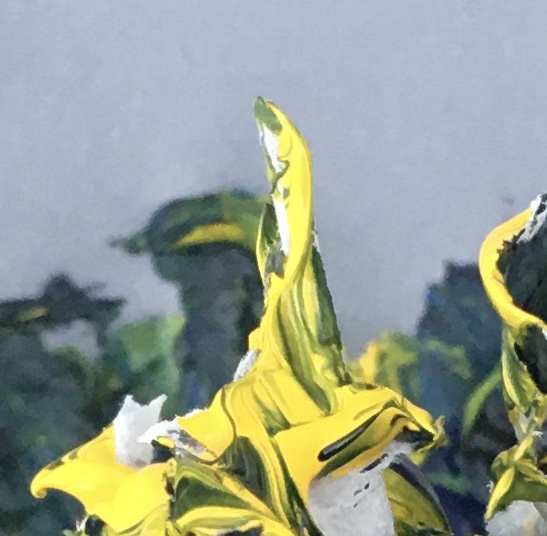
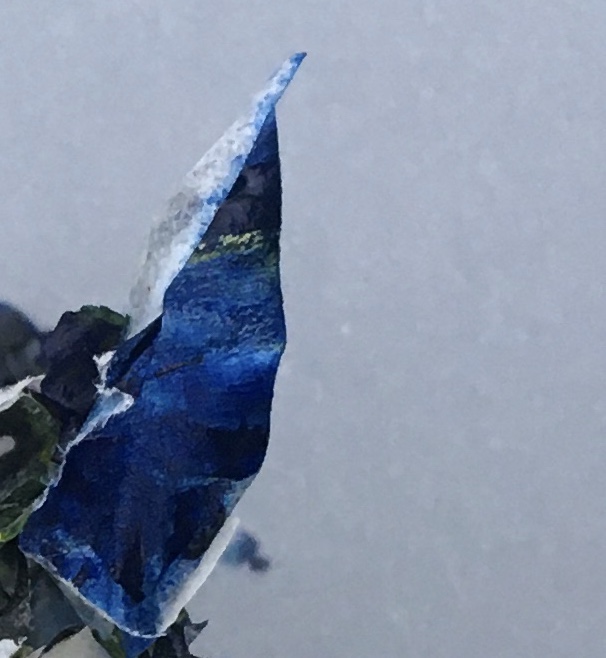
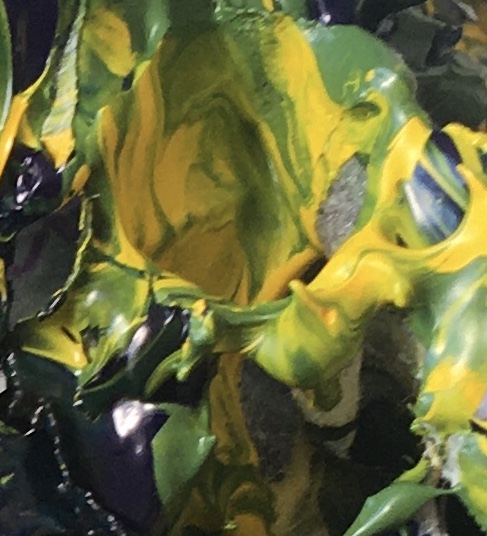
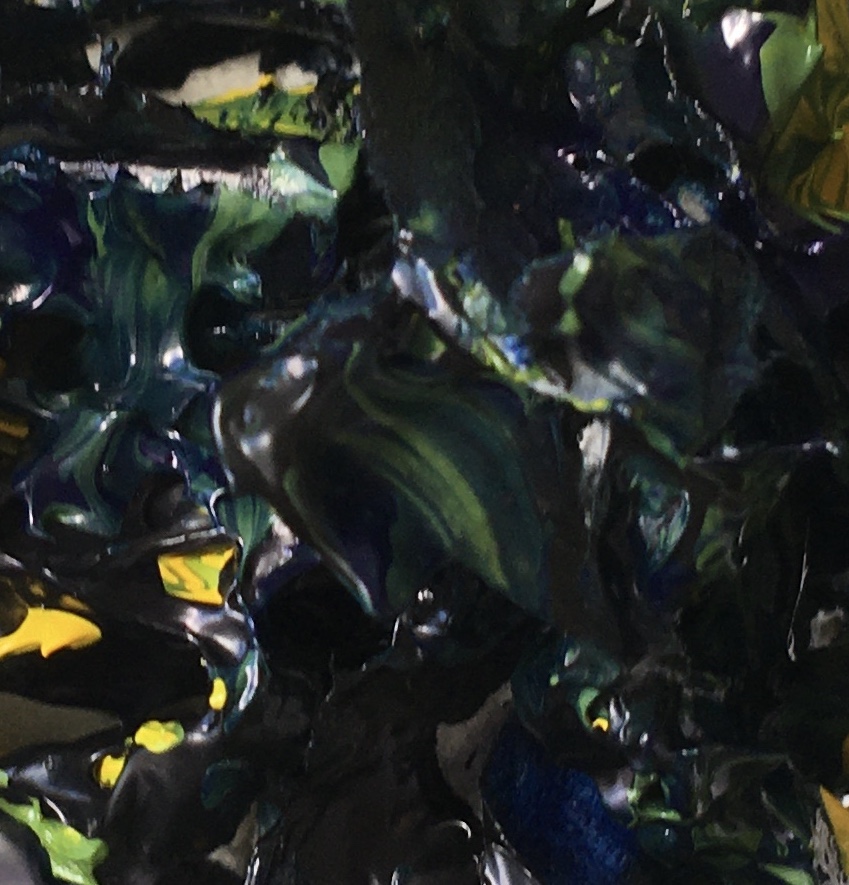
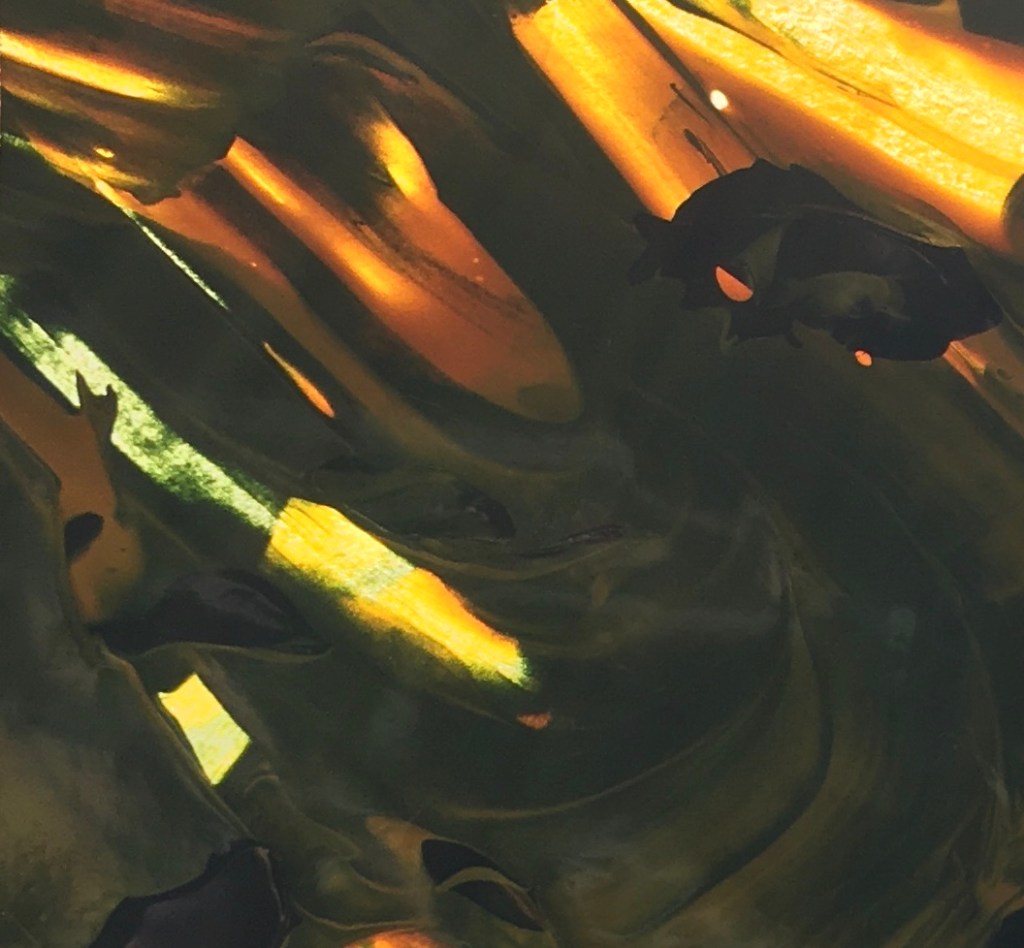
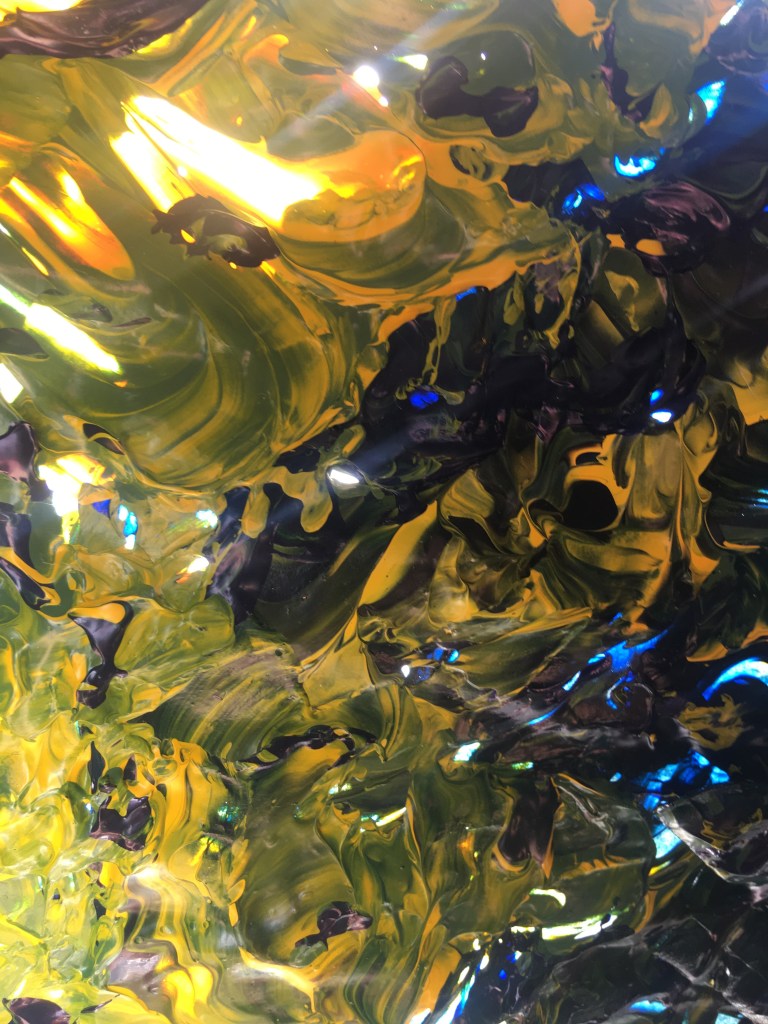
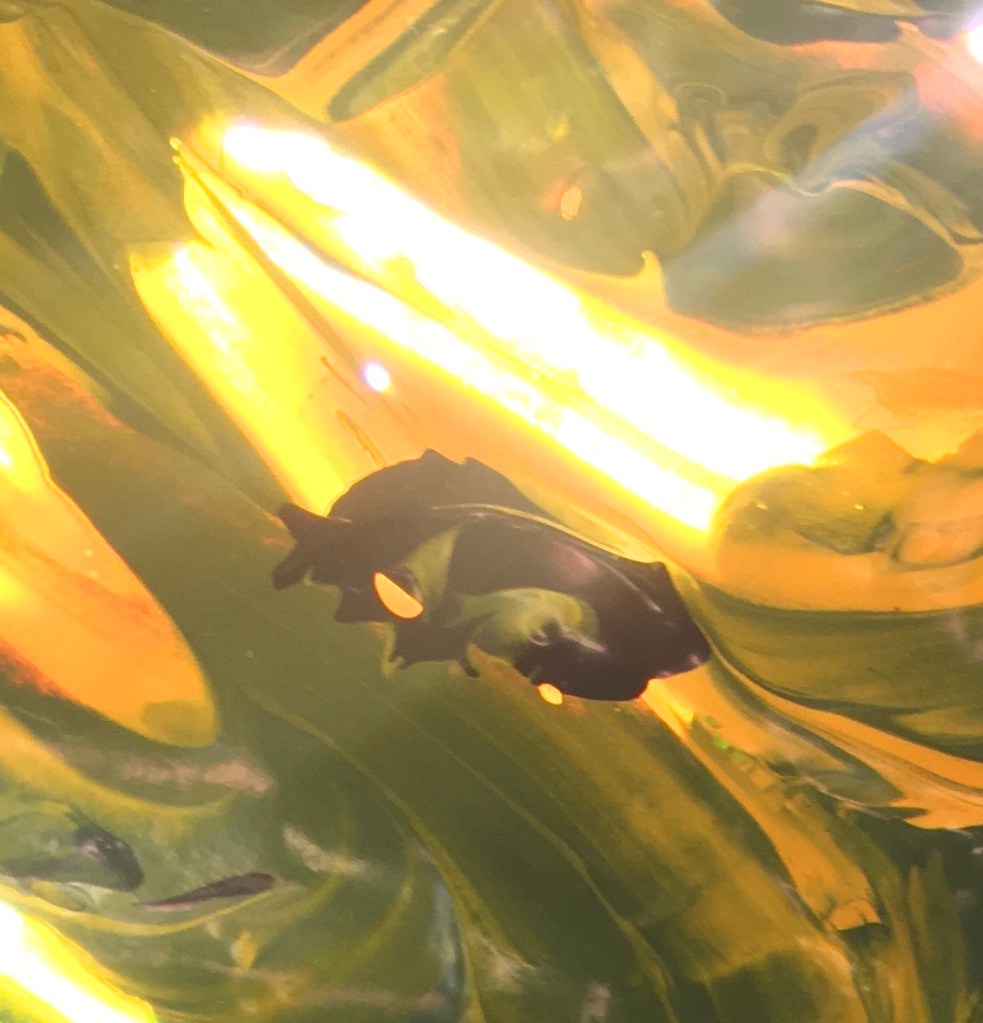
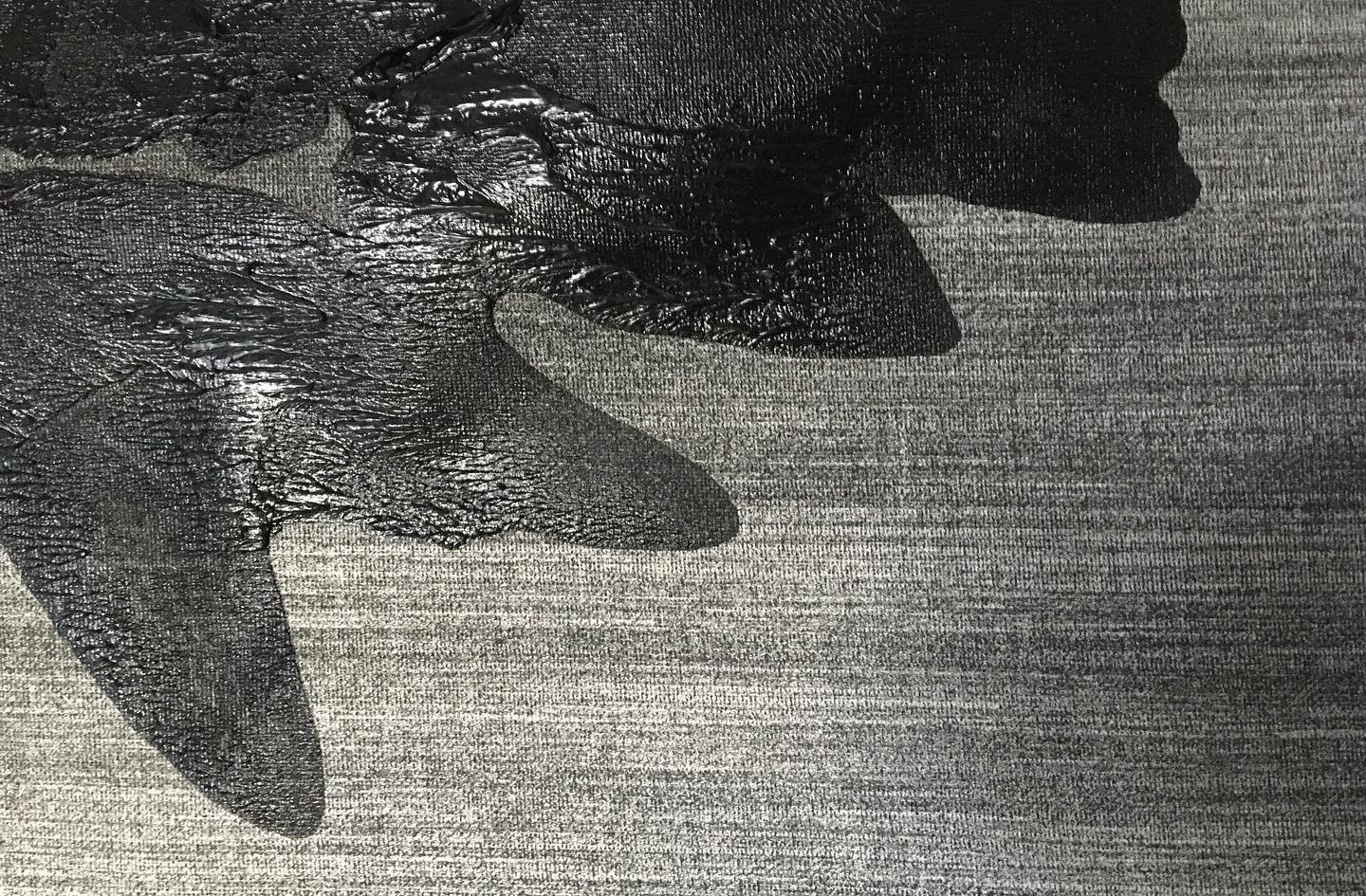
I don’t like it much but the enlarged details of the paint applied like clay is great. When i worked with clay I’d work quickly and build up form incrementally bit by bit then detail in smaller and smaller pieces using tools only when fingers were too big.
Andalucia

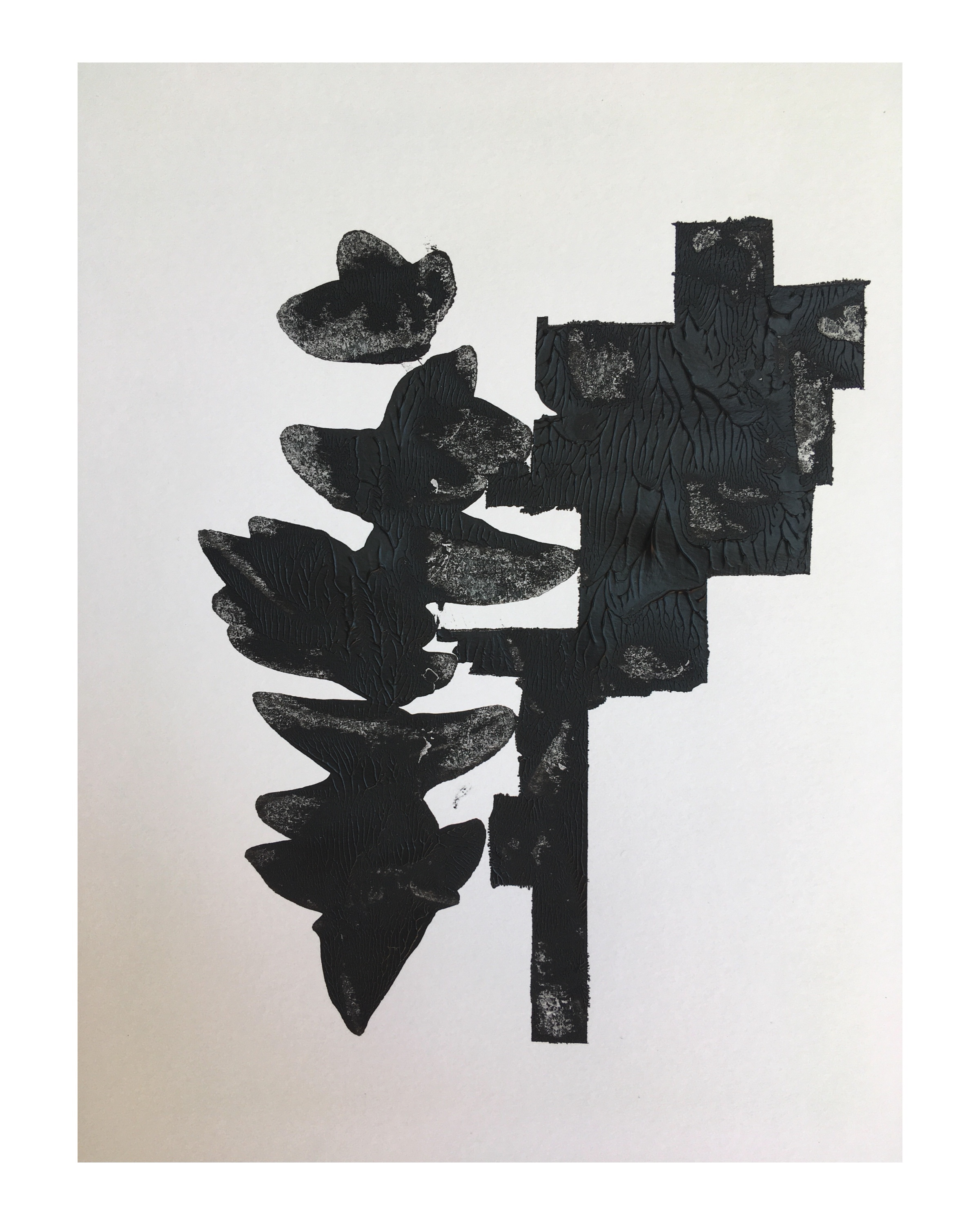
Thoughtless mark making splodging oil onto A3 tracing paper. I like using tracing paper because its robust and noisy and doesn’t mind masking tape. It allows light onto it and through it. I seem to see male and female forms engaged in a kind of flamenco.
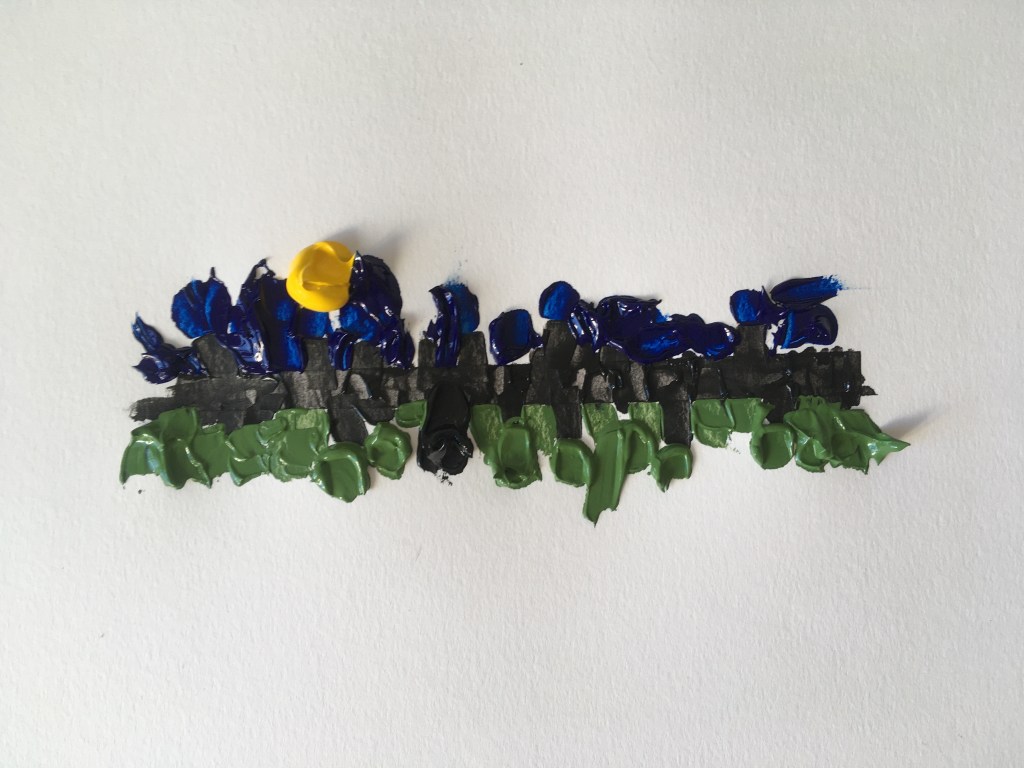
Where Is When?

On holiday in Andalusia I went for a walk every morning and thought some more about what tomorrow looks like before we arrive there. In the West we almost imagine it as a stage that we walk onto as it manifests in the present. But where is it until that point? If it somehow exists then don’t we also exist in the future? Is there a sort of folding going on somewhere? Or is the world in a constant state of coming into existence, of worlding? What does either scenario look like?

Consider a mountain. Big. Old. Heavy. It has surface and depth. It is knowable and unknowable. You are on the mountains surface and you can see it. It’s there in your present.

You plan to come back tomorrow.

You know it will be there.

But where is it in the meantime?

Between now and tomorrow?

Is it already there, waiting? A stage with all its props?