Over a year ago I was invited by Emma Somerset Davis to collaborate on an exhibition at the Lovely Gallery where both she and I have previously shown our work. Emma is deep into her Phd at the Royal College of Art, painting, performing and filming her performances. We felt our work was exploring similar themes and tackling similar problems of memory and behaviour, what forms and affects them, and how we feel we are central to their manufacture, are in control of them when really we may not be. A couple of weeks before the show we began trying to find a title. I had been reading Technic and Magic: The Reconstruction of Reality by Federico Campagna in which he says
‘Anything that appears to us as a true element of the world (that is, anything whose truthfulness, aletheia (his italics), consists in the removal of the veil that hid it from us, and its emergence as an object of our experience), does so within a certain frame’.
This resonated with both of us and from this I wrote a brief introduction related to the wider meaning of Aletheia days before the opening(see below).
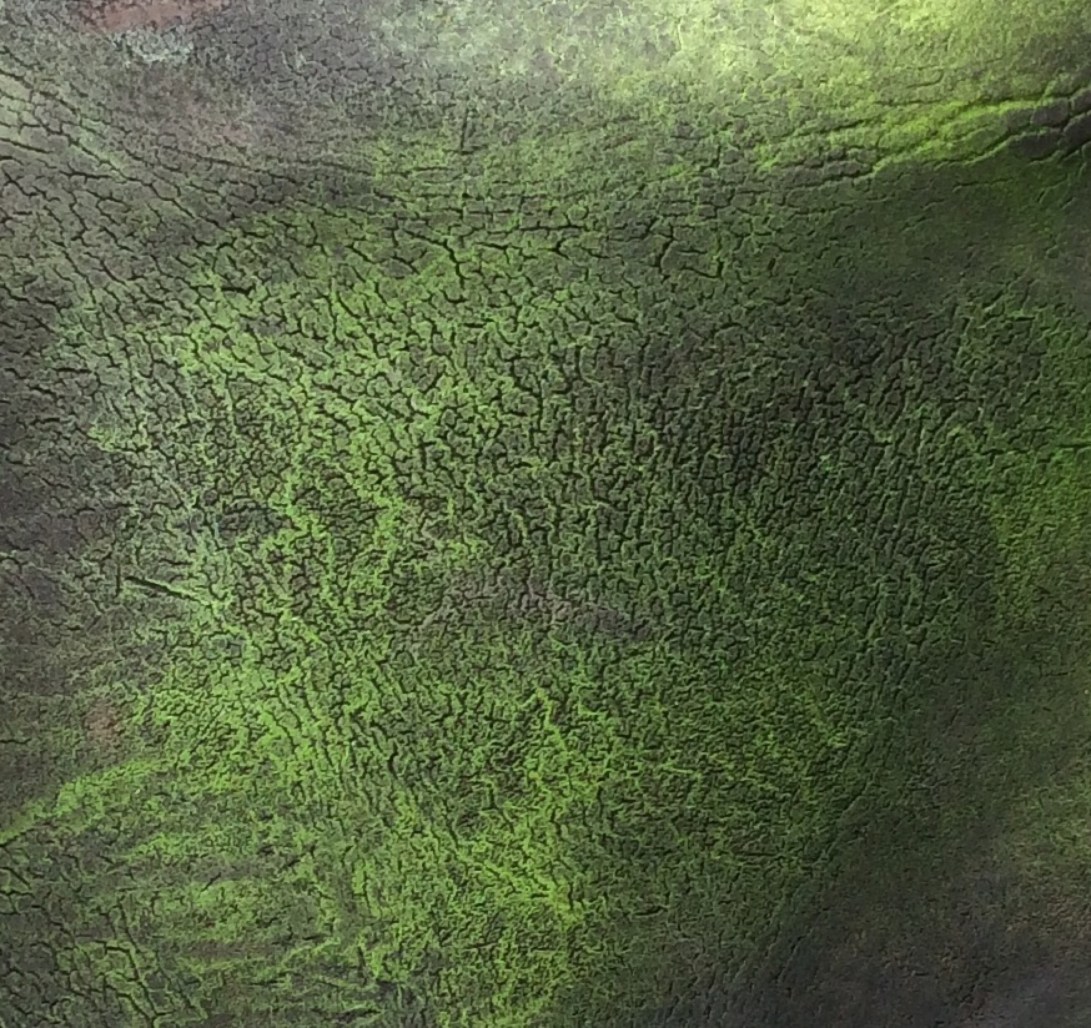
In Emma’s work, as I understand it, she paints images related to personal memories she would rather forget, combined with her explorations of past poets and artists lives that she is researching, who are being, or who have been, forgotten, then obscures them in layers of brush strokes, using a palette of colours that the artist used, or artists of that period of the poets life were using.
Unfortunately for her the attempt at obscuring her unwanted memories fails as each stroke of the brush that should act as a draught from the waters of the river Lethe serve only to reframe the memory in a metaphysical dimension where it takes on a hyperreal definition. For the viewer we can only guess as to what is hidden beneath the surface.
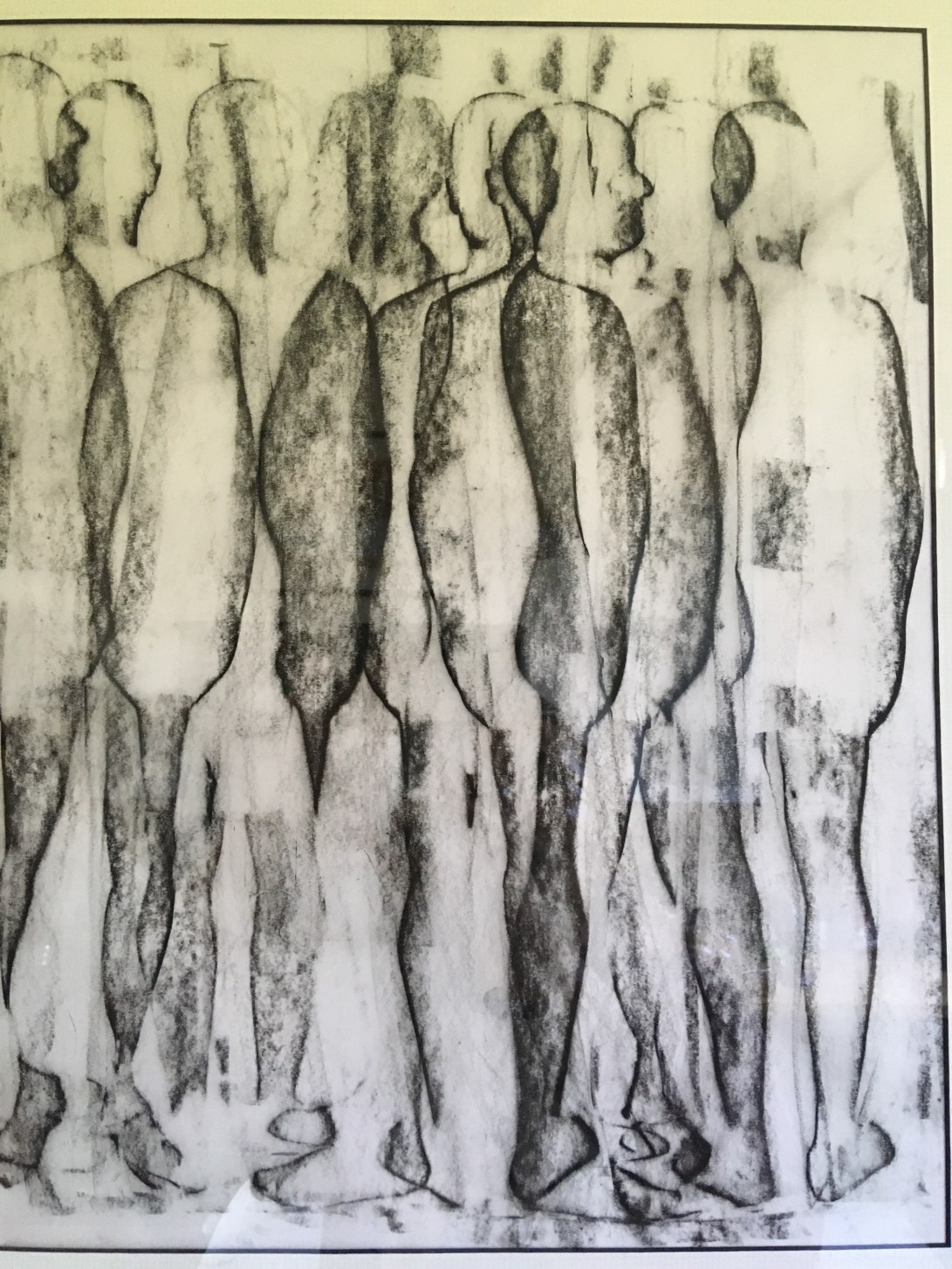
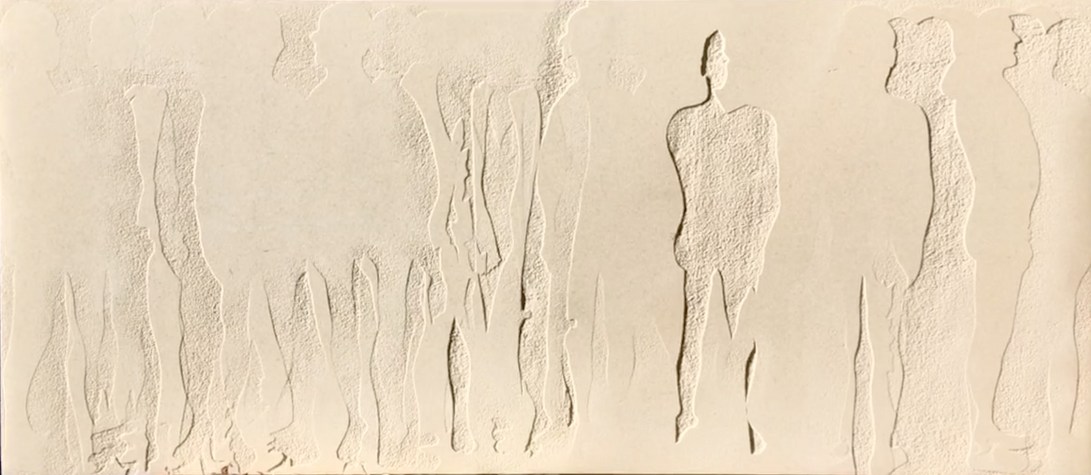
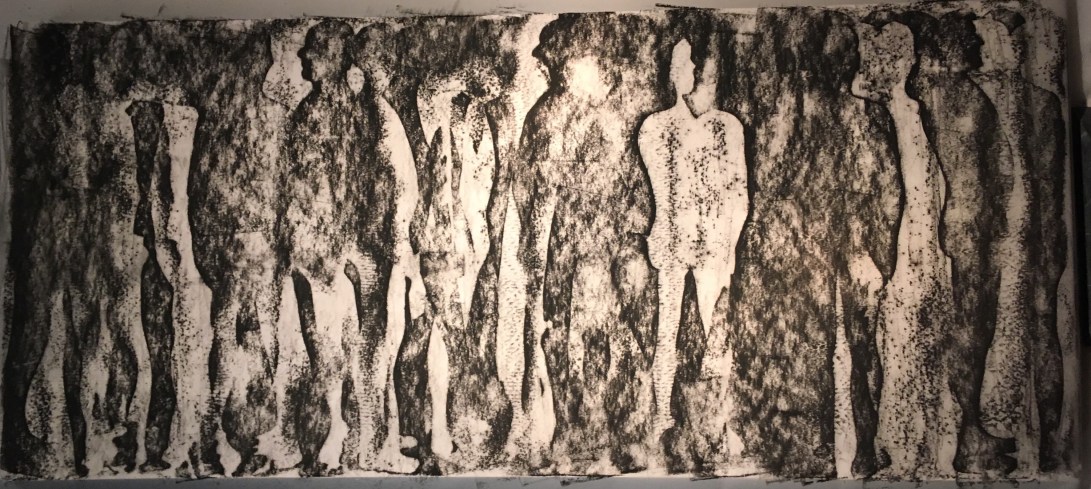
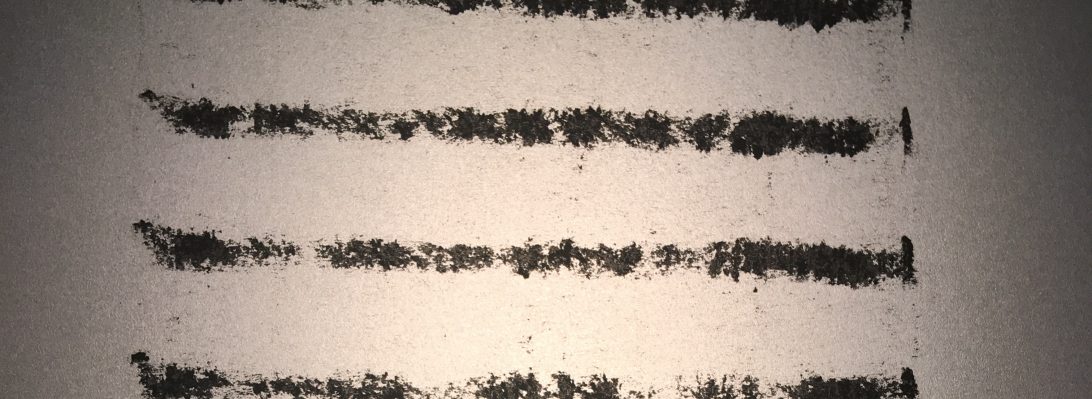
For my part the term seemed to resonate as my interests lie in trying to develop a personal language to assist in communicating with all aspects and layers of myself, analyse the nature of the information that flows between the layers, and investigate the portals through which that data flows, if indeed it can be said to do so. However the direct nature of the way in which I work means that meaning is only revealed, not intended. If there is intention it is only in an exploration of the possible, given the material, facilities and technique available to me. Thus by making art I am attempting to undo the effects of having drunk from the waters of Lethe as all humans have done by becoming material and forgetting our non-material nature, or at least probing the possibility that we are both material and non-material beings.
Interestingly, once the title was agreed and the gallery was set up, i spent some time alone with the work and was amazed at how the term Aletheia helped me to see a unifying theme of the mechanics of my work as they all in some way seem to be trying to offer a view of both surface and internal form that was not part of any conscious decision making.
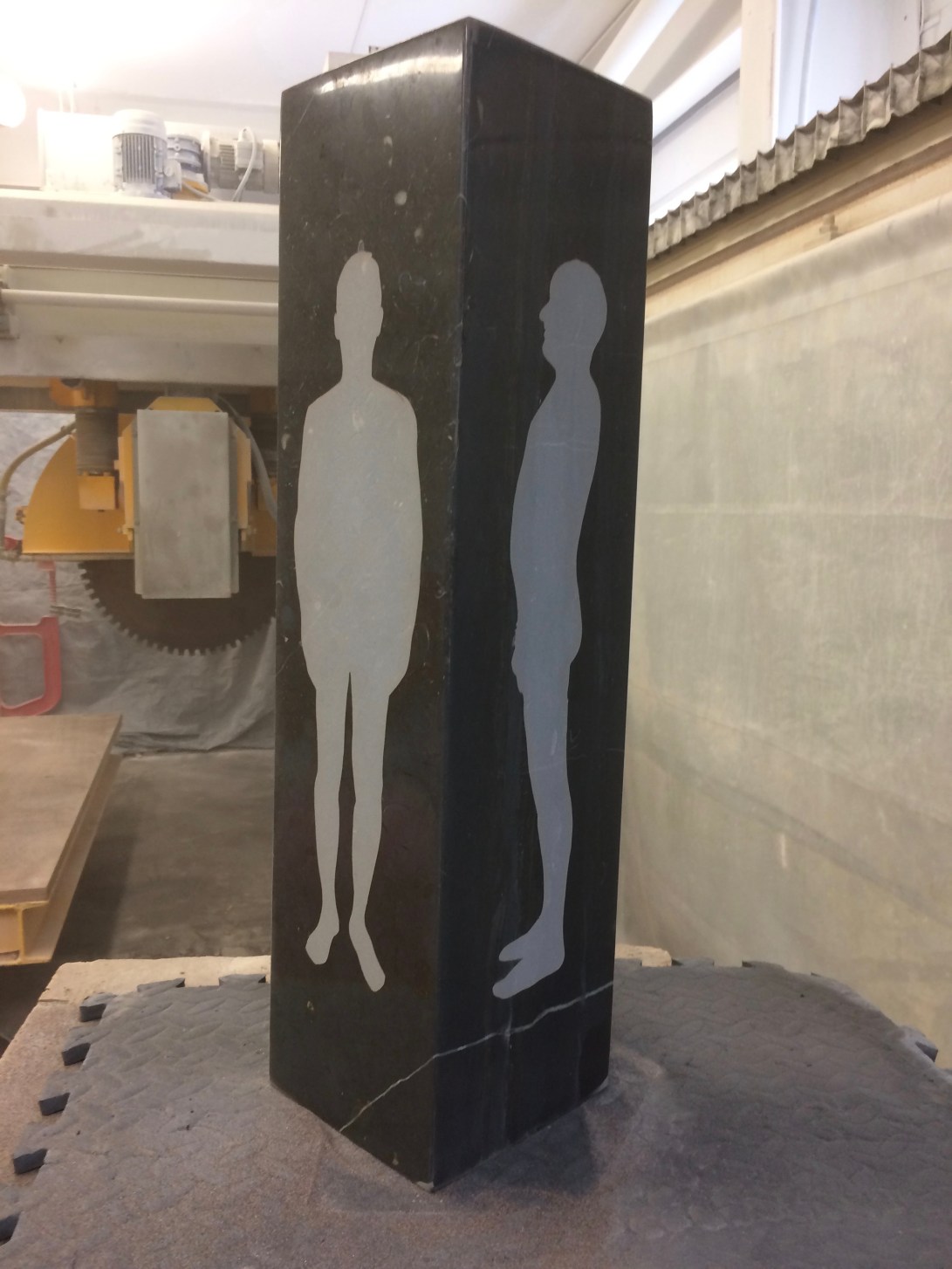
I made low plinths on wheels that would take groups of, rather than single sculptures and made smaller box plinths to act as seating, inviting the viewer to participate by choosing to spend time with each group so that the boundary between viewer as outside consumer and sculpture as object to be consumed, that is, internalised, was breached. The viewer, by choosing to place themselves on a plinth, becomes part of the show and the venn diagram bubbles start to join, float, separate and recombine in myriad ways. One sculpture, a sand blasted piece of very dense fossil Blue Lias limestone, was placed next to a raw block on which people could sit, thus: person sitting on stone looking at/being with representation of person on surface of stone though suggesting being inside the stone. The usual gallery experience of being pinballed from unique art object to unique art object, where one is thinking of the next piece as soon as one arrives at the first, like scrolling through instagram images, is disrupted. A personal relationship and narrative can be established. One has stepped outside of time, or into it. The viewer views viewers viewing …(since writing this I have watched a lecture by Nicolas Bourriaud where he describes the Active Witness whereby you exhibit someone to something, rather than something (object) to someone (subject).
Post Script
Our plan was to take this exhibition to the RCA. However within a week of it closing Charles Saatchi bought all of Emma’s work. Of course I’m thrilled for her but geez – the timing!
Aletheia
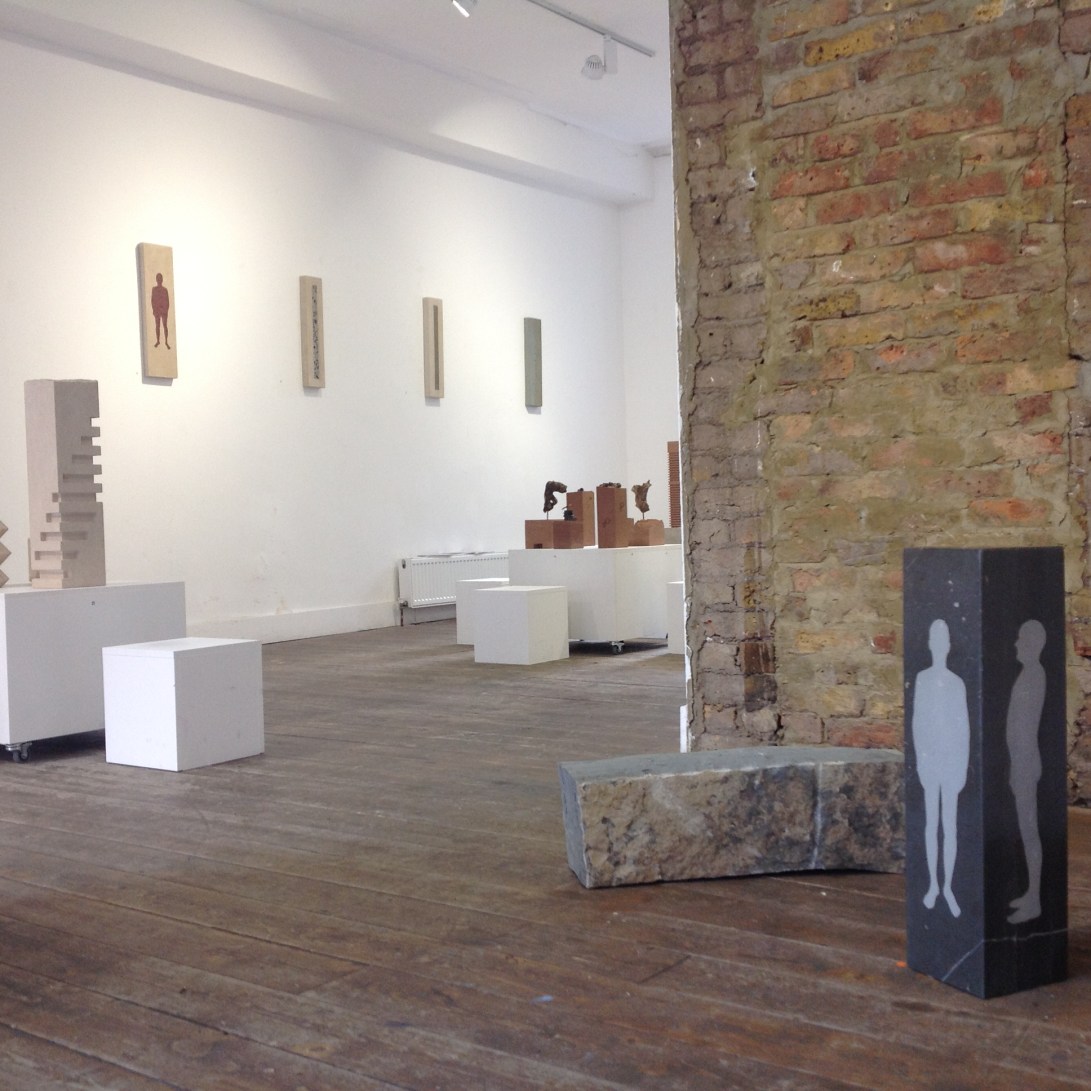
Lethe, the River of Forgetfulness, ran through Hades emptying the memories of all who drank its waters. Aletheia then, means remembering but can also mean truth or ‘the state of not being hidden’. My sculptures can be seen as representing this opening up of things to see what lies within or beneath, or as openings through which data flows between the Unconscious and Conscious, non-material and material states.
Jon Whitbread
*
All matter feels, yearns, suffers, desires and remembers. (Karen Barad, 2007).
We perceive ourselves as narratable, as protagonists of a story that we long to hear from others. My story is the outcome of relational practice, something given to me from another, in the form of a life-story, a biography. The desire for my story to be told creates a relational ontology of disclosure, vulnerability and the sharing of unique experience. I make works through painting and performance that dissolve and re-make the relationship between body, painting, support and temporal space, disclosing and re-enacting my intimate relationships and experiences.
Emma Somerset Davis