Do you ever understand anything by looking at it straight on? Nothing important is in front of you. Take death. Look at it as hard as you can. Examine it. Break it into pieces. Put it back together. Even experience it. Nothing. Understanding slides in from the side. Behind. Below. Under. Uninvited.
Also,
But
Can the subject go into an object by using thought? or can it only increase its surface? Don’t you glue/clue intelligence/understanding to the outside of a thing, a stone, a cormorant, a canvas, Love, Death, the future, wrapping it, concealing it, perhaps suffocating it? Can the subject (you) penetrate anything (other)? Or does the object penetrate you?
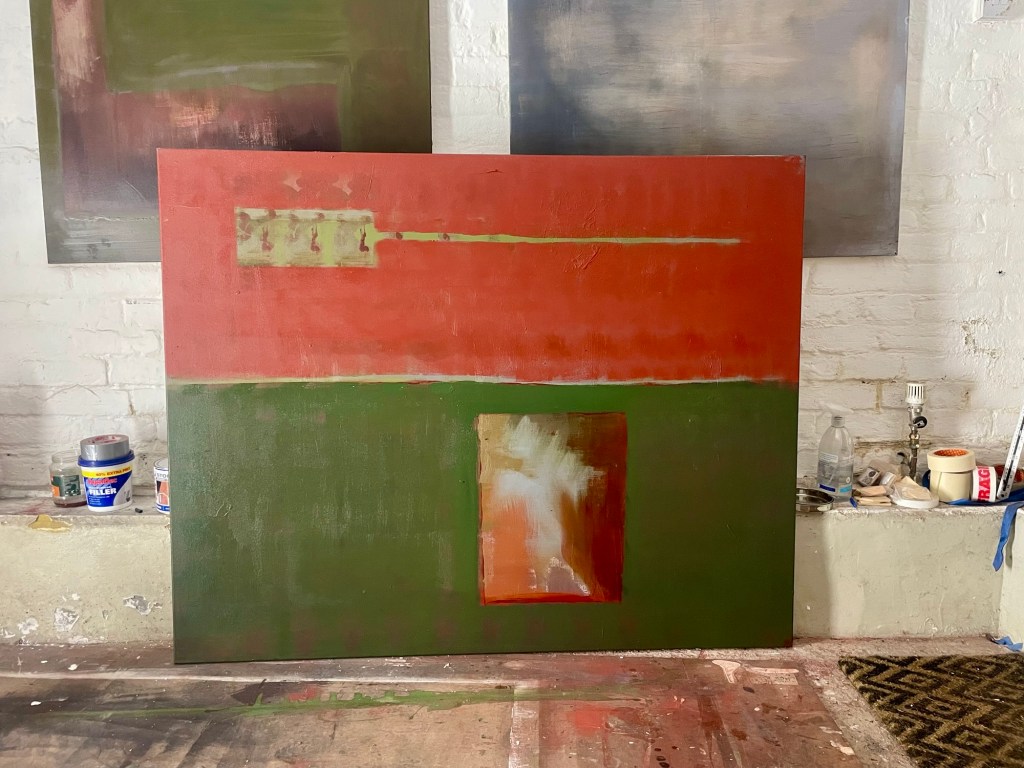
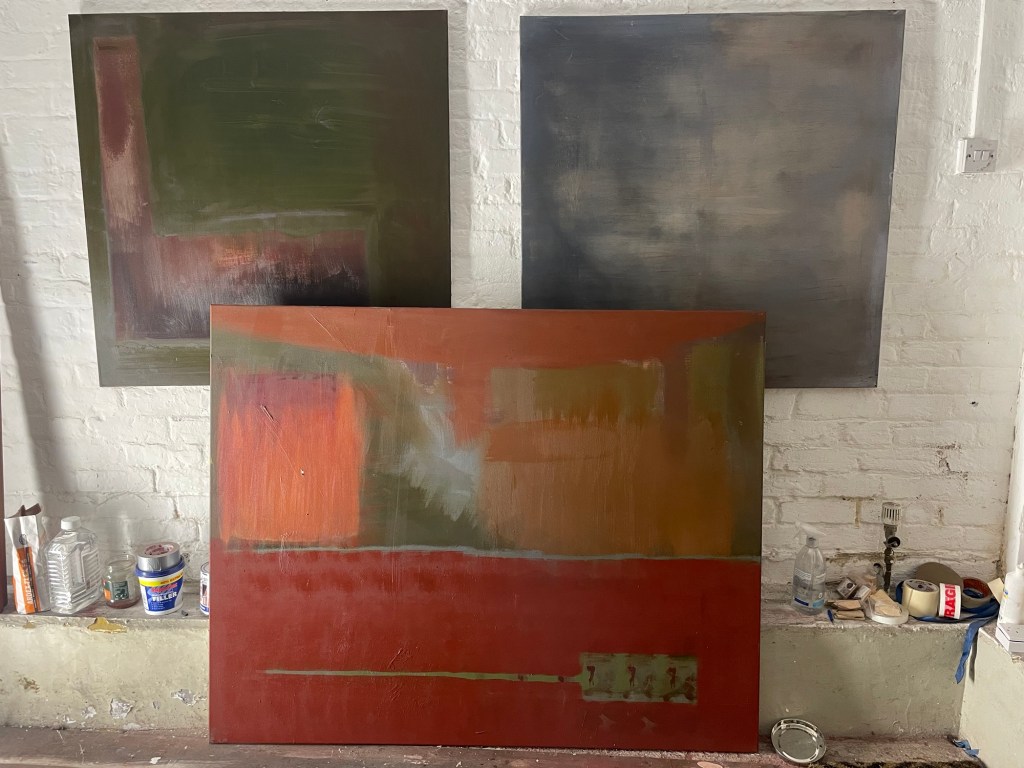
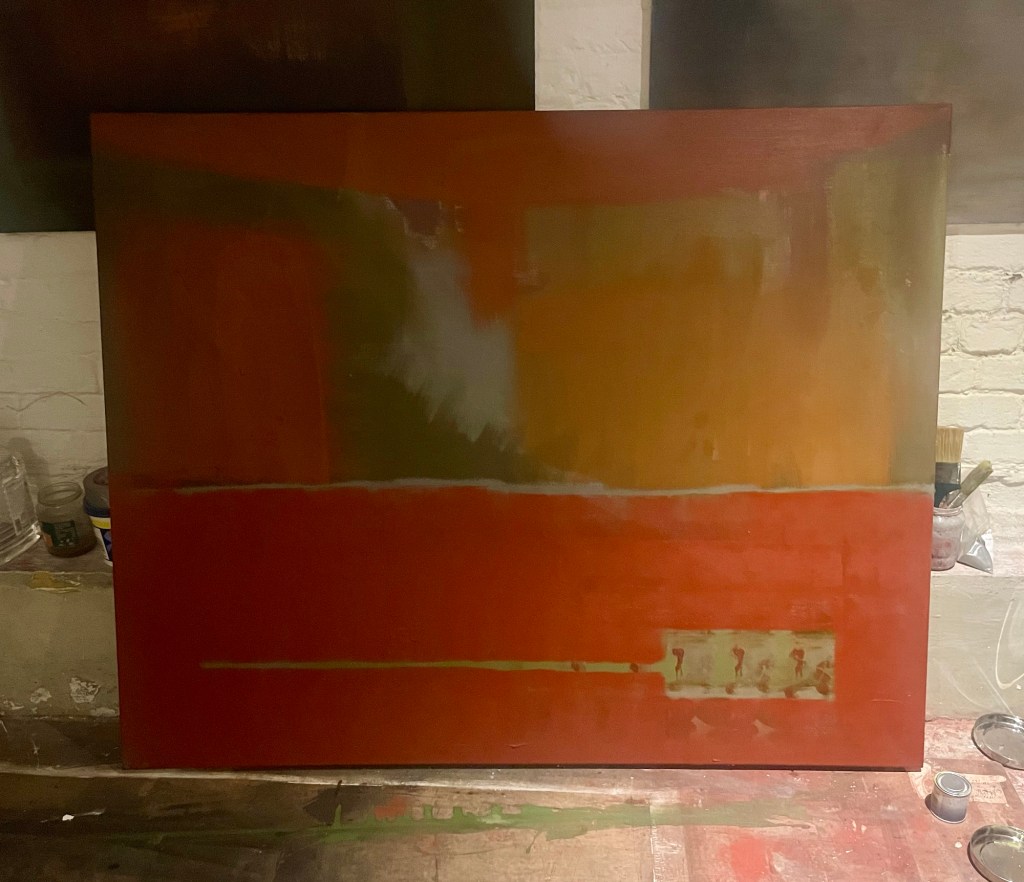
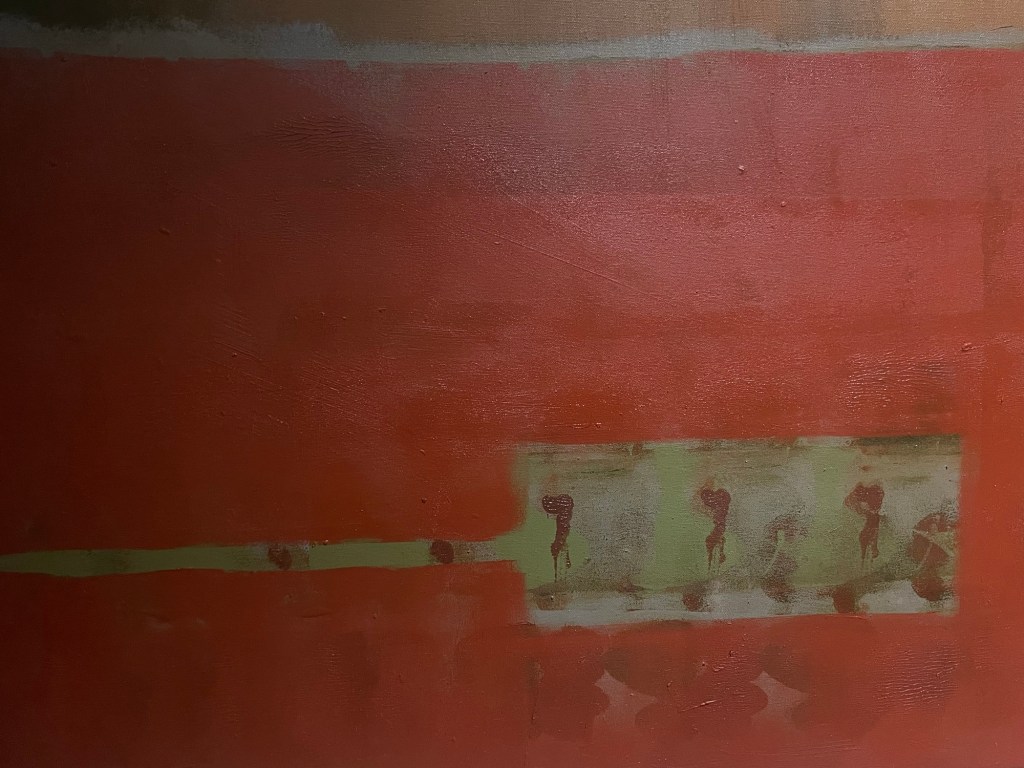
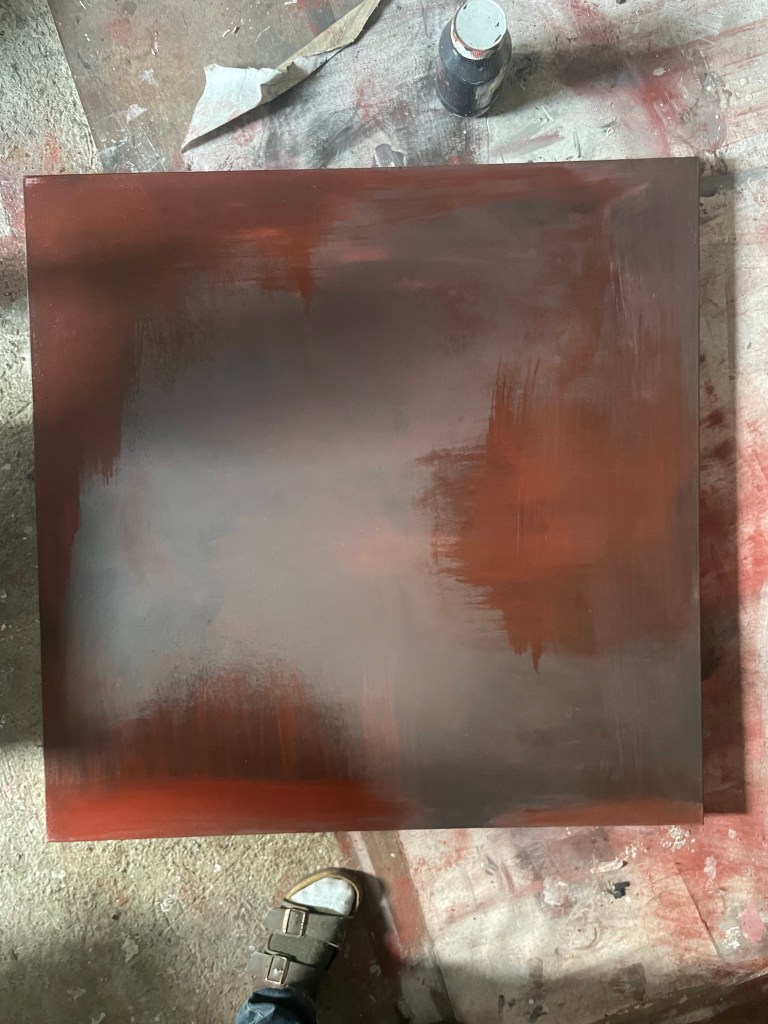
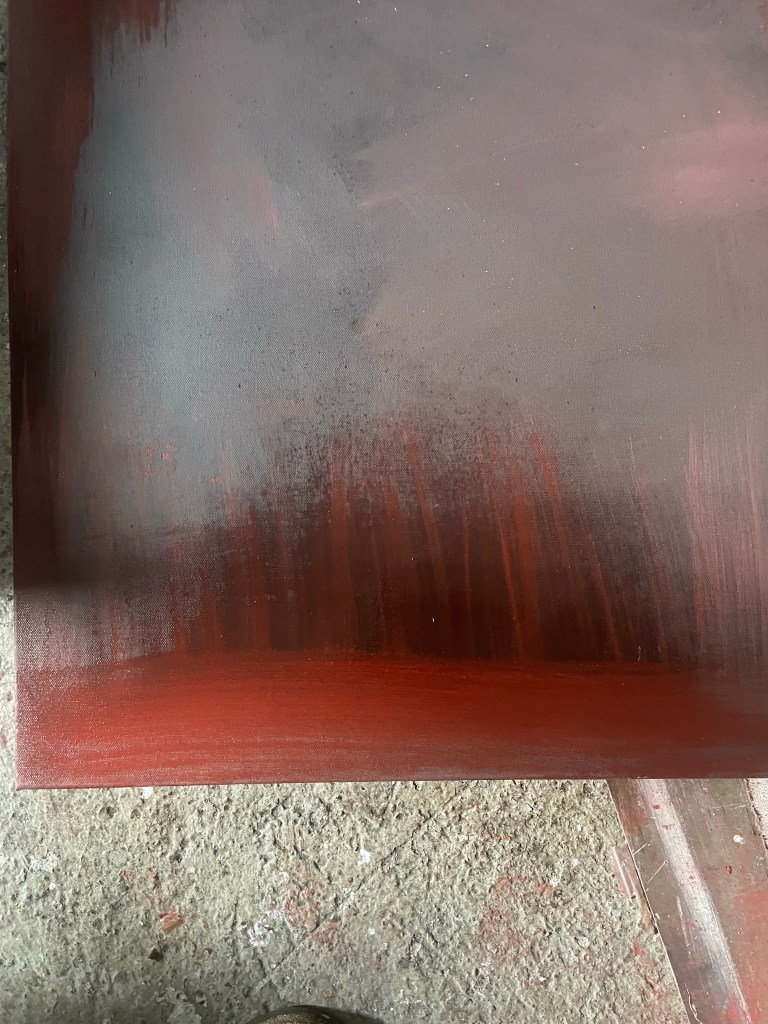
Anyway, after being stuck on this painting for a couple of weeks I finally made what i hope is a breakthrough. I found a packet of dark red powder we must have bought in India. Not sure what it was. Perhaps a powder for throwing at people during Holi or something. Interesting smell. I mixed it with varnish and it made a sort of tomato purée. I obliterated the hill and the tower and other details to which id become attached but were stopping work. Also the big fiery square from the last foray that I didn’t feel was working. What do i mean, not working? Something that was stopping the work moving forward. Driving forward to the end. Not obstacles as they can be got round. Impediments? Well once these areas had been puréed i could start to move in on the dynamic areas. The areas so dynamic they are parts of the end. The purée had served its purpose but wasn’t dynamic. I mixed up a big saucepan of green that I didn’t like but couldn’t waste so i rollered it over the purée. Not sure what’s next. I might sand some areas back to see what has survived.
Right. Ive had to change the lighting. Not sure how i feel about it. Mostly i work in poor light conditions. Why? Because the light as it presents itself is one of many materials and I’m interested in working as much as possible with what is to hand? Why? That’s for another time. But also because i like not being distracted by detail. Poor light means i can work generally and not get painterly? Why? That’s for another time too because the main point i want to make here is one of the great struggles one faces is the encroachment of the landscape. There’s the encroachment of the figurative too of course and in this painting I am now struggling with both. In fact let me add a third – the encroachment of the symbolic. What? I mean the human brain is good at identifying pattern, or rather it is a pattern maker. Regardless of whether pattern is intrinsic to nature, which it is, the encroachment is limiting and if one isn’t careful, one starts to think ooh – something is presenting itself here, something to be interpreted, or even ooh look I have painted a landscape, a figure, a symbol. But this would mean surrendering to the superficial, the surface where we spend all of our lives already. The echo-chamber of our own brain (aot mind) where pattern is just repeated data on a feedback loop of degrading value.
On another note I’ve noticed that a lot of abstract painters are into scratching their paint – in a sort of neurotic extension of this so called mark-making in art. If i ever start scratching then it means I’ve failed.
Im an interested party to the painting. Don’t be authentic, allow authenticity – thats the struggle.
Keep going until there’s an Event eg might be picking up a smear of paint hanging off the side of the canvas with a roller and printing it across the background until it’s all used up. The Event is only ever conjured. It smacks of accident, slides in from the side amidst the chaos structure and distraction. It cannot result from intent. It can only be allowed to happen.
——————————————————————————————————
We exist in this Holmesian space don’t we? This clue drenched crime scene where PROBLEMS are SOLVED. Sherlock Holmes and the Metabletica. The Platonic Clue that clues us all together. Splash patterns, tool marks, evidence of intent, motive… But what if we are Unclued? What does that look like? Beautiful anarchy. All these philosophical mind experiments inventing new templates. But what happens when we shed our templates entirely? Shed the whole question-answer cause-effect machine? Demolish our shared temples and our personal shrines? Stop going outside and start the real journey? Answer.
At some point painting becomes about going from an authentic response to what’s not yet on the canvas (raw materials, tools, state of mind, state of world, everything etc) to an authentic response to what IS on the canvas that has become its own world. That’s not necessarily an aesthetic consideration or painting for effect, but an interaction as free from idea as is possible. Risky business inviting catastrophe.
Because illustration is a form of opinion and therefore uninteresting
Or rather opinion is limiting to the point of self-destruction
It’s the by-product or effluent of language in league with the senses defining our surface world
Why are you interested in idealism, formalism and abstraction?
Because I’m interested in bypassing language and our senses as these are what our world is built from and not what the world is. They are superficial and belong to the surfaces of things.
Ive made a lot of paintings since my last post and Ive been in India for a few months (not painting at all). Rather than try to go back and tell the story of each new painting I’m going to give more of an overview of where I am with painting now to help me organise my thinking around it.
The blank canvas lays on the floor in the basement for days. Days. Sometimes ignore it, sometimes afraid of it. resent it. hate it. Tell it to fuck off. Fuck. Off!! turned all old work around or stacked it so can’t see it – can’t be influenced by it. So don’t attempt a version of it. There’s a struggle going on. It’s not action vs inaction, it isn’t confidence vs doubt. it’s pure tension. Where’s the tension. in me or between me and the world. Subject and object. Human and material. being and becoming. Behaviour of painting vs behaviour of not-painting. crisis. At some point think fuck it just put some paint on as a foundation or something. DO SOMETHING. Pick up brush, open paint, Jesus that takes some doing. Like a roar. angry roar. just paint thats there. Leftover house paint. A brown white or sth. Perfect ground. Earth. Neutral. Plough it. Part poured on. Big brush. Fast. Was just going to do the ground but now pouring on iron filings and my body is asking “what are the fucking rules for this one then?”
Activate the material until it starts to lose or has lost its workability that is, its potential to be activated with a paintbrush
That is not to say that the material ceases to be active. That’s why i like the materials i include. They’re unpredictable and uncontrollable. Iron oxide explodes on contact with liquids. Iron filings will continue to oxidise, cement will continue to absorb carbon dioxide, all the materials will continue in relationship with eachother sometimes visually sometimes not. And there’s a time limit on brushability.
Authenticity. A particular kind of truth of object unto itself. A brief interlude of human-nonhuman relationship that has authenticity, that is, a not entirely anthropocentric be-ing with its own share of object-ness. A balanced-ness. Neither a Kantian thing-in-itself nor an illustration of human intent but also not an illustration of either. That is the problem i engage with.
Is it possible to produce a non-illustrative work of art or can it only be, at its most authentic, an illustration of the struggle to produce one? No I don’t think so and I think that my work is therefore tragic as all art is, because it cannot escape illustration. So I have to be interested in the tragedy. At best I can only make art that illustrates itself.
Why is it important to ask the question?
I don’t know, Im just a human being human.
Why am I interested in or motivated by the idea of non-illustrative art?
Because i am interested in the idea (and here an idea is also an object), that an object is an authentic object in itself if not within itself. This is one of those regions where human language and The Rest engages.
Ok so at a recent exhibition that I had a painting in someone asked me “what’s your painting about?” in a way that suggested she expected an immediate answer.
But a painting is not like a book, film or cartoon. Its primary objectness is not of a narrative nature or purpose. To begin with it is static and immediate. It’s all there right now on the canvas. Yes there is context. My context while painting it for example or its socio-economic and temporal context. I don’t work in a vacuum and often anger for example can be an energising coefficient in the process. Sometimes this spills over into illustration. But it’s still only an illustration of the act of painting whilst angry, not a painting of the thing that i am angry about.
Part of me hates these situations to the point of mind-goes-blank. “What’s your art about?” What kind of fucking question is that!? Fuck I’m going to have to use words like ‘ineffable’ and ‘materials’ and ‘discourse’ or ‘narrative’, ‘context’, ‘migratory’…or ‘trauma’, ‘borders’, ‘landscape’, ‘relationship’!
So i mumbled something like “it’s about the materials”.
Occasionally, rarely, you meet someone who draws out of you through careful questioning what you’re all about. Can I be that person to myself?
With an exhibition coming up i need to at least try to organise my thinking. Why? Because I’m offering my work to another and the viewer needs an in. I am also a viewer of art and i know that one can view art as an object in itself as oneself with a viewers context, and as an object in the world with its own context. The problem is having to verbalise complex internal and external processes in a conversational way because viewers, that is to say consumers, myself included, benefit on a certain from accessibility
And yes, this has been up to now, an exercise in avoiding answering the question
“What is your art about?”
Because the answer is of course
Hopefully it’s not about anything.
And here’s a paradox. By being honest and saying these paintings are not about anything other than what they contain and the activity that they resulted from, a viewer, not being offered a narrative, a story behind the painting, feels excluded even though its an open invitation for the viewer to experience their own narrative.
And that imagined intuitive interviewer might ask
“Then do you make paintings for the pleasure of presenting them to viewers for them to have their own experience?”
Answer No. I make them in order for me to be presented with them and for them to be things in themselves in relation to eachother.
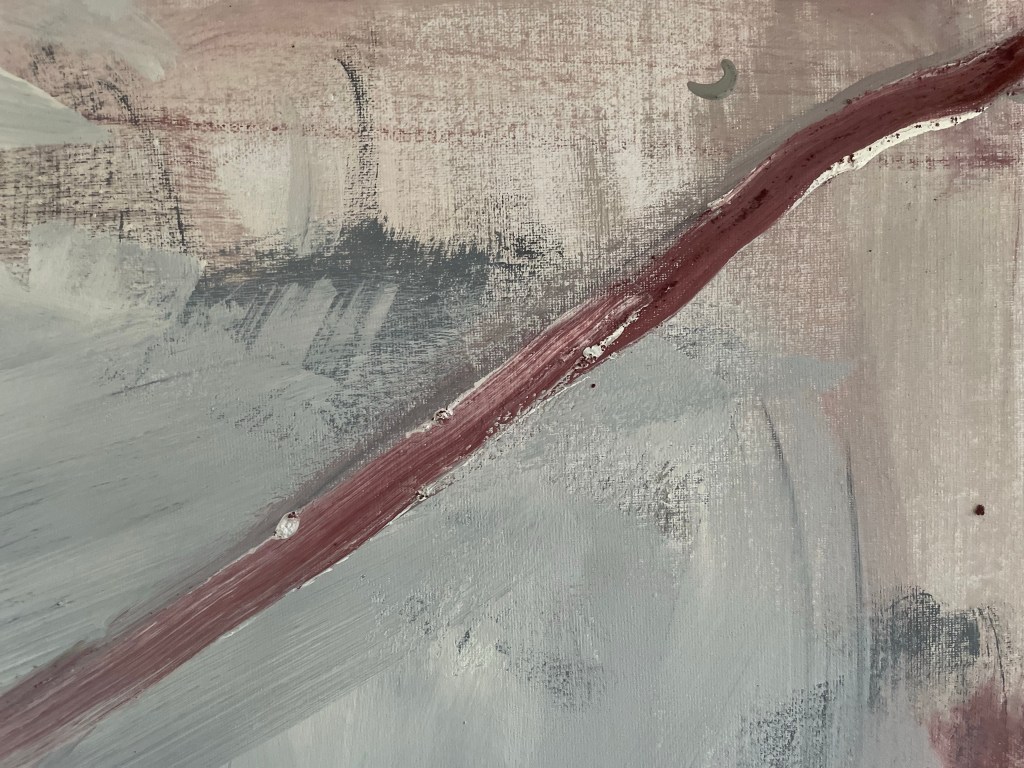
Stumbling upon the source of a river or spying some half-unearthed artifact in a remote field holds a place in my imagination when I’m out walking. Both desires are metaphors for exploring the caves, tunnels, underground lakes of the unconscious. When I was young i wanted to be an archaeologist of course, but then realised id rather make the artefacts than find them in the mud. I seem to have been playing hide and seek with materials recently. Burying them. Revealing them. Ive also hurt my leg which makes painting very painful. Perhaps that explains the red and black.
Ive become increasingly conscious of the curious fact that I make Rules Based Art and perhaps always have. In my recent long form Artists Statement (see previous post) I spoke about allowing my behaviour to interact with tools and materials. Now I realise that as I begin to behave (that is to say, pick up tool, pick up paint, apply to material, or in the case of stone, choose stone, move stone, pick up tools) I am waiting for The Rules to manifest. Each new piece, with its unique environment (detritus from previous work on floor around canvas, particular location of tools for example) can influence what The Rules might be. A Rule might be “ah – the 1 inch paint brush is to be pushed across the canvas” or “right – the side of the brush is to be driven into the canvas through the paint” or “hmm – the blade is to spread the paint between the canvas and the paper only very little, or to its maximum extent, or only in one direction” or “all activity will stop now” etc. The Rules only manifest as the work progresses. The Rules come from the interaction between tool, material and behaviour. There is no intention other than to begin and usually even beginning is without intention as it might happen while I am walking past the canvas on the floor on my way to doing something else entirely unrelated to painting.
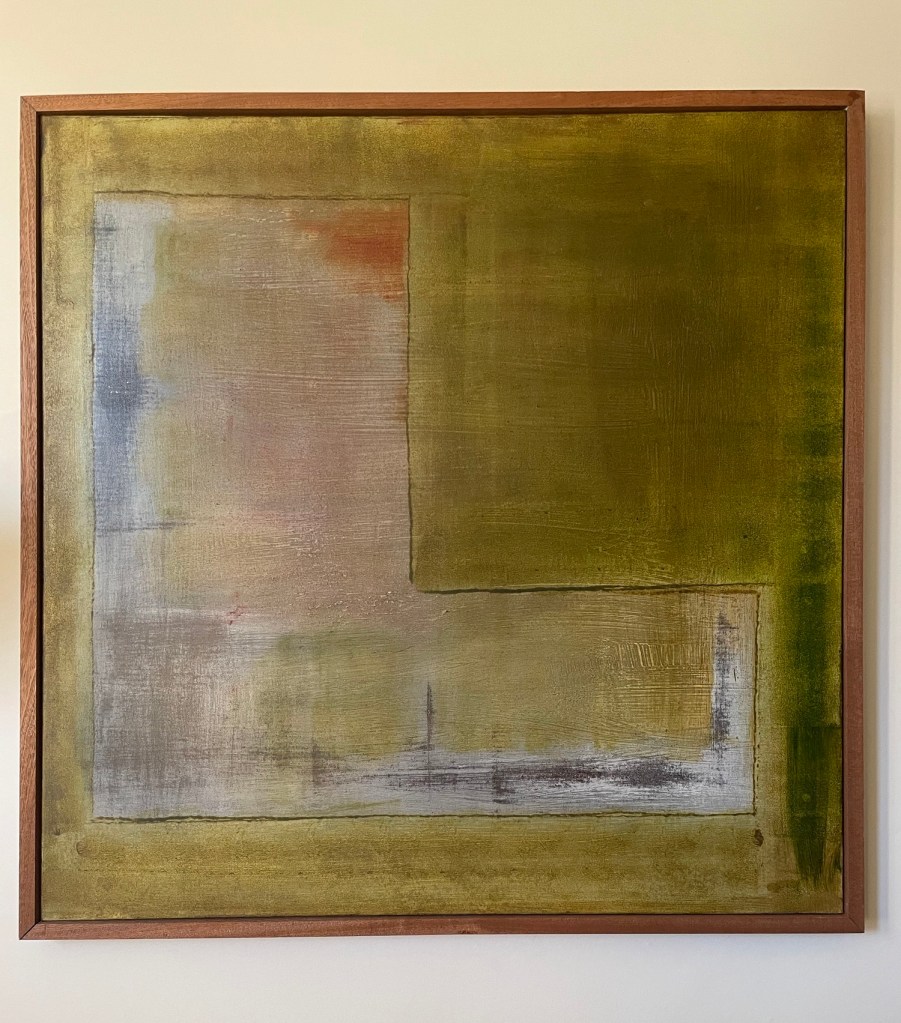
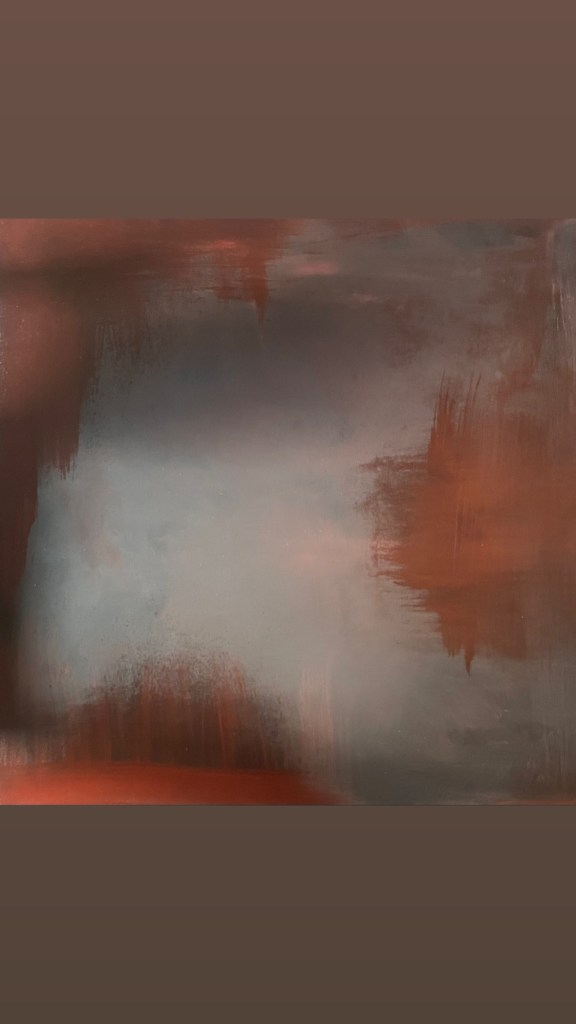
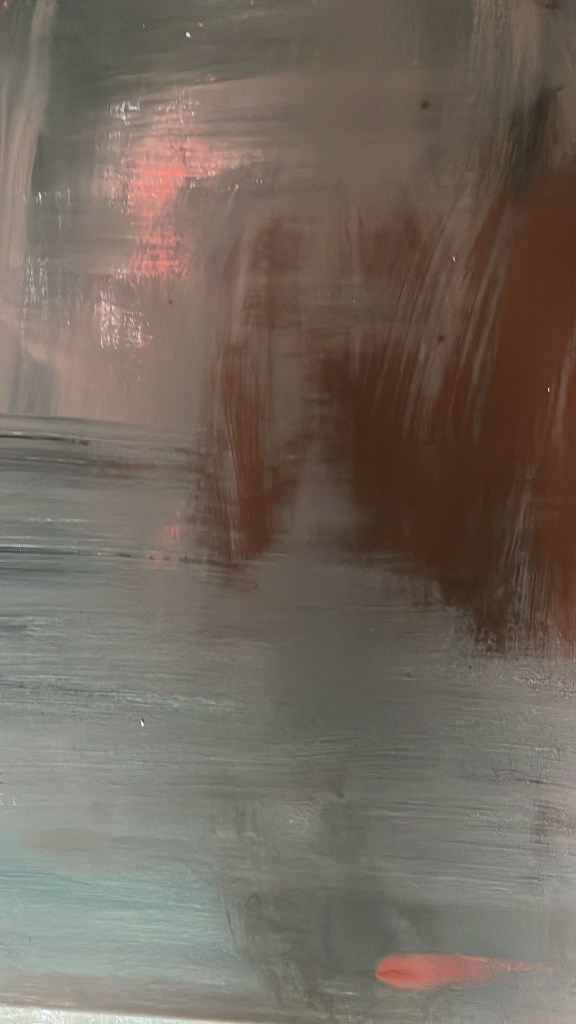
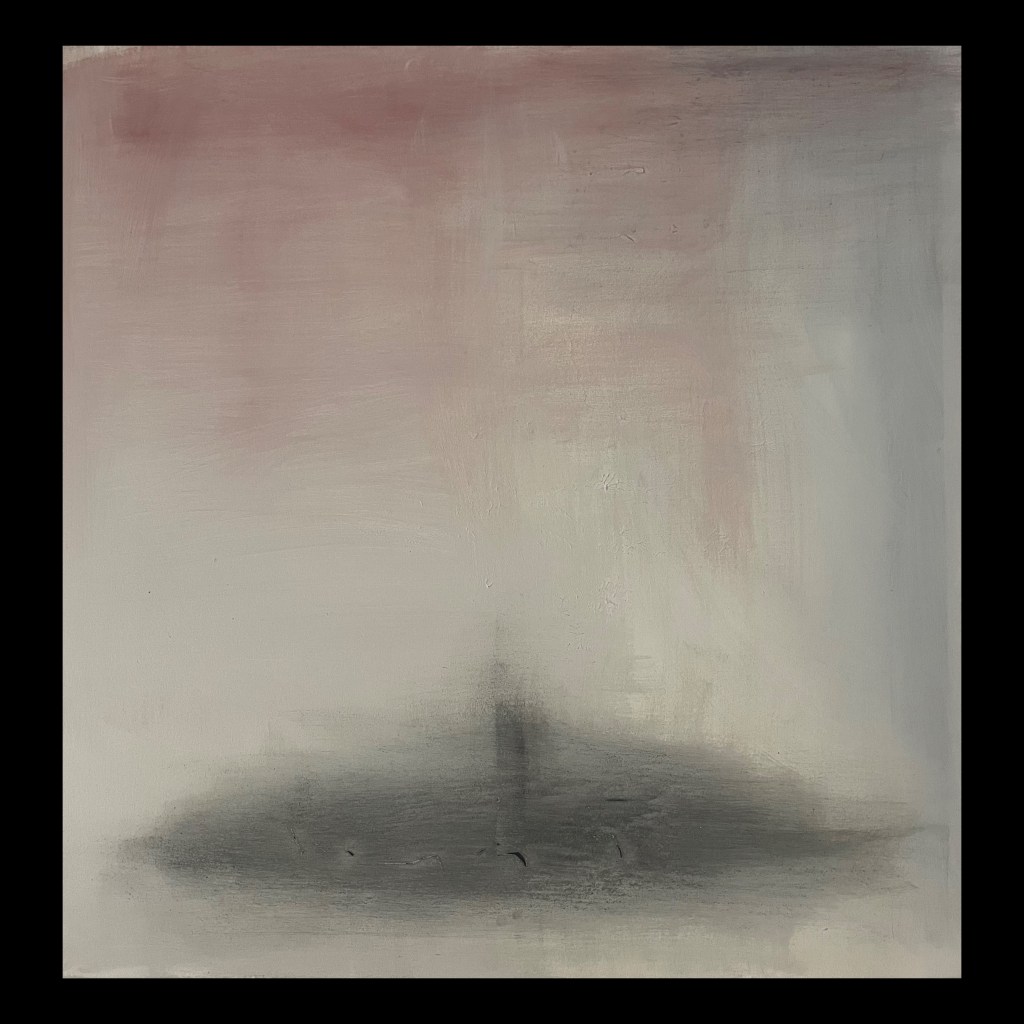
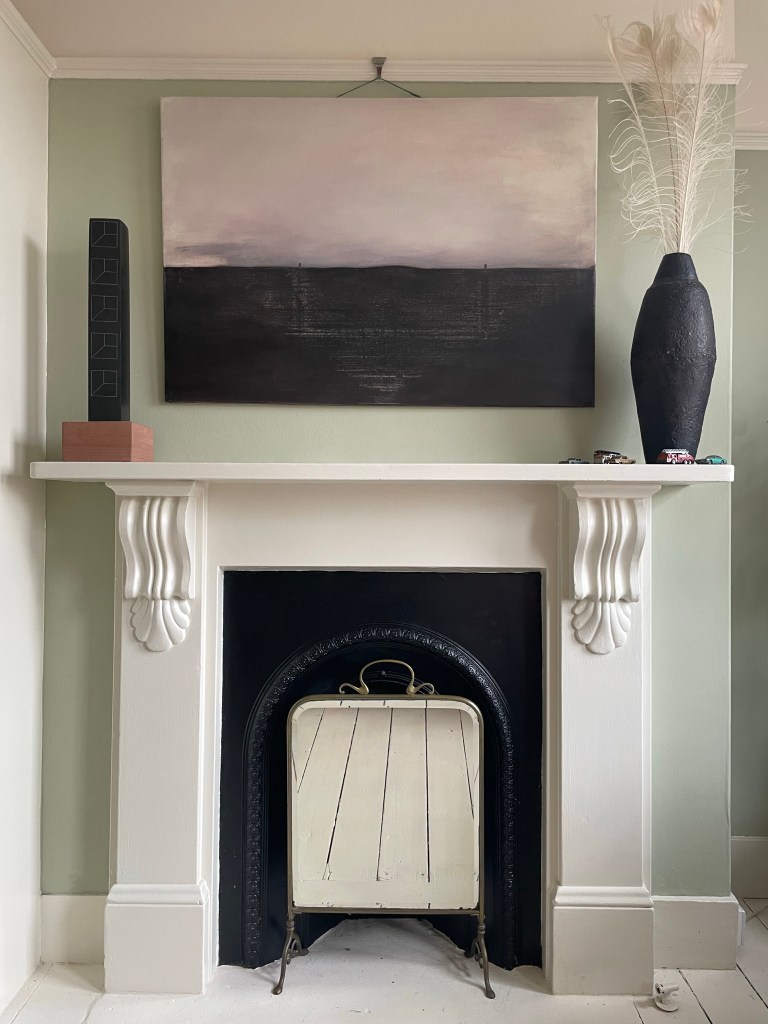
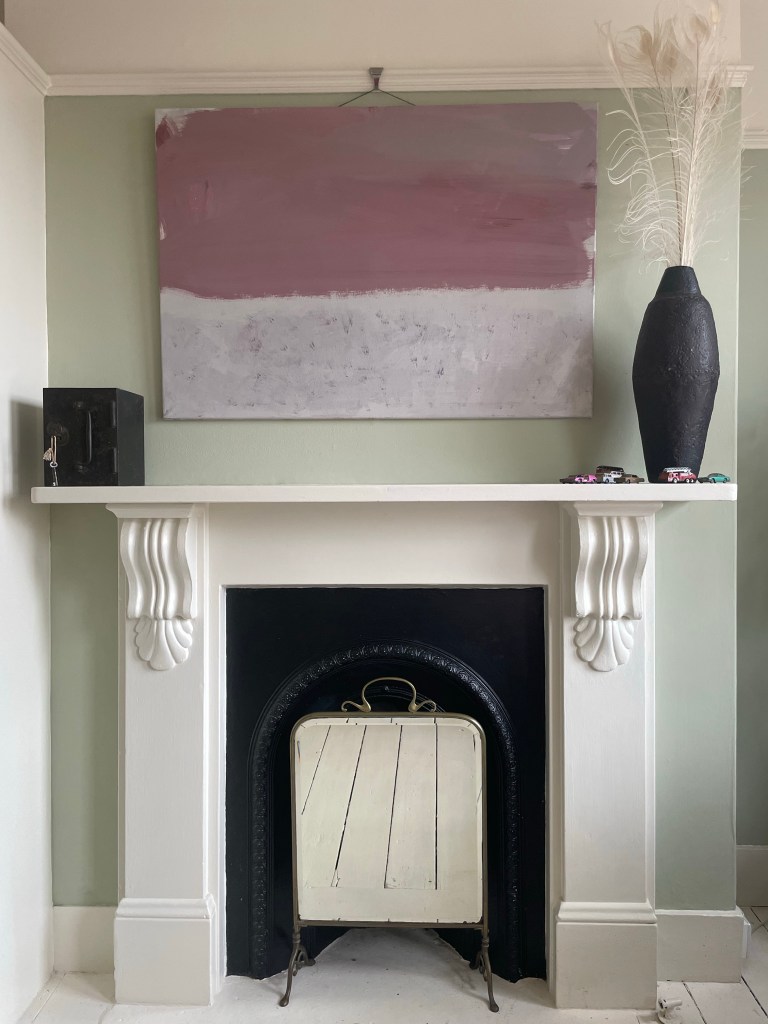
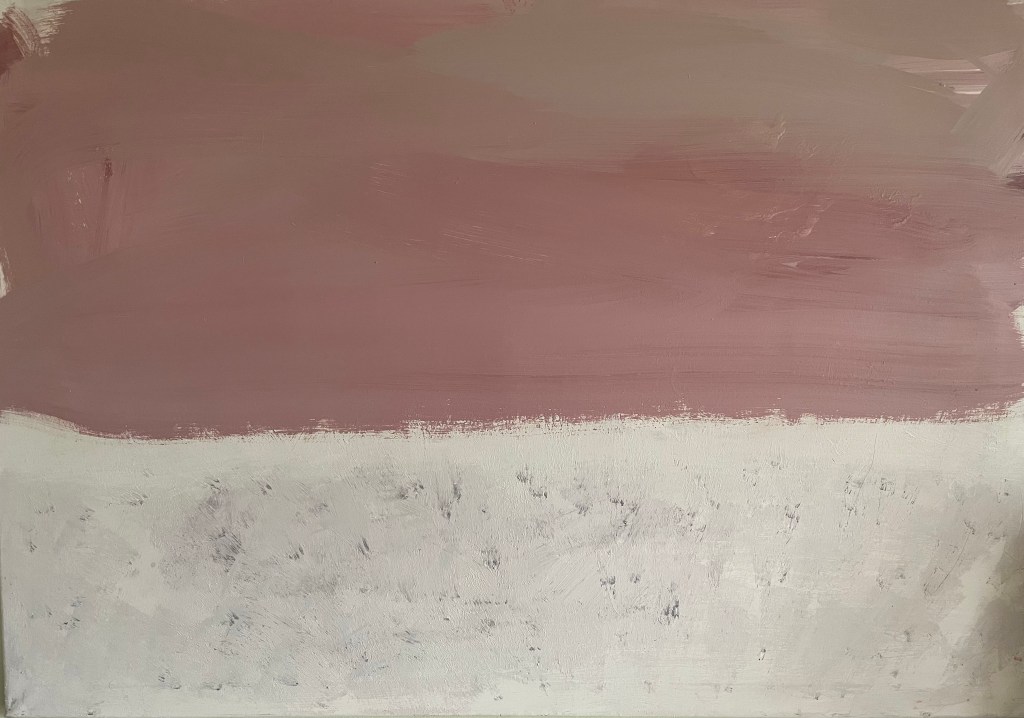
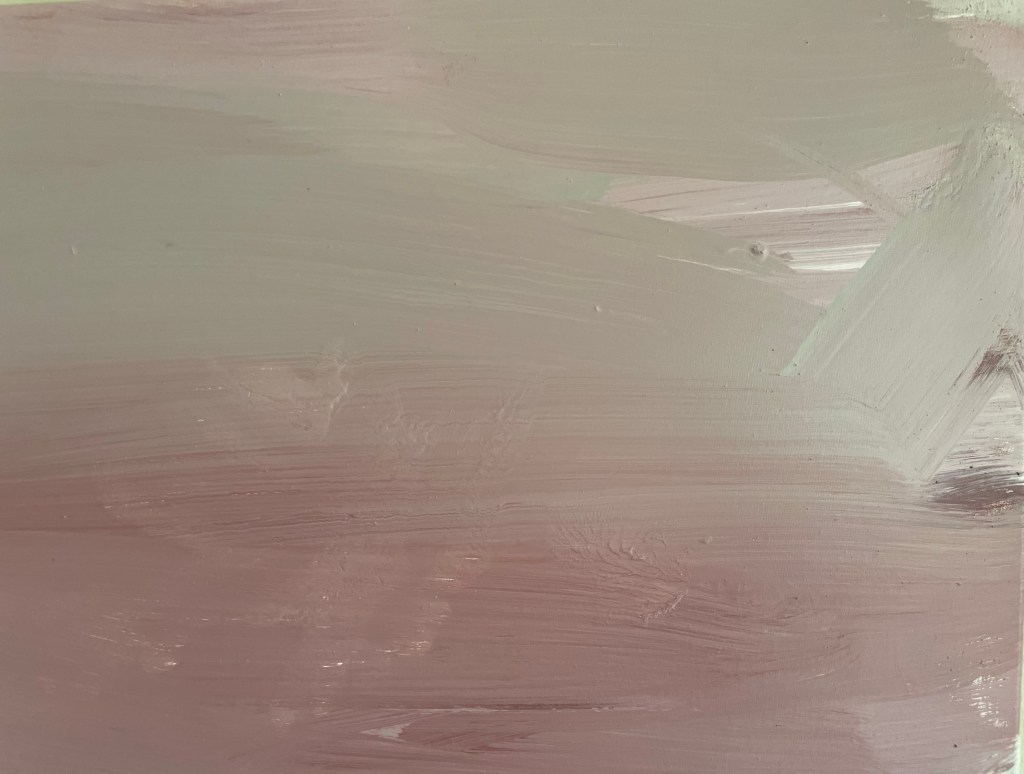
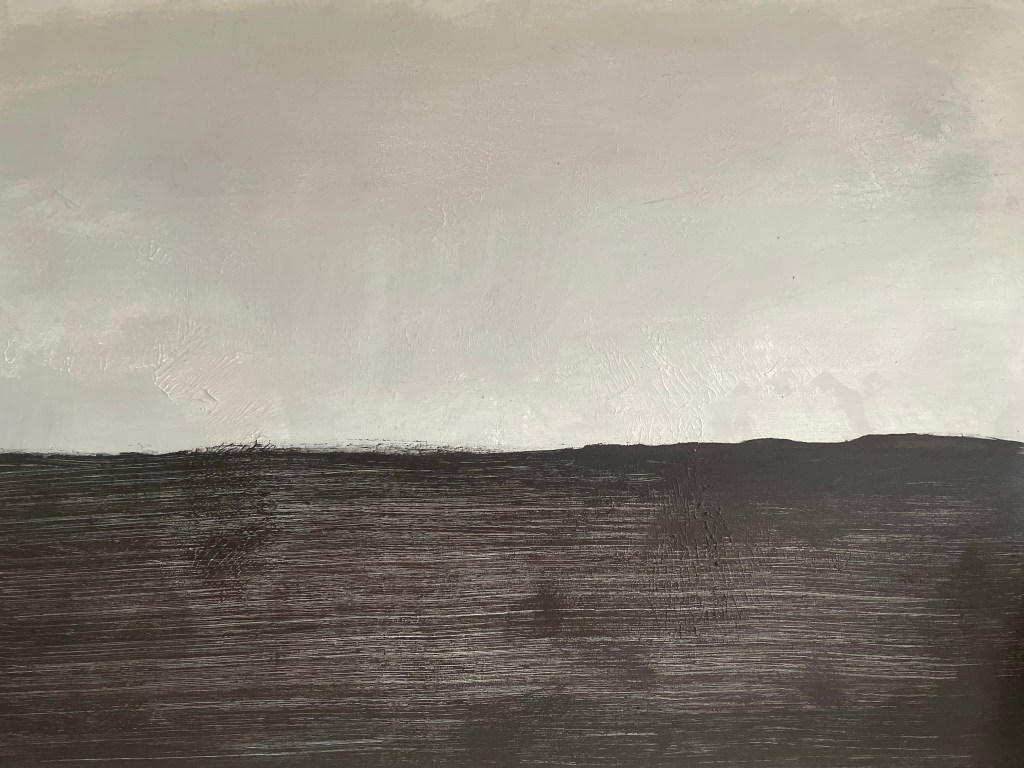
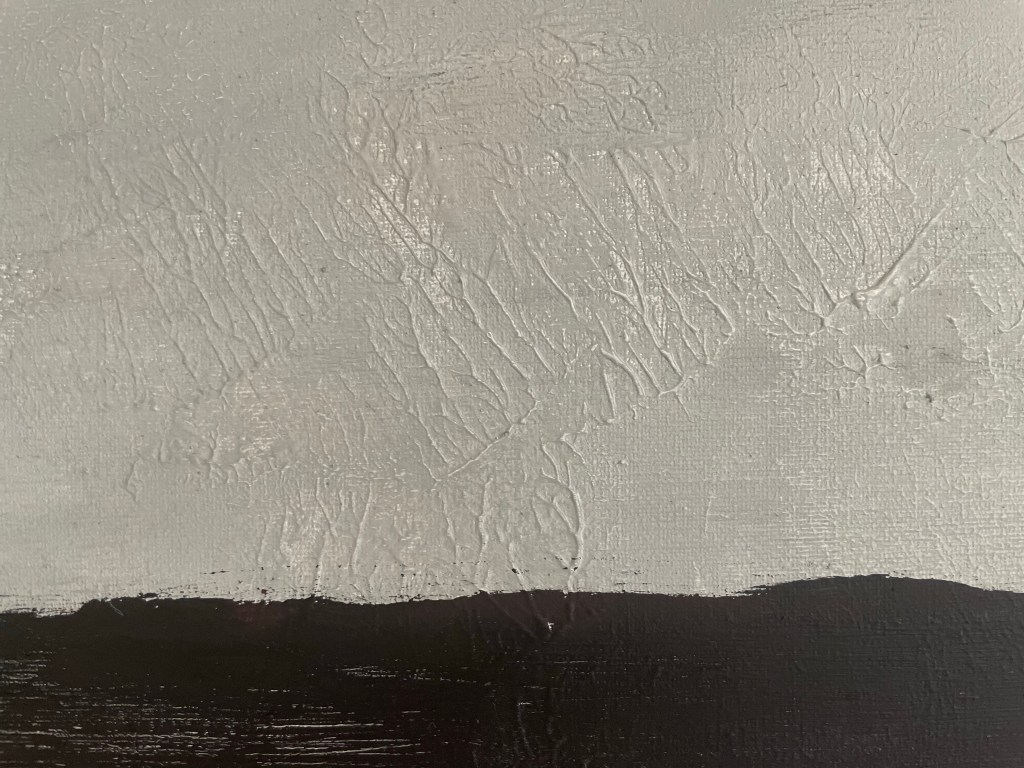
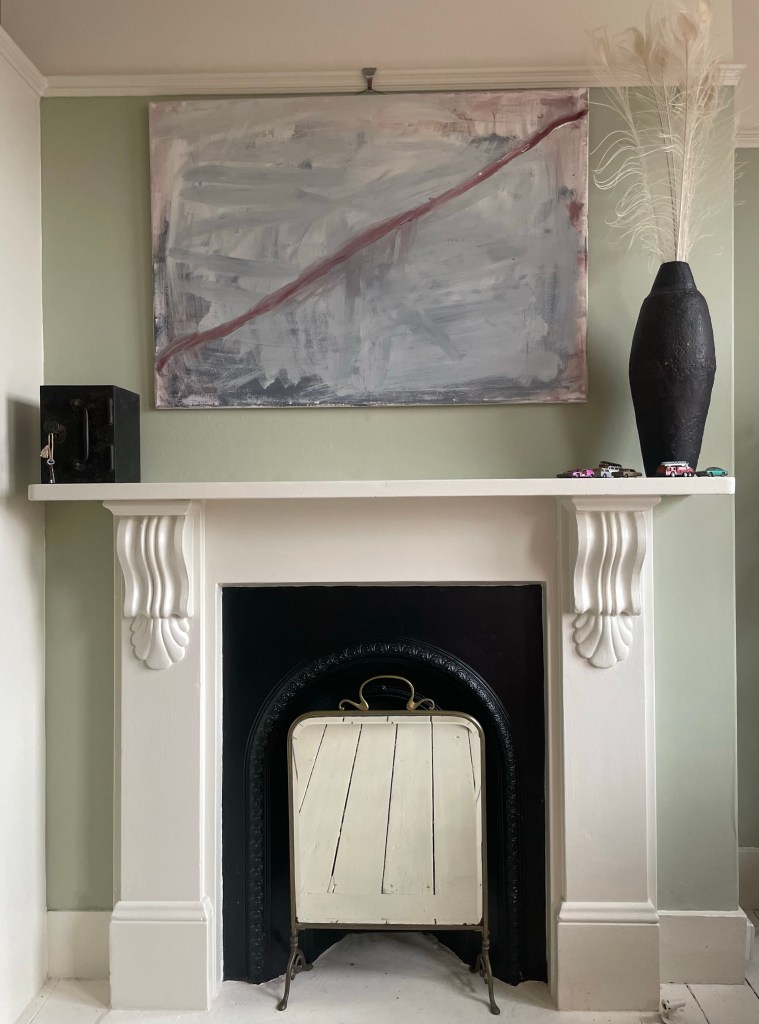
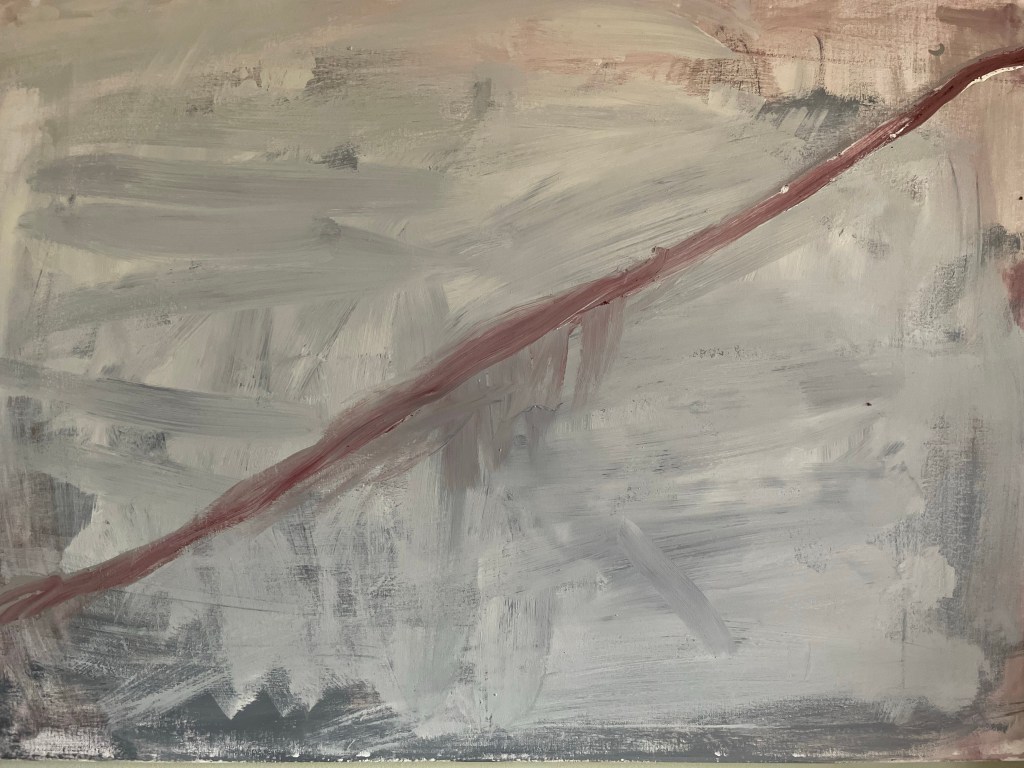
Untitled (100/100cm) oil, acrylic, iron oxide, carbon, cement



 JON WHITBREAD ART